Both Sides Say They're Ready for War. The Diplomatic Door Is Still Open.
As Washington and Tehran trade public warnings of military readiness, Iranian negotiators are quietly weighing whether to show up in Islamabad at all — and whether JD Vance is the address for anything that resembles a deal.
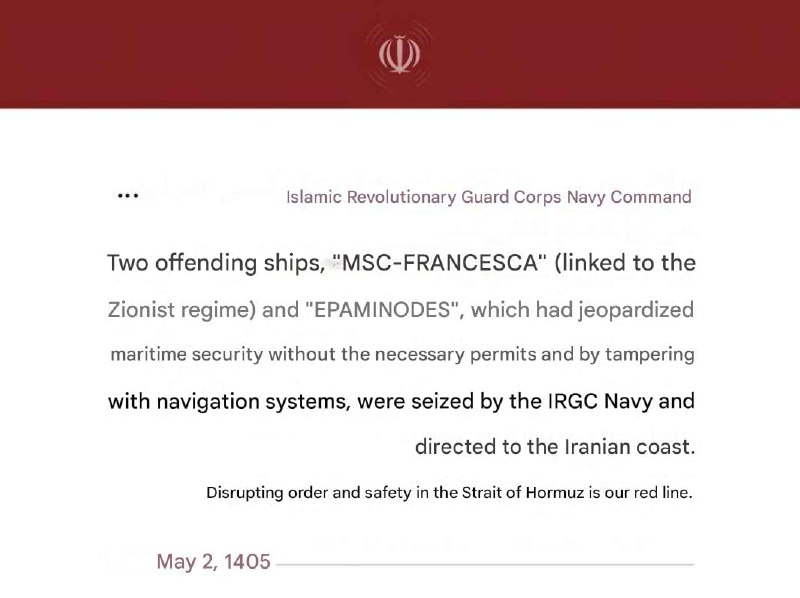
On 20 April 2026, the United States and Iran each issued warnings that could charitably be read as deterrence and less charitably be read as preparation for exactly the catastrophe they claim to be preventing. The statements arrived within hours of each other, compounding a already fragile environment around the Pakistan ceasefire process, which sources described on 21 April 2026 as effectively stalled. [SCMP] [Middle_East_Spectator] The dissonance between the public posture and the private channel is not new. What is new is the specificity of the threat language and the timing — right as Iranian officials were weighing whether to board a plane to Islamabad at all.
The gap between what governments say in public and what they signal through back-channels is a permanent feature of crisis diplomacy. But the gap has rarely been this wide and this consequential at the same time. Both capitals are apparently willing to let the other believe war is imminent, while simultaneously leaving the Vance channel open in Islamabad. That is not incoherence — it is a familiar pressure tactic, conducted at the expense of regional stability and the civilians caught between.
The Statements and What They Actually Mean
The US warning, reported by SCMP on 21 April 2026, was unambiguous in its implications: Washington sees military action as a credible option on the table. Iranian state-adjacent media, meanwhile, carried Tehran's own parallel warning within the same news cycle. [SCMP] The near-simultaneity of the two statements is unlikely to be coincidental. Both sides are trying to establish that the other would bear responsibility for escalation — a common赛前 move in crisis bargaining, and one that rarely de-escalates anything.
The practical effect is to raise the political cost of compromise. Any Iranian diplomat who walks into the Islamabad talks now does so under the shadow of their own government's public war rhetoric. Any US official who engages the channel has to answer for the simultaneous military posturing. The ceasefire process becomes a political liability for both sides before a single meeting is held.
The Islamabad Calculus: Show Up or Stay Home
Iran may attend another round of talks in Islamabad but send a lower-ranking delegation, according to reporting by the Middle East Spectator on 21 April 2026. [Middle_East_Spectator] The alternative — not physically attending but agreeing to extend the ceasefire — was described as equally live. The Wall Street Journal, cited by unusual whales on 20 April 2026, reported that Iran had signalled it would send a negotiating team to Pakistan the following day, a team that would meet JD Vance. [unusual_whales]
The signal-and-noise problem is acute here. A lower-ranking delegation signals reduced commitment without formally breaking the channel. Agreeing to a ceasefire extension without showing up preserves the diplomatic fiction while buying time. Neither option resolves the underlying disagreement — whatever that disagreement actually is, since the public framing of these talks remains deliberately vague. What is clear is that Tehran is not ready to walk away entirely, and Washington has not closed the door. That, in the peculiar logic of crisis management, counts as a positive.
The Vance Channel: Architecture of a Back-Channel
The presence of JD Vance — a senior US official — in any capacity around these talks is itself significant. Back-channel diplomacy typically works best when it is deniable. A senior political figure occupying that space changes the calculus: anything agreed in that room carries political weight that a technocratic envoy cannot easily disavow. That cuts both ways. It gives the US flexibility to move quickly if Tehran offers something substantive. It also makes it harder for Washington to walk away from any deal that emerges, which is arguably the point.
The structural logic here is straightforward: both sides face domestic constraints on direct negotiation, both face regional audiences watching every gesture, and both have interests in avoiding a conflict neither can cleanly win. The Vance channel is the mechanism through which those interests get tested against the public posturing. Whether it produces anything durable depends on whether either side is willing to accept the political cost of being seen negotiating under these conditions.
The Aviation Angle: Secondary Effects Already Biting
The economic ripple effects of heightened US-Iran tensions are beginning to register in places that have nothing to do with geopolitics directly. JetBlue's CEO ruled out bankruptcy this year on 21 April 2026, Reuters reported, but acknowledged that surging fuel costs — driven by the broader Iran conflict environment — are a material pressure on the airline's finances. [Reuters] This is not the story. But it is a reminder that the costs of military posturing are never contained to the military domain. Aviation fuel markets respond to geopolitical risk premiums. Airlines with thin margins absorb those premiums or pass them on. Passengers in both countries and across the region pay in higher fares before they ever pay in any other currency.
The financial press treats fuel cost shocks as a corporate story. The underlying driver — a geopolitical crisis that nobody has fully resolved — remains under-covered in that context.
What Remains Unknown
The sources do not specify the substance of what either side is demanding in the Islamabad talks. The ceasefire extension options described suggest some form of agreement was previously in place, but its terms and which party violated them — if either did — are not detailed in the available reporting. The Vance meeting agenda, if one exists, has not been made public. Whether Iran sends a senior or junior delegation changes the political read significantly, but it does not on its own determine whether a deal is possible. The structural incentives on both sides argue for some form of managed de-escalation. Whether those incentives are strong enough to overcome the domestic and regional audiences that benefit from continued tension is the question nobody in the public record has answered.
What is not in doubt is that both capitals have publicly committed to the language of war readiness while privately maintaining a diplomatic channel that, if it produces nothing else, at least keeps the alternative alive. That is not reassurance. But it is not nothing.
Wire provenance
This editorial synthesis draws on the following public wire/social posts:
- http://reut.rs/4tmMIPs
- https://t.me/Middle_East_Spectator
- https://x.com/unusual_whales/status/1912497856786964690