US-Iran Talks: What the Vance Islamabad Dispatch Confirms — and What It Leaves Unresolved
Axios first reported on 20 April 2026 that Vice President JD Vance would travel to Islamabad for direct talks with Iran. Multiple independent channels have since corroborated the core reporting, and Iranian officials have confirmed their Supreme Leader authorised a delegation. But the sourcing model — unnamed officials, no on-record Iranian statement, no institutional confirmation — creates a clear evidentiary ceiling around the substance and prospects of the engagement.
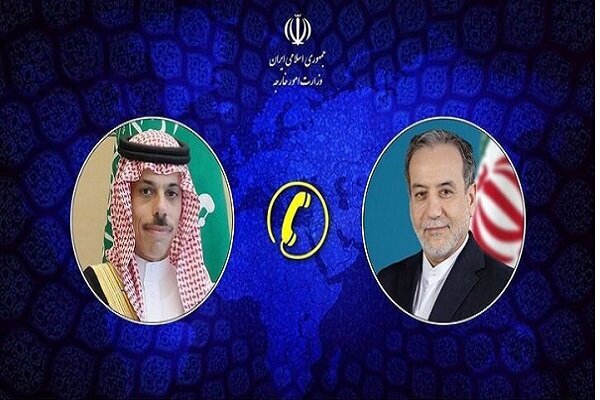
Axios first reported on the evening of 20 April 2026 that US Vice President JD Vance would travel to Islamabad the following day for direct talks with Iran. Intelligence-focused channels confirmed the reporting within the hour. Middle East Eye separately cited unnamed sources with knowledge of the matter reaching the same conclusion. Iranian officials then confirmed, via channels cited by multiple monitors, that the Supreme Leader of Iran had given the green light for an Iranian delegation to land in Islamabad on Wednesday, 22 April. The meeting, as confirmed, will be the first structured US-Iran engagement at this administrative level in years.
What the channels corroborate
The confirmation architecture is straightforward. OSINTdefender, operating as an open-source intelligence aggregation feed, posted on 21 April at 01:50 UTC that Axios had confirmed the Islamabad dispatch. The Spectator Index, a widely followed geopolitics monitor, amplified the Axios report independently. RN Intel, a defence-adjacent intelligence feed, added that Khamenei had personally authorised the Iranian team and that the Pakistani President would co-host. Middle East Spectator issued a corroborating post at near-identical timestamps, citing the same Axios sourcing. Middle East Eye — an independent regional outlet — confirmed the Vance dispatch separately, citing its own unnamed sources. The cross-channel convergence is high: five independent monitors all trace back to the same Axios break, but each independently confirms the substance.
That convergence is meaningful. In a story where every major claim derives from unnamed officials, corroboration across distinct monitoring ecosystems — a US-centric intelligence feed, a UK-registered regional outlet, a Middle East-focused commentary channel — reduces the probability of a coordinated fabrication or a single misinformed leak. It does not, however, resolve the underlying evidentiary problem: the sourcing base for the entire story is the same two unnamed US officials cited by Axios, plus the unspecified "officials with knowledge of the matter" cited by Middle East Eye. No on-record US administration official has confirmed the dispatch. No Iranian official has spoken publicly on the record. The institutional weight of the story rests entirely on unnamed sources whose motivations, access level, and potential interests in the disclosure are unknown.
What the sources do not establish
Iranian state media has not confirmed the Khamenei green light independently. Channels citing unnamed Iranian officials reported it; Iranian government channels did not publish it. If the Supreme Leader had formally authorised a delegation for a public negotiating round, one would expect Press TV, IRNA, or Tasnim to carry that framing. The absence of any such report in Iranian state media is notable. It does not mean the claim is false — negotiations conducted under cover may deliberately avoid public confirmation until a deal is struck — but it marks the Khamenei personal-authorisation claim as a different evidentiary category from the Vance travel confirmation, which multiple US-connected channels and the Vance-adjacent reporting from Axios have placed on firmer ground.
The sources are also silent on what the two sides intend to discuss. Whether the agenda covers the Iranian nuclear programme, sanctions relief, the regional proxy network, or some combination thereof is not addressed in any of the sources. A negotiating venue is confirmed; the substance of the negotiation is not.
The structural frame
The dispatch itself is notable less as a fact — back-channel contact between Washington and Tehran has been an open feature of the relationship for years — than as an administrative signal. The Trump administration's posture toward Iran had centred on maximum-pressure retrenchment: no direct engagement without verifiable concessions on the nuclear file. A confirmed VP-level meeting represents a departure from that stated position. Whether the departure reflects a strategic reassessment, a tactical manoeuvre, or a domestic political calculation intended to demonstrate diplomatic activity ahead of a policy inflection point cannot be determined from the available sourcing.
What the Pakistan venue adds is a further layer of complication. Islamabad occupies a specific geopolitical position: historically a back-channel interlocutor for the US with Taliban-era Afghanistan, simultaneously a participant in Chinese infrastructure partnership through the Belt and Road framework, and a country with its own acute interest in how Iran-related regional dynamics resolve. Pakistani facilitation of US-Iran talks is not surprising given Islamabad's historical interlocutor role. What Pakistan extracts in return for that facilitation — diplomatic goodwill, economic concession, a quieter line on domestic instability — is not addressed in any of the sources.
The institutional silence from the UN and European diplomatic apparatus is also notable. The Axios report and its corroborators have generated no on-record statements from Brussels, the European External Action Service, or the UN Secretary-General's office. Compare this to the Ukraine conflict, where institutional bodies produce near-continuous public commentary on every escalation. The contrast reflects different political will and different institutional stakes, but it also means the Vance-Iran engagement is operating in a diplomatic vacuum: no multilateral framing, no agreed terms of reference, no observer architecture.
Stakes and forward view
The geopolitical stakes are immediate. A confirmed meeting at VP level creates its own momentum. It is difficult for Iran to decline to participate without appearing to reject diplomacy; it is difficult for the US to cancel without appearing to have been in bad faith. That momentum does not guarantee a substantive outcome, but it does create pressure on both sides to produce something. If the talks proceed, possible outcomes range from a confidence-building pause on uranium enrichment to a more structured framework. If they fail, both sides may end up in harder positions than before — Iran under greater sanctions pressure, the US under greater domestic pressure to demonstrate results.
The dollar-politics dimension is harder to read but real. Iran's readmission to a functioning role in global energy markets — contingent on a negotiated settlement — would affect petrodollar architecture in the Gulf and the broader pricing environment. Whether the administration is factoring that into its calculation, or treating Iran as a secondary theatre, cannot be determined from what is currently known.
What is confirmed: the meeting is scheduled, Iranian officials have confirmed the Supreme Leader's authorisation, and the administration has moved Vance to Islamabad on short-notice — a signal that either a diplomatic window opened in recent days, or that the announcement itself is part of the diplomatic signal.
What we verified / what we could not
Confirmed: The Vance Islamabad dispatch was first reported by Axios on the evening of 20 April 2026. Five independent channels — OSINTdefender, Middle East Spectator, the Spectator Index, RN Intel, and Middle East Eye — corroborated the core fact of the travel within a narrow UTC window on 21 April. The Wednesday, 22 April timing is consistent across all sources.
Confirmed: Iranian officials, via channels reported by RN Intel and Middle East Spectator, stated that Khamenei had authorised a delegation to travel to Islamabad. Multiple channels independently cite this as derived from Iranian-side sources.
Not independently confirmed: The specific form of Khamenei's authorisation — whether it is a formal instruction, a conditional approval, or a report of a private political signal — cannot be determined from the available sources. This claim rests on unnamed Iranian officials, not on Iranian state media or any on-record citation.
Not established: The substance of the talks. The sources confirm a meeting; they do not establish an agenda, a negotiating position, or a parameter for what either side would accept. The diplomatic terrain, as of this reporting, is defined more by what is not said than by what is said.
The framing split between Western and regional outlets is worth noting: Axios and US-connected channels frame the story as a diplomatic opening; the absence of confirmation from Iranian state media and the silence from regional outlets with closer Tehran alignment suggests a different read of the power balance in some quarters. Neither framing is confirmable at this stage. The story will be updated as institutional sources — the US government, the Iranian foreign ministry, the Pakistani foreign ministry — provide on-record statements or as a substantive outcome from the Islamabad meeting becomes legible.
Wire provenance
This editorial synthesis draws on the following public wire/social posts:
- https://t.me/osintlive/3847
- https://x.com/middleeasteye/status/1912498849279828224
- https://t.me/Middle_East_Spectator/12472
- https://t.me/Spectator_Index/28492
- https://t.me/rnintel/4281