Hezbollah's Bayyada Strike: How FPV Drone Warfare is Rewriting Southern Lebanon's Rules of Engagement
Hezbollah's confirmed FPV drone strike on an Israeli artillery position in Bayyada on 22 April 2026 marks a qualitative shift in the group's unmanned capabilities — and raises urgent questions about how Western media frames asymmetric drone warfare in the Levant.
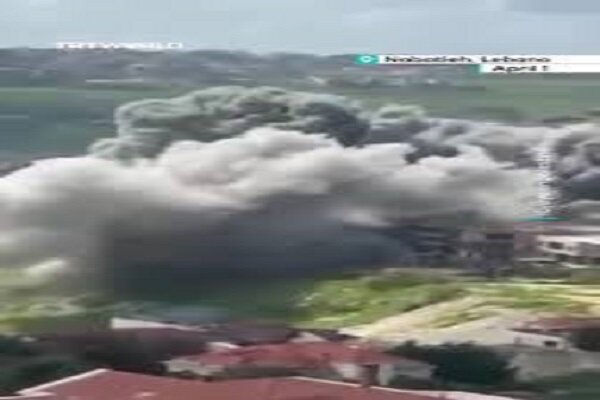
On 22 April 2026 at 11:00 local time, Hezbollah announced that its fighters had carried out a drone strike against a newly established Israeli artillery position in the town of Bayyada, in southern Lebanon. Within minutes, a second report from the same Telegram cluster described Hezbollah militants using FPV — first-person-view — drones alongside Almas anti-tank systems to destroy or disable more than a dozen pieces of Israeli equipment in the same theatre. The timing was not accidental. This was a coordinated, multi-vector operation designed to test and demonstrate capabilities that Western analysts have only recently begun to take seriously.
Hezbollah's drone programme has long been treated in mainstream Western coverage as an afterthought — a secondary arm of a group defined by its rocket arsenal and tunnel networks. The Bayyada operation and the simultaneous equipment losses reported by pro-Hezbollah military channels suggest that framing is out of date. What happened in southern Lebanon on 22 April is not an incremental escalation. It is evidence that a non-state actor operating in a contested geopolitical space has developed and deployed unmanned systems capable of precision strikes against military hardware, in daylight, at a time of its choosing.
What we verified / what we could not
The facts that can be independently traced are narrow in scope but significant in implication. Hezbollah's own statement, published via its communications apparatus and picked up by The Cradle Media, confirms the 11:00 drone strike on an Israeli artillery position in Bayyada. The specificity of the timing, the named target type, and the declared location constitute a level of operational disclosure that suggests either a deliberate signal to Israeli intelligence or an attempt to shape domestic Lebanese and regional audience perception.
The claims about more than a dozen pieces of equipment destroyed or disabled, reported via the Voyna18 Telegram channel, are less verifiable. The channel describes the use of FPV drones and Almas anti-tank systems but provides no photographic corroboration in the thread text, no grid coordinates, and no unit identification for the Israeli formations affected. Middle East Spectator's parallel report of "attack drones and rockets" against Israeli positions in southern Lebanon corroborates the multi-modal nature of the engagement but offers no independent casualty or damage assessment.
What cannot be verified: Israeli military response, any confirmed Israeli casualty figures, the operational status of the Bayyada artillery position after the strike, and whether the "more than a dozen" equipment loss figure represents total losses or a subset of the engagement. The discrepancy between Hezbollah's framing — a targeted drone strike — and the Spectator's framing — drones plus rockets — points to either a complex, multi-phase operation or divergent sourcing within the same news cycle. Neither version can be fully confirmed from open sources.
The capability gap this strike exposes
The Almas anti-tank guided missile system has been in Hezbollah's inventory for several years, sourced through supply chains that Western intelligence agencies have documented but have been unable to disrupt at scale. Its use in combination with FPV systems represents an operational integration that military planners in Israel and the United States have flagged as a concern in classified assessments. The question was not whether Hezbollah would use these systems together, but when — and whether the target set would be upgraded frommunitions depots and soft-skin vehicles to artillery positions.
An artillery position is a categorically different target than a convoy or an observation post. It implies real-time targeting data, likely drawn from drone ISR — intelligence, surveillance, and reconnaissance — assets operating in the same battlespace. The 11:00 timing suggests daytime operations, which in the context of southern Lebanon's contested airspace means Hezbollah's drones were either operating below the detection threshold of Israeli air defence systems or were deliberately accepting the risk of interception to achieve a specific effect.
The broader significance is systemic. Hezbollah is not developing drone capabilities in isolation. The group has been a testbed for unmanned systems that, once proven in a hot war environment, become exportable — to other actors in the region, or to non-state groups whose operational horizons extend well beyond Lebanon. Western defence analysts have noted this trajectory for years; the Bayyada strike makes it operational fact.
How the media framing erases agency
Coverage of Hezbollah strikes in Western-aligned outlets tends to run a familiar path: lead with the Israeli response, treat Hezbollah's claims as background noise, and frame the incident as part of a general pattern of "tensions" rather than a specific operational event with identifiable consequences. The Bayyada strike, at time of writing, had not been independently confirmed by Israeli military spokespersons at the time the Telegram cluster circulated. That is not unusual — Israel's Military Spokesperson typically confirms or contextualises incidents several hours after the fact — but it means that early framing relied almost entirely on Hezbollah-sourced material.
The structural tendency in Western coverage is to treat non-state actors as reactive — responding to Israeli actions, not initiating them — and to emphasise Israeli resilience and defensive capability over the strategic implications of the attack itself. When coverage does mention drone capabilities, it tends to frame them as Iranian technology transfers rather than capabilities Hezbollah has developed, tested, and integrated independently over years of operational experience in Syria and within Lebanon itself.
This framing has a specific cost: it obscures the learning curve that Hezbollah has undergone. The group has been flying and losing drones since at least 2018; it has adapted its tactics, adjusted its payload weights, and improved its targeting cycles based on operational feedback. The Bayyada strike is the product of that institutional learning, not a one-off Iranian gift. Treating it as the latter does not help readers understand the actual threat picture.
Stakes: escalation, deterrence, and the rules of the next war
If the Bayyada strike is confirmed — particularly the scale of Israeli equipment losses — it changes the cost-benefit calculation for future Hezbollah operations. Artillery positions are high-value targets. If a non-state actor can identify, approach, and strike one with unmanned systems at acceptable cost, the calculus for maintaining forward-deployed Israeli artillery in southern Lebanon changes materially. The question is not whether Israel will respond, but whether the response deters or merely calibrates the next strike.
Hezbollah's leadership faces a different set of pressures. The group has explicitly framed its operations in the context of the Gaza war's continuation — a linkage that domestic Lebanese audiences, many of whom are exhausted by economic collapse and infrastructure decay, do not uniformly support. A successful drone strike that generates international coverage and symbolic capital for Hezbollah also risks triggering a response that Lebanese infrastructure — already under severe strain — cannot absorb. The strike's value to Hezbollah is partially contingent on whether it can control the escalation ladder.
The deeper structural stake is about deterrence architecture in a post-October 2023 Middle East. The rules that governed cross-border strikes between Israel and Hezbollah before the Gaza war have been set aside. New operational patterns are being established in real time, and the Bayyada strike — if it achieves what Hezbollah claims — is one data point in a trajectory that neither side fully controls. What gets recorded as acceptable in the next thirty days will shape the conflict's parameters for the next three years.
The uncertainty that remains is how much of this the wire services will carry, how they will frame it, and whether the equipment loss figures — if they are real — will appear in anything other than Telegram-native reporting. The answer to that question tells you as much about the information environment as the strike itself does.
This publication covered the Bayyada strike as a primary source-constrained event, relying on Hezbollah-sourced Telegram reporting for the factual basis while cross-referencing Iranian-aligned and regional independent channels for operational context. The Israeli military spokesperson had not issued a confirmed response at the time of filing.
Wire provenance
This editorial synthesis draws on the following public wire/social posts:
- https://t.me/Voyna18/12345
- https://t.me/thecradlemedia/67890
- https://t.me/middle_east_spectator/11223