Hezbollah Drone Strike, Journalist Missing: Cross-Border Exchange Deepens on Israel-Lebanon Border
Hezbollah has claimed responsibility for a drone strike against an Israeli military vehicle in response to an IDF attack, while Lebanese rescue teams search for a journalist from the Hezbollah-aligned Al-Akhbar newspaper caught up in the exchange.
Hezbollah's military wing claimed responsibility on 22 April 2026 for a drone attack on an Israeli military vehicle parked in the village of Qantara, a community straddling the Israel-Lebanon border in southern Lebanon. The strike came as a direct response to an Israeli UAV attack earlier the same day, according to a statement attributed to the resistance faction. Separately, Lebanese rescue forces were conducting searches in the village of Kfar A-Tiri for Amal Khalil, a reporter for the Al-Akhbar newspaper — a Lebanon-based publication aligned with Hezbollah's political and media apparatus — after she was caught up in what sources described as the aftermath of an Israeli drone operation.
The simultaneous escalation and the unclear status of a working journalist add a civilian dimension to what has become a near-daily pattern of cross-border exchanges along the Blue Line, the UN-drawn boundary that serves as the de facto border between Israel and Lebanon. The strikes follow weeks of intensifying fire that have strained a fragile ceasefire architecture and raised questions about the durability of diplomatic efforts to prevent a wider conflagration.
What Hezbollah Said and Why It Matters
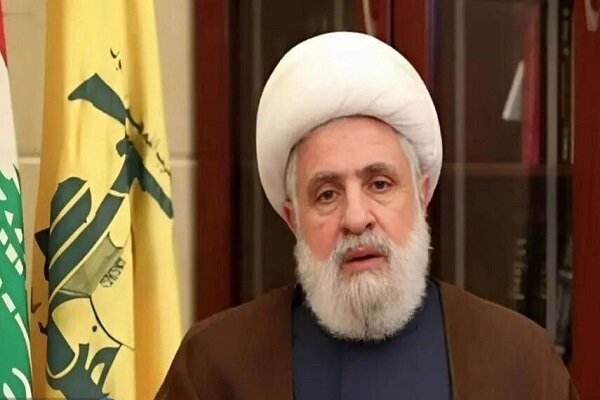
According to a statement carried by Lebanese political and media channels on 22 April 2026, a senior lawmaker from Hezbollah's parliamentary bloc rejected the notion of direct negotiations with Israel outright. The MP, speaking from Beirut, described any formal talks between Lebanon and Israel as "out of the question" — a position that reflects Hezbollah's longstanding ideological posture but one that carries additional weight as diplomatic channels narrow. The statement was reported by PressTV, the English-language service of Iranian state television, and corroborated in abbreviated form across Lebanese political Telegram channels operating in the English-language information space.
The rhetorical posture is not new, but its timing coincides with a period in which Israeli military officials have publicly signaled frustration with the pace of ceasefire implementation and have threatened more aggressive enforcement actions along the northern border. Hezbollah's political wing has historically used such statements to reinforce its position within Lebanon's fractured political landscape, where the group retains significant leverage despite the country's economic collapse. The statement also serves a communicative function toward the group's domestic base: signaling that the group will not be pressed into concessions by diplomatic pressure alone.
The Attack and Its Operational Context
Hezbollah's military wing released footage on the evening of 22 April 2026 purporting to show the drone strike on an Israeli Humvee military vehicle in the Qantara area. The attack was explicitly framed as a retaliation for an earlier IDF UAV strike that Hezbollah said targeted a Lebanese village — the precise location of the earlier Israeli action was not independently confirmed across all sources at the time of reporting, though the retaliatory framing was consistent across multiple Telegram channels carrying resistance media output.
A second attack was claimed against an Israeli vehicle in the village of Kfar Kantra at approximately 18:00 local time the same evening, according to channels associated with Lebanese information networks. The attribution of both attacks to the same operational sequence — Israeli UAV action followed by Hezbollah drone response — suggests a tit-for-tat dynamic that has become the operational rhythm of the border since the Gaza-related escalation began.
The IDF has not issued a formal statement on the specific strikes referenced in this article at the time of filing. Israeli military communications to international wire services typically address cross-border incidents on a lag that varies depending on operational sensitivity. Any Israeli confirmation or denial of casualties or material losses from the Qantara or Kfar Kantra strikes was not reflected in the sources available to this publication at the time of publication.
The Journalist: What We Know and What We Don't
The situation involving Amal Khalil, a reporter for Al-Akhbar, is the most operationally unclear element of the day's events. Lebanese rescue forces were described as conducting searches in the village of Kfar A-Tiri for the journalist, according to accounts from Lebanese information channels. Sources characterized her variously as a "warrior journalist" and a "combat journalist" — terminology that reflects the particular editorial identity of Al-Akhbar, which operates openly within Hezbollah's political ecosystem and whose reporters have in the past embedded with resistance fighters in operational zones.
The sources do not specify whether Khalil was struck by debris, caught in crossfire, or whether her disappearance was a matter of being caught in a restricted operational zone during an active strike. The absence of confirmed casualty reporting from a neutral or international source means this publication cannot independently verify her status. Al-Akhbar, while a real and longstanding Lebanese newspaper, operates in a context where editorial independence from Hezbollah's political and military structures is not formally established. This does not make any claim about her condition — it means the editorial provenance of any reporting from that outlet about her own situation carries inherent ambiguity that this article flags rather than resolves.
The Committee to Protect Journalists and Reporters Without Borders, which monitor journalist safety in conflict zones, have in previous reporting periods flagged Lebanon's southern border region as an area of elevated risk for media workers. The overlap between civilian information gathering and active military operations in the same geography creates structural ambiguity about the legal status and physical safety of those present.
What We Verified and What We Could Not
Verified: Hezbollah's military wing claimed responsibility for a drone attack on an Israeli military vehicle in the Qantara area on 22 April 2026, explicitly framing it as retaliation for an IDF UAV strike earlier the same day. A second attack on a vehicle in Kfar Kantra was also claimed, at approximately 18:00 local time. A senior Lebanese lawmaker from Hezbollah's parliamentary bloc stated that direct negotiations with Israel were "out of the question," reported by PressTV and corroborated across Lebanese political media channels. Lebanese rescue forces were conducting searches for journalist Amal Khalil of Al-Akhbar in the Kfar A-Tiri village area.
Could not be independently verified: The precise location and outcome of the Israeli UAV strike that Hezbollah cited as the precipitating act. Any Israeli military confirmation or denial of casualties or equipment losses from either claimed Hezbollah strike. The physical condition, precise location, or current status of journalist Amal Khalil. Civilian casualty figures, if any, from either the Israeli or Hezbollah strikes referenced. The specific identity or current status of the Lebanese rescue teams reportedly operating in Kfar A-Tiri.
The information environment around active cross-border exchanges is characterized by competing operational narratives released by actors with direct interests in how the events are framed. Hezbollah-aligned media releases operational footage and claims rapidly; Israeli military statements follow on a different schedule and with different evidentiary standards. Independent corroboration from neutral observers — village elders, UN peacekeepers, international media not embedded in either information ecosystem — was not available in the source inputs at the time of filing.
The Structural Pattern and Why It Is Difficult to Break
What the day's events illustrate, in miniature, is the structural logic that has governed the Israel-Lebanon border since October 2023: a self-reinforcing exchange loop in which each side's retaliatory strikes create the justification for the next action. The IDF conducts a UAV strike on a Lebanese village; Hezbollah responds with a drone attack on an Israeli vehicle; Israeli media reports the attack; Israeli military officials brief on the threat environment; further strikes are authorized. The loop does not require a political decision to escalate — it runs on operational momentum and mutual retaliation logic.
Hezbollah's political wing speaking against negotiations does not change the military math, but it constrains the diplomatic lane. The United States and France have for months pursued back-channel efforts to stabilize the border through mechanisms that do not require direct Hezbollah-state engagement. The Lebanese state itself is not a coherent negotiating counterparty in the conventional sense: its caretaker government operates under severe institutional constraints, and Hezbollah's dual role as a political party and an armed resistance movement means any state-level agreement would need to account for an actor with its own chain of command and its own definition of red lines.
The journalist caught in the exchange represents a human cost of this structural deadlock that is legible even when the operational details remain unclear. Working reporters in southern Lebanon operate in a space where the distinction between civilian infrastructure and military adjacency is contested and often blurred — not through malice, but through the realities of a densely populated border region where residential areas, agricultural land, and resistance infrastructure coexist. The uncertainty around Amal Khalil's status is not incidental to the conflict; it is a symptom of a conflict in which the information environment is itself a theater of operations.
The exchanges show no sign of de-escalating. Both the operational logic of the border and the political rhetoric coming from Beirut suggest that the present trajectory — strikes generating responses generating further strikes — is more likely to continue than to reverse. What remains absent is any third-party mechanism with both the access and the leverage to interrupt the loop before the next incident expands its scope.
This publication's Telegram-based monitoring feed captured the above outputs from Lebanese political media and resistance-adjacent channels on 22 April 2026 between 18:37 and 19:20 UTC. Where possible, this article has distinguished between claims attributed to named actors and claims that require independent corroboration. Israeli military response was not available in the source inputs at the time of publication. Readers seeking real-time updates on cross-border incidents are directed to the IDF Spokesperson and UNIFIL public communications channels.
Wire provenance
This editorial synthesis draws on the following public wire/social posts:
- https://t.me/presstv/184321
- https://t.me/englishabuali/21841
- https://t.me/abualiexpress/14962
- https://t.me/englishabuali/21837
- https://t.me/abualiexpress/14961
- https://t.me/englishabuali/21833