Hezbollah Conducts Wave of Drone Strikes Against IDF Positions in Southern Lebanon
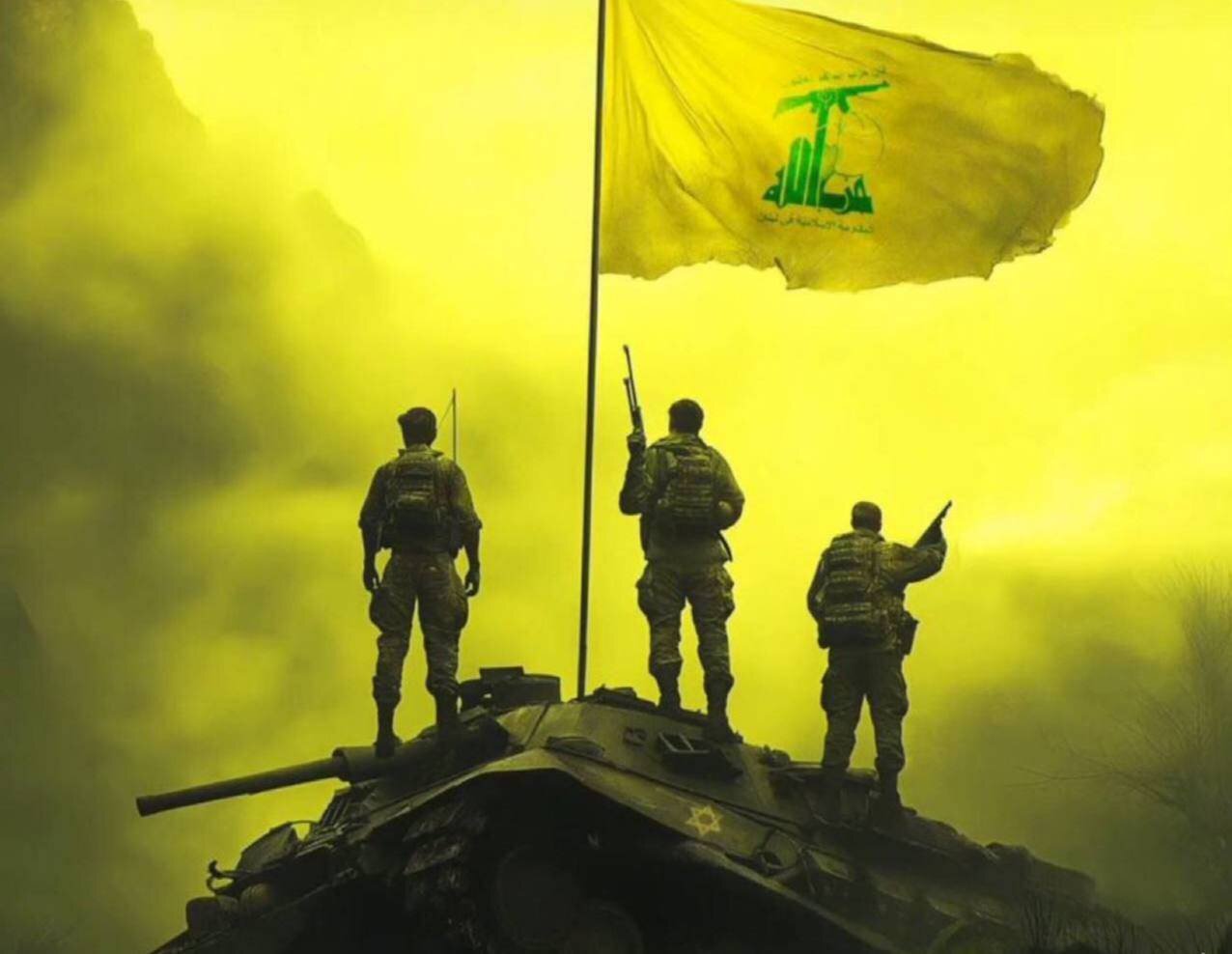
Hezbollah carried out a concentrated wave of drone attacks against Israeli Defence Forces positions along the southern Lebanon border on 22 April 2026, according to statements from the group and independent OSINT monitoring of the thread. The operations — spanning at least four separate locations — included the downing of Israeli surveillance drones, a direct strike on a Merkava tank, and attacks on a military vehicle and a gathering of soldiers. The IDF confirmed that its troops had identified vehicles departing a Hezbollah-linked military structure and approaching the Forward Defence Line, though it offered no substantive public response to the broader strikes at the time of writing.
The attacks represent the most significant escalation along the Lebanon-Israel frontier since the most recent ceasefire framework took effect, and they arrive at a moment of acute fragility in efforts to extend the Gaza ceasefire. Hezbollah's statements frame every operation as a retaliatory measure against what it describes as Israeli ceasefire violations — a contention the Israeli government had not publicly addressed by 22:00 UTC.
A Pattern of Escalation
The sequence of events on 22 April began with Hezbollah announcing it had shot down four Israeli reconnaissance drones over al-Mansoori settlement, citing Israeli ceasefire violations as justification. Within the same hour, the group reported an attack on an Israeli artillery position in the town of Al-Bayada using a drone — footage of which it subsequently released. Shortly afterwards, Hezbollah published a video appearing to show a first-person-view drone directly striking an Israeli Merkava tank in Biyada, another southern Lebanon town. Within minutes of each other, additional statements confirmed an attack on a military Humvee and a suicide drone strike targeting a gathering of Israeli soldiers, both in Qantara.
The releases were coordinated in their timing and broad in their geographic spread, suggesting a deliberate effort to present Hezbollah's response as systematic rather than opportunistic. The Merkava tank footage, in particular, carries tactical and symbolic weight: a direct hit on one of the IDF's primary frontline armoured platforms, broadcast in high definition, is designed for an audience that extends well beyond the theatre of operations.
The IDF confirmed, in parallel, that its troops had identified two vehicles that had departed from a Hezbollah-linked military structure and crossed the Forward Defense Line, approaching Israeli forces. That detail — that Hezbollah-linked vehicles were moving outward from Lebanese territory toward the demarcation line — is consistent with the group's stated offensive posture in its retaliatory operations.
Israeli Silence and the Ceasefire's Fraying Edge
What is notable about the Israeli response is its absence. The IDF acknowledged the vehicle-incursion detail but did not, by the end of the reporting window, issue any substantive statement on the drone strikes or the tank hit. Tel Aviv has historically responded to strikes of this magnitude within hours. The relative quiet from official Israeli channels does not signal de-escalation so much as it suggests either a deliberate policy decision to avoid reciprocal escalation while Gaza negotiations continue, or an intelligence assessment that the strikes caused insufficient material damage to warrant a tit-for-tat response.
Neither interpretation is flattering to the ceasefire's stability. The mechanism that is supposed to prevent precisely this kind of tit-for-tat exchange — a monitored, enforced cessation — appears to be operating without the restraint it was designed to produce. Hezbollah is not acting unilaterally and then waiting for an Israeli reaction; it is announcing each operation as it happens, apparently in an effort to document a pattern it can later present as justified.
The Gaza Complication
The timing of the strikes is inseparable from the broader Gaza trajectory. Negotiations over a second-phase ceasefire — one that would address the permanent disposition of forces and hostages — have stalled repeatedly in recent weeks. The parameters that govern the Lebanon frontier are distinct from those governing Gaza, but the political logic is shared: both sides have demonstrated willingness to test the limits of restraint when domestic pressure or tactical advantage makes escalation attractive.
Hezbollah's framing — that every strike is a proportional response to a violation — is designed to occupy exactly the legalistic space that ceasefire monitoring bodies occupy. Whether that framing corresponds to reality on the ground is difficult to verify independently from open sources alone. The IDF has not published its own catalogue of alleged ceasefire violations, which would be the logical counterweight to Hezbollah's claims. Without that counterweight, the public record is, for now, Hezbollah's version of events.
What Remains Uncertain
Several dimensions of Tuesday's events cannot yet be independently confirmed. The exact damage caused by each strike — whether the Merkava was destroyed or only damaged, whether there were casualties from the Qantara strike — is not verifiable from open sources. Hezbollah's footage has not been independently geolocated and authenticated by a neutral third party at time of publication, though the video's internal consistency with known geography of southern Lebanon has been noted by OSINT analysts monitoring the thread. The IDF has not released casualty figures or equipment-loss assessments. Whether Tel Aviv's silence reflects a measured strategic pause or an internal deliberation over response options is not yet visible from the public record.
The sources do not specify the model or origin of the drones used in each operation, nor do they establish whether the Israeli surveillance drones brought down were crewed or autonomous systems. Hezbollah's statements attribute each operation to a specific location and weapon type, but independent confirmation of those details would require access to the IDF's own operational logs or third-party aerial imagery that is not yet publicly available.
What is clear is that the ceasefire on the Lebanon frontier — never robust — is under significant stress. Hezbollah has demonstrated a capacity for coordinated, multi-axis drone operations that it has not previously deployed at this tempo. The IDF's muted response suggests a degree of deliberate restraint, but restraint without a stated rationale is indistinguishable from indecision. The coming forty-eight hours will determine whether Tuesday's strikes remain a discrete episode or become the opening phase of something larger.
Wire provenance
This editorial synthesis draws on the following public wire/social posts:
- https://t.me/alalamfa/3142
- https://t.me/AMK_Mapping/8911
- https://t.me/rnintel/7762
- https://t.me/Middle_East_Spectator/5589
- https://t.me/Middle_East_Spectator/5590
- https://t.me/wfwitness/4421