Hormuz Closure Forces Global Oil Trade Into Historic Rerouting
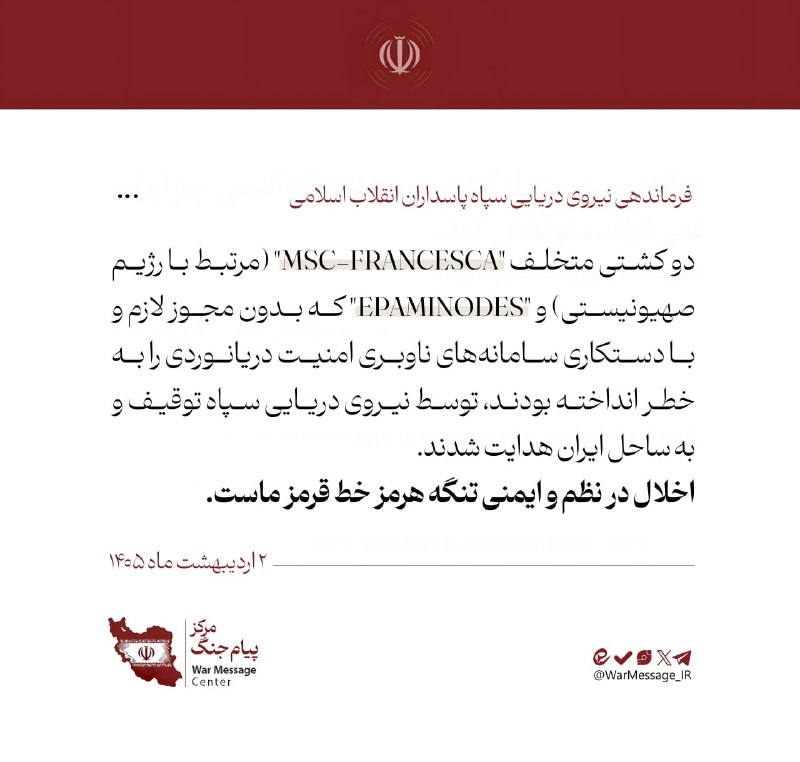
The world's most critical oil artery has been severed — and the consequences are radiating outward faster than most energy models predicted.
The closure of the Strait of Hormuz, reported across wire services on 22 April 2026, has forced a fundamental restructuring of global petroleum commerce. Asian buyers — long dependent on Middle Eastern crude flowing through the narrow Persian Gulf channel — have pivoted sharply toward exports from the Gulf of Mexico, according to Financial Times coverage of the developing situation. The shift has in turn driven a pronounced increase in traffic through the Panama Canal, a waterway already operating near capacity after years of drought-related restrictions and subsequent rehabilitation.
The Strait of Hormuz handles roughly one-fifth of the world's daily petroleum trade. Its closure — regardless of the political circumstances that produced it — removes a volume of throughput that cannot be absorbed by any single alternative corridor. The logistics of rerouting that volume are now the dominant story in global energy markets.
The Logistics of Rerouting
Tankers that previously transited Hormuz to reach refineries in Japan, South Korea, and China's eastern seaboard now face a choice with no clean answer. The Cape of Good Hope route adds roughly two weeks of sailing time and significant fuel costs. The alternatives — increased draws from the U.S. Strategic Petroleum Reserve, faster depletion of West African offshore fields, or accelerated production from Gulf of Mexico deepwater rigs — each carry their own bottlenecks.
Asian buyers have turned to crude oil exported from the Gulf of Mexico as a primary substitute, according to the Financial Times reporting. That pivot is not merely a matter of redirecting tanker contracts; it requires renegotiating the grade specifications refineries were designed to process. Gulf crudes like Mars and Southern Green Canyon carry different sulfur profiles and API gravity than the Basra Light or Murban grades that Asian refiners have optimized for. The transition is technically feasible but costly, both in adaptation downtime and in the price premiums now attaching to available Gulf of Mexico cargoes.
Traffic in the Panama Canal has intensified as this rerouting has taken shape. The canal, which handles roughly 40 percent of U.S.-Asia container trade under normal conditions, has become a critical bottleneck for oil tanker traffic that previously had no reason to transit it. Canal authorities have been managing increased demand since the first reports of Hormuz disruption emerged, but the scale of the current shift is testing those capacity limits in real time.
The Panama Canal Under Pressure
The canal's recovery from the 2023-2024 drought — which drove vessel draft restrictions and a months-long backlog — is a matter of record. Transit numbers had returned to near-normal levels by late 2025. What the current situation is exposing is that "normal" volumes were already a strained ceiling for the Asia-Pacific trade flows the Hormuz closure has redirected northward.
The canal's commercial managers face a scheduling problem with no elegant solution. Oil tankers are among the largest vessels in the global fleet, and the canal's lock system imposes strict dimensional limits. Routing a significant share of Asia-bound crude through Panama means displacing other cargo — container ships, bulk carriers, liquefied natural gas vessels — that would normally claim those transit slots. The queue dynamics are nonlinear: a 10 percent increase in tanker requests does not produce a 10 percent increase in throughput. It produces a queue.
The immediate winners in this realignment are U.S. Gulf Coast producers, whose offtake options have multiplied overnight. The immediate losers are refiners in South and Southeast Asia who face longer lead times, higher freight costs, and the technical expense of adjusting processing runs. The longer-run losers — and this is where the structural analysis becomes harder to avoid — are the energy consumers in import-dependent nations who have no leverage over the corridors their supply chains require.
The Structural Reckoning
The Hormuz closure is an acute shock, but it is landing atop longer-run shifts that the global energy architecture has not adequately processed. The concentration of petroleum transit through a handful of strategic chokepoints — Hormuz, Suez, Panama, Malacca — has been a known vulnerability for decades. The policy response to that vulnerability has been, in the main, to assume it would remain theoretical.
The current disruption exposes the gap between that assumption and the reality of a world in which geopolitical fault lines increasingly intersect with physical infrastructure. Energy security, as a concept, has been debated in conference rooms for years. The rerouting of oil tanker traffic in real time is what it looks like when the theoretical becomes the operational.
There is a counter-argument worth surfacing: some analysts had anticipated precisely this kind of chokepoint crisis, and the market's ability to find substitutes — Gulf of Mexico crude, West African offshore, expanded Arctic routing — demonstrates the resilience of the global trading system. This publication's assessment is that such resilience is real but unevenly distributed. The nations with the most to lose from corridor disruption are also the nations with the least capacity to absorb price spikes and logistics premiums. The market finds a solution; it does not guarantee that the solution serves everyone equally.
What Remains Uncertain
The sources reviewed for this article do not specify the political circumstances that produced the Hormuz closure, nor do they establish a timeline for potential reopening. The Financial Times reporting, drawn from the Telegram wire dispatches of 22 April 2026, addresses the logistics and market effects but not the diplomatic context. The structural consequences for Persian Gulf producing states — revenue interruption, export infrastructure idle costs, reputational risk among buyers — are material but not yet quantifiable from open sources.
What is measurable is the rerouting itself: the pivot toward Gulf of Mexico crude, the strain on Panama Canal scheduling, the price premiums now attaching to substitute supply routes. These are first-order facts. The second-order effects — on inflation in import-dependent economies, on U.S. energy export policy, on the political calculus of the parties whose actions precipitated the closure — will take longer to assess and will depend on variables the current wire coverage does not yet address.
The Strait of Hormuz closure is a stress test for the global energy order. The results are still coming in.
This publication covered the Hormuz disruption as a logistics and market story rather than a geopolitical attribution piece. The Telegram-sourced wire dispatches focused on trade flow effects; coverage of the closure's political causes was not available in the sources reviewed.
Wire provenance
This editorial synthesis draws on the following public wire/social posts:
- https://t.me/alalamfa/45632
- https://t.me/tasnimnews_en/78941
- https://t.me/farsna/234891