Iran and Afghanistan Hold Diplomatic Call as Regional Architecture Shifts
Iran's Foreign Minister spoke with his Afghan counterpart on 22 April 2026, in what Tehran framed as routine consultation — but the timing places it against a backdrop of widening instability across the wider region.
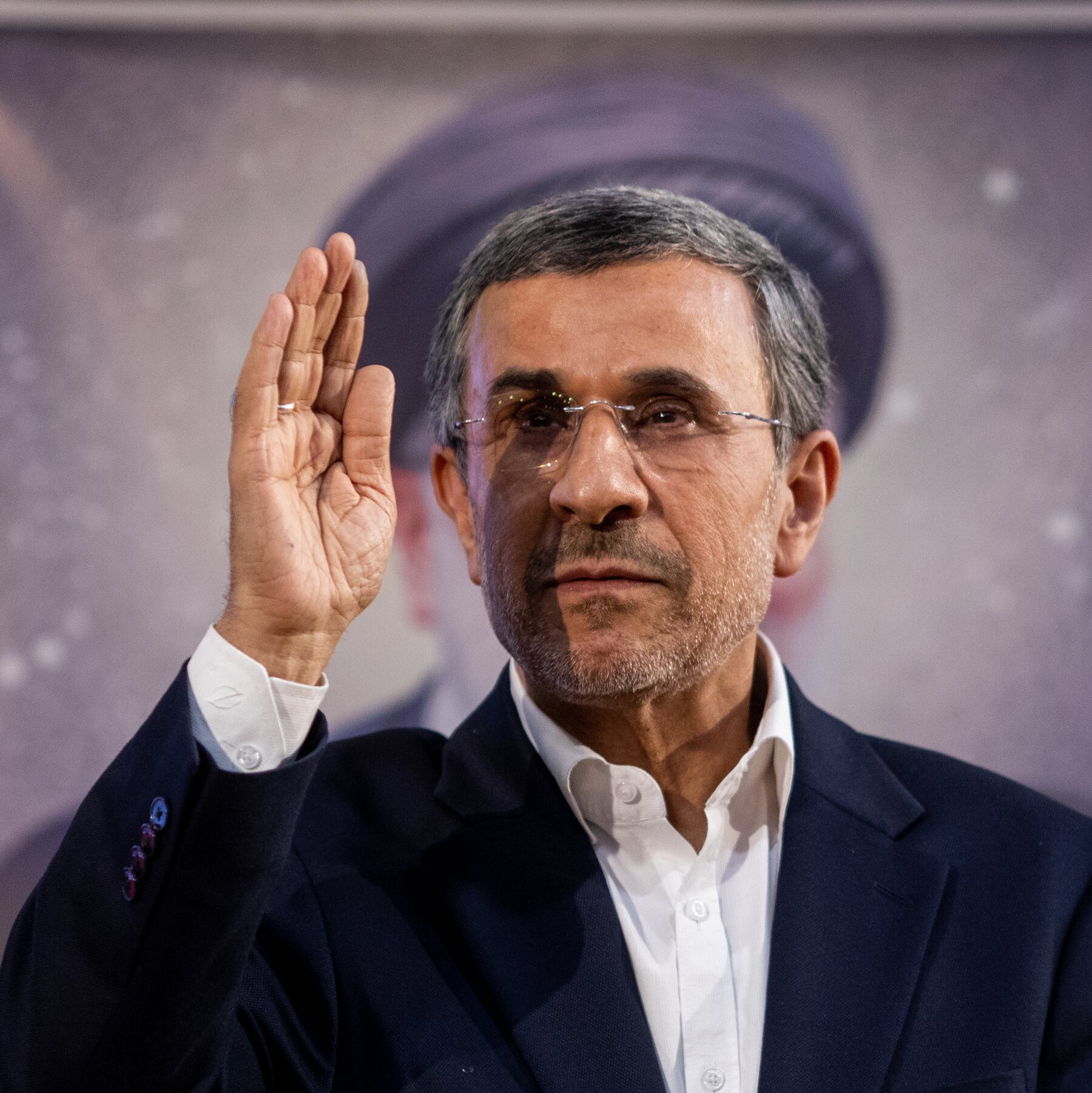
Iran's Foreign Minister held a telephone conversation with his Afghan counterpart on the morning of 22 April 2026, according to Iranian state media. Seyed Abbas Araghchi and Amir Khan Motaghi discussed what Tehran's diplomatic channels described only as "the latest regional developments" — language that, while formulaic, arrives at a moment when the strategic environment surrounding both countries is anything but routine.
The call, confirmed across multiple Iranian wire services including Fars News, Tasnim News, and Mehr News, was presented by the Iranian Foreign Ministry as a continuation of Araghchi's broader consultation programme with regional counterparts. No joint statement was published by either side by the time of filing.
The diplomatic exchange sits within a context of intensifying geopolitical realignment across the broader region. Iran has been navigating a complex web of pressures — ongoing sanctions, nuclear programme tensions with Western powers, and an escalating security environment along several of its borders. Afghanistan, under Taliban administration since 2021, occupies a sensitive position in Iran's eastern calculus, sharing a long and contested border. Afghan transit routes, water-sharing arrangements, and the presence of refugee populations inside Iran are recurring friction points between the two governments.
What the sources do not specify is what specific regional developments occupied the agenda. Iranian state media's description — "the latest regional developments" — is a standard diplomatic placeholder that reveals little. The absence of detail leaves considerable interpretive space: the conversation could have ranged from shared concerns about terrorist activity near shared borders, to coordination on mutual strategic interests, to more mundane bilateral matters such as consular operations or trade facilitation. Monexus was unable to independently corroborate the substantive content of the call beyond the official framing.
The framing of the exchange in Iranian state media is notable in its tone. Araghchi's consultations are presented as part of an active and deliberate diplomatic programme — a signal, perhaps, of Tehran's intent to position itself as a regional actor engaged in continuous dialogue rather than isolated or reactive. Coverage across multiple state-aligned outlets did not frame the call as a response to any specific provocation, which suggests either that no acute trigger existed or that both sides preferred a low-profile approach.
The structural dynamic here is one that analysts tracking the region have noted with increasing attention: Iran's diplomatic activity along its peripheral neighbourhood has been deliberately sustained, not sporadic. Talks with Afghanistan, with Central Asian states, with regional partners in the Gulf and the wider Middle East, form part of a pattern of sustained engagement that Tehran appears to be treating as a priority even as its relationship with Western powers remains under severe strain.
The stakes are practical as well as symbolic. Afghanistan under Taliban rule is a neighbour Iran cannot choose, and the nature of that relationship — whether it tilts toward cooperation or confrontation on shared security concerns — has direct consequences for populations on both sides of the border. Water rights, refugee movements, and cross-border militant activity are all live issues where ministerial-level communication serves as a pressure-release valve, however limited.
Whether this call produces any follow-on action — a formal agreement, a joint statement, a reciprocal visit — will be a test of whether the consultations were substantive or purely performative. The sources consulted by Monexus do not indicate that either side has scheduled further engagements, though past precedent from similar diplomatic contacts suggests the absence of an announced follow-on does not preclude behind-the-scenes progress.
What remains unclear from the available record is the degree to which both sides entered the call with aligned or divergent objectives. Iranian state media's uniform framing across multiple outlets reflects an editorial discipline consistent with how Tehran's official communications apparatus operates, but it does not give insight into what Afghanistan's priorities were, what concessions — if any — were discussed, or whether the conversation produced any agreement in substance rather than only in spirit.
The call itself is not remarkable as an isolated diplomatic event. What is worth watching is whether it signals a deepening channel between two neighbours whose relationship has not always been easy, and what that implies for the wider web of competing interests across the region.
This publication noted that Western wire services did not carry equivalent reporting on the call at time of filing — a reminder that diplomatic exchanges framed as routine by one capital often receive minimal outside coverage, even when their cumulative weight matters.
Wire provenance
This editorial synthesis draws on the following public wire/social posts:
- https://t.me/FarsNewsInt/18452
- https://t.me/alalamfa/68921
- https://t.me/mehrnews/28491
- https://t.me/tasnimnews_en/31844
- https://t.me/JahanTasnim/42109