Iran's Cultural Heritage Under Reconstruction as Domestic Priorities Shift
Iran's president is pushing to accelerate restoration of damaged cultural and historical sites, while simultaneously reviving a controversial central-neighbourhood urban scheme — a policy mix that reveals competing priorities within the administration.
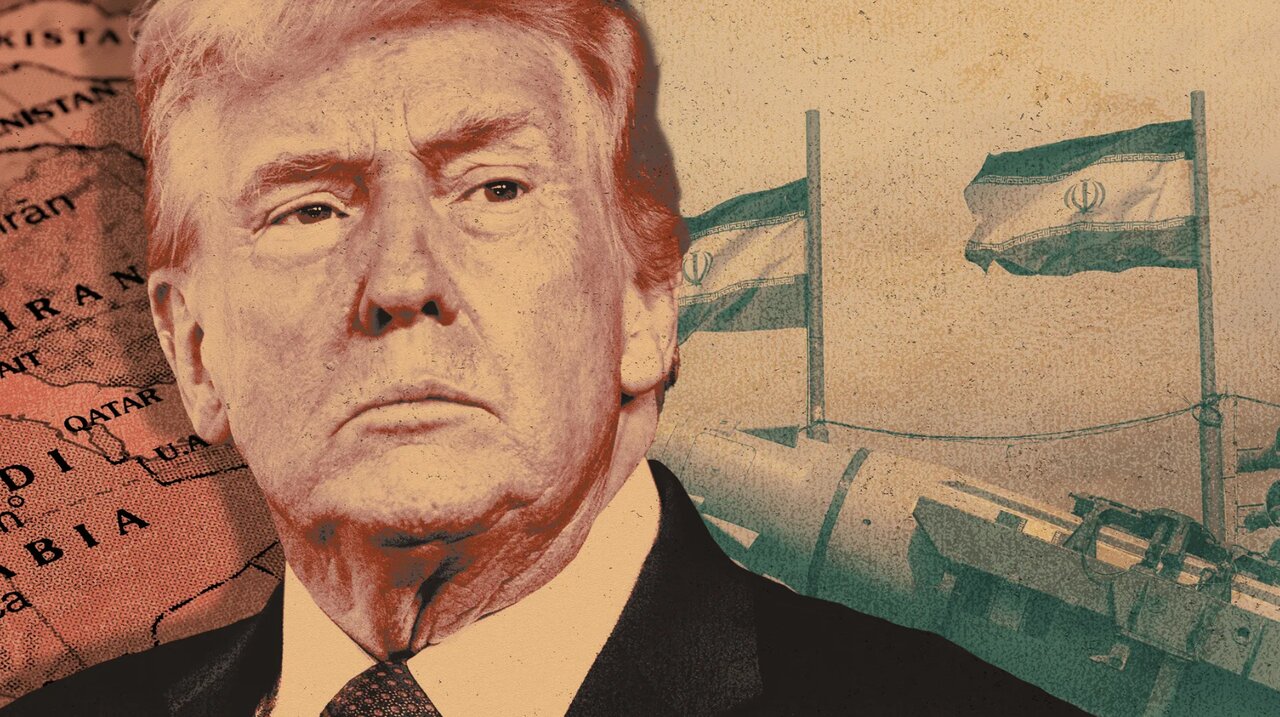
On 22 April 2026, Mehr News reported that Iran's president had directed ministries to accelerate the restoration of damaged cultural and historical heritage sites across the country. Within the same news cycle, the same presidential office signalled renewed emphasis on implementing a so-called "central neighbourhood" urban scheme — an initiative that has previously drawn criticism for displacing lower-income residents in favour of mixed-use redevelopment. The simultaneous ordering of heritage preservation and urban restructuring is not accidental. It reflects an administration navigating between two constituencies: those who view Iran's architectural legacy as a non-negotiable asset, and those who see densification and commercial redevelopment as essential to economic recovery.
The policy pairing exposes a familiar tension in Iranian urban governance — the gap between heritage preservation rhetoric and the mechanics of land redevelopment. Restoration of historical structures requires significant investment and generates goodwill among cultural constituencies and the diaspora. The central-neighbourhood scheme, by contrast, addresses housing supply and municipal revenue questions that the president's economic team is pressing to resolve. That both directives landed in the same day's reporting from the presidential media office suggests coordination rather than coincidence — a deliberate attempt to demonstrate administrative breadth.
The Heritage Dimension
Iran holds one of the deepest inventories of pre-revolutionary and pre-Islamic cultural sites in the Middle East. Restoration efforts have historically moved slowly due to sanctions, budget constraints, and competing demands on public spending. The president's directive, as reported by Mehr News on 22 April, calls for "speeding up" restoration — language that implies prior programmes were moving below the desired pace. What remains unclear from the available sources is which specific sites are prioritised, whether funding commitments accompany the directive, and what enforcement mechanism exists if provincial authorities resist.
Iran's cultural heritage portfolio includes structures damaged during the Iran-Iraq war of the 1980s, sites affected by more recent earthquakes, and monuments that have suffered from decades of deferred maintenance. Accelerating work on these sites would address both domestic political signals — projecting competence and care for national identity — and international positioning, given that UNESCO-listed sites attract tourism revenue and diplomatic goodwill.
The Central-Neighbourhood Controversy
The second directive reported on 22 April concerns the "implementation of the central neighbourhood" — an urban regeneration framework that has surfaced periodically in Iranian planning discourse. The phrase, as used in Iranian municipal policy, typically refers to schemes that consolidate older residential blocks into higher-density mixed-use districts, ostensibly to improve livability while increasing the tax base.
In practice, such schemes have a track record of displacing renters and small businesses that cannot absorb the cost increases that follow redevelopment. Iranian civil society groups and urban-planning advocates have documented cases where "central neighbourhood" labelling served as cover for demolition of working-class housing stock. The president's renewed emphasis on this scheme on 22 April, without apparent reform to displacement protections, drew a pointed response from what Mehr News characterised as a public figure, identified only as Qazii, who was subsequently forced to apologise.
The Qazii apology — also reported by Mehr News on 22 April at 12:39 UTC — suggests internal pressure or public backlash significant enough to compel a retraction. Whether Qazii's original statement concerned the central-neighbourhood scheme directly, or addressed a broader pattern of urban policy, cannot be determined from the available sourcing. What is clear is that the incident registered as noteworthy within the presidential media apparatus and was flagged for coverage.
Reading the Policy Logic
What the two directives share is an interest in demonstrating that the president controls the domestic agenda — that ministries and provincial authorities are receiving unambiguous instruction on multiple fronts simultaneously. The heritage restoration directive appeals to Iran's cultural establishment and the conservative political base that values architectural continuity. The central-neighbourhood scheme addresses economic modernisation advocates within the administration who view urban densification as necessary for fiscal sustainability.
The tension between these two priorities has not been resolved by issuing both directives on the same day. Rather, the sequencing suggests that the president is keeping both constituencies engaged while deferring any explicit reconciliation between preservation and redevelopment goals. Heritage sites that fall within proposed central-neighbourhood zones will eventually test whether the acceleration directive or the implementation directive takes precedence. The Qazii affair indicates that this ambiguity is already generating friction in public discourse.
What Remains Unresolved
The source material — all sourced from Mehr News on 22 April — does not specify which ministries are responsible for implementation, what budget has been allocated for heritage restoration, or what legal protections, if any, exist for residents in central-neighbourhood zones facing redevelopment. The apology incident involving Qazii is documented but its substantive content is not available in the thread context, leaving the nature of the dispute incompletely reconstructed. The absence of independent corroboration from Reuters, BBC Persian, or other wire services means the Monexus desk is relying on a single-source account of the day's events. The pattern of presidential directives landing simultaneously from the same media office warrants attention — but the specifics require confirmation from additional reporting.
Wire provenance
This editorial synthesis draws on the following public wire/social posts:
- https://t.me/mehrnews/123456
- https://t.me/mehrnews/123457
- https://t.me/mehrnews/123458