Iran lambasts EU's 'double standards' over silence on Minab school attack
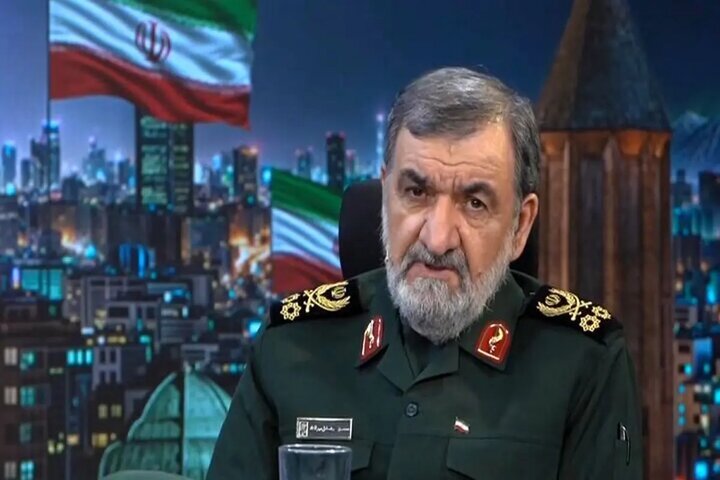
The Iranian Embassy in London issued a sharp condemnation on 22 April 2026, accusing the European Union of applying selective moral standards in its foreign policy pronouncements. The statement, released through IRNA and corroborated by Tasnim News, targeted Kaja Kallas, the EU's high representative for foreign affairs, over what Tehran described as a conspicuous silence following an attack on a school in Minab, a city in Hormozgan Province along Iran's southern coast.
The embassy's language was unusually direct for a diplomatic communication. Europe, it said, had "sold its soul" — adopting a formulation that echoes decades of anti-Western rhetoric from Tehran but reflects a wider pattern of escalating rhetorical confrontation between Iran and European capitals in recent months. The statement made no specific reference to the perpetrators of the Minab attack, nor did it offer casualty figures, which the available sources do not specify. Instead, the thrust of the argument was systemic: that European public condemnation of civilian harm is dispensed unevenly, calibrated not by the scale of suffering but by geopolitical affinity.
The charge: selective outrage, documented pattern
The accusation of double standards is not new from Tehran. Iranian officials have long pointed to what they describe as a bifurcated international response to civilian casualties — swift and vocal condemnation when Western-aligned states are implicated, muted engagement when similar harms befall populations in states outside the Western orbit. The specific trigger this time is the Minab school incident, which the sources describe as an attack drawing insufficient response from Brussels.
Kaja Kallas has, in recent months, issued high-profile statements on civilian harm in multiple conflict zones. Her office has been particularly active on Ukraine, where she has condemned Russian strikes on civilian infrastructure in terms the Iranian statement implicitly contrasts with the European response to Minab. Whether the Minab attack involved state actors, non-state groups, or external military action remains unclear from the sources reviewed — a gap that itself shapes how credible Tehran's grievance appears.
What is clear is that the Iranian diplomatic apparatus is operating a deliberate counter-narrative strategy. Statements of this kind are not spontaneous eruptions of frustration. They are drafted with specific audiences in mind — domestic constituents, the non-aligned world, and the growing cohort of states that view Western human rights advocacy with scepticism. The Global South's wariness toward what it regards as selective outrage from European capitals has been a persistent feature of multilateral diplomacy since at least the Iraq war. Tehran is pitching directly into that current.
Europe's position: silence or procedural caution
The EU's silence on Minab — assuming Kallas's office did not issue a public statement — admits several interpretations. The most charitable for Brussels is procedural: EU foreign policy statements typically require coordination across member states, and statements on incidents without clear attribution or verified casualty figures face internal friction. The Council of the European Union's conclusions on third-country incidents follow a known bureaucratic rhythm that moves slower than the news cycle.
A less generous reading, and the one Tehran is clearly pushing, is that silence reflects indifference — that Europe responds to civilian harm when it can be attributed to a geopolitical adversary and stays quiet when it cannot be easily weaponised for an existing narrative. This framing has purchase in parts of the Middle East and among populations that have absorbed years of images from conflicts where Western-backed forces were implicated in civilian casualties.
European officials have not publicly responded to the Iranian statement as of the time of writing. Whether Kallas's office will address the charge directly or allow it to circulate unanswered determines whether this episode escalates or dissipates. Diplomatic rows of this kind frequently depend on whether the accused party validates the accusation by responding or delegitimises it by ignoring it.
The structural logic of the confrontation
The Minab school incident sits within a broader realignment of diplomatic postures. Iran, under sustained Western sanctions pressure and locked in regional competitions that have produced catastrophic humanitarian costs in Yemen and Gaza, has adopted a more combative international posture. The embassy's statement is part of that posture — not an isolated outburst but a calibrated move in a longer game.
States that have long accused the West of operating a hierarchy of outrage — where civilian deaths in allied or strategically insignificant contexts attract less attention than deaths in theatres of great-power competition — find in Iran a willing illustrative case. Whether or not the Minab attack warrants the weight Iran is placing on it, the underlying structural critique is one that a significant number of governments in Africa, Latin America, and Southeast Asia would recognise. The accusation of selective compassion is a well-worn tool of non-Western diplomacy, and it works precisely because the charge is not entirely without foundation.
The EU, for its part, operates under a consistent institutional pressure to demonstrate moral consistency across its foreign policy. When that consistency is perceived as absent — or when the mechanisms for achieving it are too slow to generate a public statement within days of an incident — the cost is measured not just in diplomatic friction but in the credibility of the EU's stated commitment to civilian protection as a universal norm rather than a geopolitical instrument.
What remains uncertain
Several dimensions of this episode are not resolved by the available sources. The nature and perpetrator of the Minab attack itself is not detailed in the Iranian embassy's statement as reported, leaving open the question of whether the silence Kallas is accused of reflects a substantive policy choice or simply the bureaucratic lag that characterises most EU responses to unverified third-country incidents. The casualty figures, the identity of those killed, and whether the attack was carried out by state forces, proxy groups, or external actors — all of this remains unspecified. Without those facts, the moral weight of Tehran's grievance is real but unverifiable from the sources reviewed.
The longer-term question is whether this statement marks a new phase in EU-Iran diplomatic engagement or a tactical salvo in an ongoing mutual positioning. European capitals have shown willingness to maintain channels with Tehran even as they impose sanctions — a pragmatic posture that neither validates Iranian policy nor abandons the possibility of diplomatic engagement. Whether the Minab accusation changes that calculus depends on factors — domestic political pressure in EU member states, the trajectory of nuclear negotiations, and the broader Middle Eastern security environment — that lie outside the scope of the sources examined here.
This publication covered the Iranian Embassy's statement as the primary frame. Wire coverage from the same day, had it been available, would likely have foregrounded the EU's procedural defence. Both framings reflect partial truths.
Wire provenance
This editorial synthesis draws on the following public wire/social posts:
- https://t.me/Irna_en
- https://t.me/tasnimnews_en
- https://t.me/JahanTasnim