Iran Seizes Vessels, Deploys Mines as Six-Month Hormuz Clearance Warning Lands in Washington
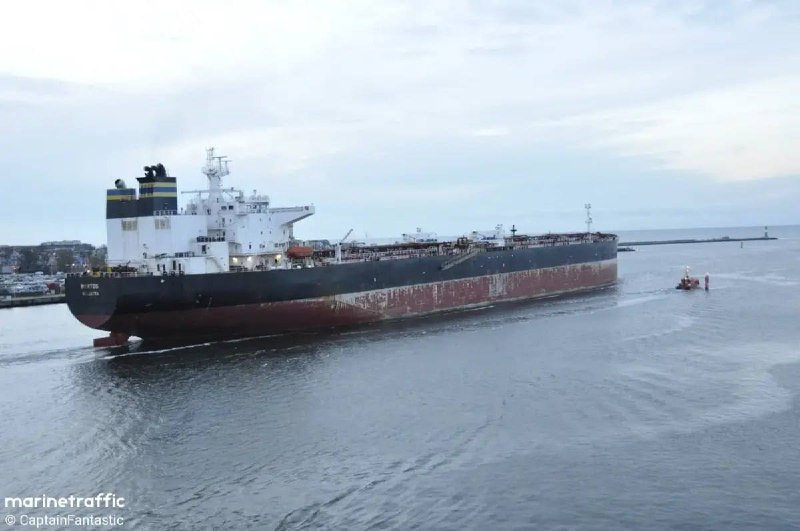
Iranian forces seized two trade vessels inside the Strait of Hormuz on 22 April 2026, according to reports confirmed by multiple wire services and intelligence-focused channels. The Iranian Revolutionary Guard Corps carried out the detention as the Trump administration publicly presented Tehran with a three-to-five-day ceasefire window, after which a deal must be presented or consequences would follow. Separately, the Pentagon informed Congress that clearing Iranian-deployed sea mines from the waterway could take six months — a timeline that would severely complicate any military de-escalation scenario.
The two seizures and the clearance warning landed within hours of each other on Tuesday, injecting fresh volatility into a corridor that carries roughly one-fifth of the world's daily oil shipments. The峔 Strait is also the conduit for liquefied natural gas exports from Qatar, the world's largest LNG producer. Any extended disruption would reverberate through European and Asian energy markets already navigating post-sanctions supply chain reassessment.
Seizures and the Ceasefire Question
The IRGC's detention of the two vessels drew an unexpected response from the White House. President Donald Trump told reporters on 22 April that the ships held by Iran were not American-flagged — a characterisation Tehran has also reinforced through its own state-adjacent channels. Trump also stated that he did not view the seizure as a ceasefire violation, a position that immediately undercut the harder-line posture coming from some Republican legislators in Washington.
The administration's apparent choice to absorb the seizures rather than respond militarily reflects a calculated posture. Engaging Iranian naval assets inside the Hormuz would carry a high risk of triggering the very escalation the ceasefire talks are meant to prevent. It would also place US warships in proximity to a dense minefield — a scenario the Pentagon's own assessment, reported by the Washington Post via multiple intelligence-adjacent channels on the afternoon of 22 April, treats as a six-month engineering problem.
Iran, for its part, has rejected Trump's public claims about halting women executions — a separate humanitarian demand the administration had apparently attempted to leverage as a goodwill gesture from Tehran. Iranian state-adjacent outlets, including Jahan Tasnim, characterised the claims as inaccurate. That dismissal came within hours of the vessel seizures, suggesting Tehran is unwilling to grant Washington the framing victory of presenting the pause as a concession.
The Minefield Assessment
The most structurally significant disclosure of the day was the Pentagon's estimate that clearing the Hormuz of Iranian-deployed mines would require six months of continuous operations. The assessment, confirmed to Congress and first reported via intelligence aggregation channels on 22 April, describes a demining timeline driven by the density of the投放, the prevailing tidal patterns in the strait, and the operational limitations of available mine-countermeasure vessels.
That duration matters for several reasons. First, it means the ceasefire's credibility — and any eventual verification regime — would depend on Iranian cooperation to refrain from seeding additional hazards while talks proceed. Second, it substantially narrows the military options available to the US in the near term. A mine clearance operation of that scale requires sustained infrastructure, logistics chains, and allied participation that cannot be stood up in days. Third, it anchors the negotiating table differently: whoever controls the pace of de-mining controls the timeline for normalised commercial transit.
The峔 geography compounds the problem. The strait at its narrowest is roughly 33 kilometres wide, with a shipping channel only three kilometres wide in the southbound lane. Mine-laying in those chokepoints is a relatively low-cost asymmetric action; clearing them requires expensive, slow, methodical operations. Iran's calculus in deploying them is not difficult to read.
The Uranium Demand and Tehran's Red Lines
Trump also outlined on 22 April what his administration regards as a non-negotiable condition: Iran must hand over its accumulated enriched uranium stockpile. That demand, conveyed through public remarks on the day the seizures occurred, signals the administration is running two parallel tracks — a ceasefire framework on one side, and a disarmament-style precondition on the other — that may not be compatible on the timeline Washington is publicly demanding.
Iran's nuclear programme, which it has consistently framed as a peaceful energy and research effort, has been the subject of multiple international agreements since 2006, most recently the Joint Comprehensive Plan of Action negotiated under the Obama administration and abandoned by the Trump White House in 2018. The current stockpile, accumulated in the years since reimposed sanctions, represents leverage Tehran has historically been reluctant to surrender without broad sanctions relief — a structure the current administration has so far declined to offer in explicit terms.
Whether the three-to-five-day deadline is a genuine ultimatum or a negotiating pressure tactic remains unclear from the available sourcing. What is evident is that Iran's actions — the vessel seizures, the mine deployment, the rejection of the execution-halt framing — suggest Tehran is not treating the window as a concession it must reciprocate, but rather as a status quo it is in no hurry to disturb.
Stakes: Energy Markets, Negotiating Leverage, and Allied Positioning
The峔 Hormuz situation carries distinct risk layers across three domains.
For energy markets: a six-month partial or intermittent disruption to tanker transit would constrain supply to Asian and European buyers at a moment when several are reassessing their Russian energy exposure. Asian buyers — particularly in China, Japan, and South Korea — have significant exposure to Gulf-sourced crude and LNG. Chinese state media and industry commentary have in prior tensions framed US military posturing as a factor that itself elevates price risk, a counter-argument that is structurally coherent even if it is not always presented in those terms.
For the negotiating dynamic: the mine clearance timeline, if accurate, hands Iran a structural advantage in any ceasefire-versus-deal comparison. A ceasefire could hold without resolving the weapons programme. A deal that meets the uranium-surrender condition could unravel if the mine problem remains unresolved and Iran retains the ability to re-seed the channel. The sequence of concessions matters enormously, and the available evidence does not yet clarify which side is willing to concede sequencing.
For allied positioning: Saudi Arabia, the UAE, and Qatar have a direct interest in the strait remaining navigable and in avoiding a US-Iran confrontation that draws their territory into the blast radius. European allies, already contending with a second year of reduced Russian pipeline gas, have limited strategic depth to absorb a Hormuz disruption. That constrains their negotiating posture in the background of any talks.
What remains uncertain from the sourcing is the exact status of the two detained vessels — their flags, crews, and cargo — and whether any diplomatic channels between Washington and Tehran are open that might produce a rapid release. The峔 does not appear in the available sources. The framing from the Trump administration treats the seizures as a non-escalation, at least for now. Whether Iran reads it the same way is the central question for the days ahead.
This article reflects coverage from Polymarket wire alerts, Unusual Whales political wire, and OSINT-focused Telegram channels reporting on the Hormuz situation as of 22 April 2026.
Wire provenance
This editorial synthesis draws on the following public wire/social posts:
- https://x.com/unusual_whales/status/1912789012349878272
- https://x.com/polymarket/status/1912756272349878272
- https://x.com/polymarket/status/1912747345678272
- https://x.com/polymarket/status/1912728905678272
- https://t.me/osintlive/2847
- https://t.me/JahanTasnim/8912