IRGC Navy Seizes Two Container Ships in Strait of Hormuz Escalation
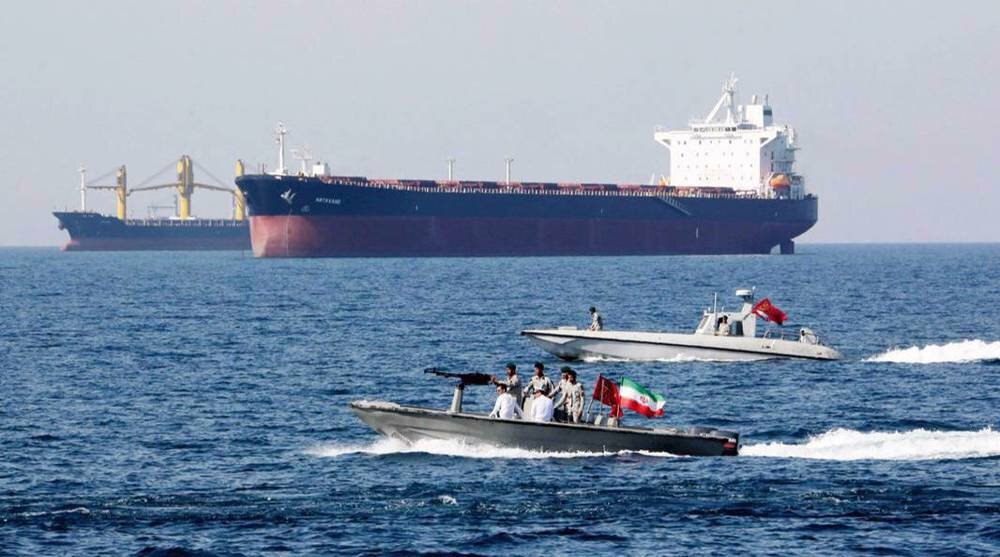
The Islamic Revolutionary Guard Corps Navy released footage on 22 April 2026 showing its forces boarding two container ships in the Strait of Hormuz — the MSC Francesca and the MSC Epaminondas — after what Iranian authorities described as violations of a declared maritime blockade. The videos, verified by open-source analysts tracking regional naval activity, depict armed personnel ascending the vessels by rope and securing the bridges. The MSC Epaminondas, flagged under Liberian registry, was among those intercepted as it attempted to transit the strait, according to footage shared by the IRGC's media arm and corroborated by independent OSINT investigators.
The seizure represents the most visible enforcement action in the Hormuz corridor since a series of incidents in 2019, when Iran downed a US surveillance drone and the US nearly responded militarily. Video evidence of this scale — professionally filmed, intentionally distributed — signals a deliberate communications strategy rather than a tactical incident gone sideways.
Immediate Context: A Blockade Enforced
The footage released by the IRGC Navy shows a planned boarding operation, not an improvised response. Special forces approached both vessels simultaneously in clear weather conditions, suggesting the operation was timed and coordinated. The MSC Epaminondas, flying a Liberian flag but carrying commercial cargo, was intercepted mid-transit. According to reporting by ClashReport and corroborated by multiple regional monitoring channels, the ship had attempted to breach what Tehran describes as a lawful naval enforcement zone.
The language used by Iranian authorities frames the seizures as regulatory action against ships violating designated shipping corridors — a characterization that carries obvious political weight in advance of any international arbitration. For Tehran, the optics of asserting control over a chokepoint that carries roughly 20 percent of global oil output serve purposes beyond the immediate disruption of any single commercial shipment. The blockade posture has been building for months; Tuesday's seizures suggest it is now being actively tested by merchant operators, and answered.
Western shipping analysts who monitor the strait noted that major container lines had so far maintained normal transit patterns despite elevated regional tensions, suggesting the seizures may have caught some operators off guard. The MSC line's exposure — two vessels, within hours — indicates the blockade enforcement is not merely declaratory.
Counter-Narratives: Sovereign Rights vs. International Law
The Iranian framing rests on a claim of legitimate maritime enforcement within what Tehran considers its territorial waters or adjacent exclusive economic zone. This claim is rejected categorically by the United States and most Western navies, which maintain that the Strait of Hormuz is an international waterway subject to unimpeded transit under the UN Convention on the Law of the Sea. Tehran has never ratified UNCLOS but invokes its provisions selectively.
The alternate read — one gaining traction among regional analysts — is that the seizures are a calibrated signal to Washington rather than an independent assertion of naval sovereignty. Iranian decision-making in the current period reflects awareness that the Trump administration, despite maximalist rhetoric on Iran during its first term, ultimately declined to strike Iran after the drone incident and has signaled in recent weeks a desire for diplomatic off-ramps. The seizure of two merchant vessels, with video deliberately released for global distribution, creates a pressure point without crossing the threshold that would force a military response.
That reading has limits. The administration in Washington faces domestic pressure to respond visibly to any challenge to freedom of navigation in a corridor central to global energy markets. Trump's public response — reportedly stating "We get along well with Iran" — will be parsed for whether it signals acceptance or a precursor to escalation. The gap between diplomatic language and operational reality in the Gulf has been wide before.
Structural Frame: Hormuz and the Architecture of Coercive Signaling
The Strait of Hormuz has functioned for decades as a pressure-release valve for Iranian leverage against the broader Western economic order. When sanctions bite hardest, when regional tensions spike, when diplomatic channels narrow — the strait reasserts itself. The logic is simple: any disruption, however temporary, registers immediately in oil markets and insurance premiums, translating into political leverage disproportionate to the naval capability required to threaten transit.
This dynamic sits within a broader pattern of maritime coercion in which the world's most strategically sensitive corridors — the Straits of Malacca, the Suez Canal approach, the Bosporus — become theaters of asymmetric bargaining. The defending power, or the power claiming authority over adjacent waters, can impose costs on global commerce at thresholds well below conventional military engagement. Merchant operators and their insurers are the first-order casualty; the political cost lands on Western governments whose citizens depend on energy and manufactured goods.
For Tehran, the calculus is doubly favorable: it demonstrates the ability to disrupt without the commitment of resources that a sustained naval campaign would require, and it distributes evidence of that capability directly to global audiences through social media channels. The footage released on Tuesday required no Western wire service to reach its audience. The IRGC's own media apparatus ensured worldwide distribution within minutes.
The structural risk is that this logic, once normalized, incentivizes further escalation. Each successful seizure — even one met with sanctions rather than military response — teaches operators in Tehran's navy that the threshold for enforcement is lower than the threshold for retaliation. Over time, that asymmetry erodes the credibility of the freedom-of-navigation norms that Western navies have maintained, at significant expense, since the 1980s.
Stakes and Forward View
The immediate stakes are commercial. Container shipping through Hormuz accounts for a disproportionate share of the world's manufactured goods transit. A sustained blockade — or an escalating cycle of seizures and Western escort missions — would push insurance premiums higher, reroute vessels around the Cape of Good Hope, and add days to supply chains already strained by broader geopolitical fragmentation. Energy markets, still absorbing the aftershocks of sanctions on Russian exports, would face a second supply-side shock in as many years.
The medium-term stakes are diplomatic. Washington is at an inflection point in its Iran posture. The administration's reported preference for negotiation coexists with an installed hardliners' cabinet in Tehran that has consistently interpreted diplomatic overtures as weakness to be exploited. If the current seizures are followed by silence from Washington, Tehran's calculus will shift toward more frequent enforcement. If the response is kinetic — a carrier group's visible presence, the interception of Iranian vessels, direct confrontation — the escalation spiral that both sides have managed to avoid for five years narrows dramatically.
What the sources do not yet establish is whether the seizures reflect a coordinated decision at the senior leadership level in Tehran or an initiative by the IRGC Navy acting on its own operational mandate. Distinguishing between those scenarios matters: the former suggests a negotiating lever deployed deliberately; the latter suggests institutional momentum that may be harder to reverse through diplomatic channels.
Monexus covered this as a deliberate assertion of coercive signaling consistent with Tehran's historical playbook in periods of elevated sanctions pressure. The Western wire framed it primarily as a navigation-freedom incident. The structural frame — one merchant power leveraging a chokepoint against a sanctions coalition — sits between those two reads and, the evidence suggests, is closer to the operating logic on the Iranian side.
This publication will continue monitoring transit disruptions in the Strait of Hormuz and related diplomatic developments.
Wire provenance
This editorial synthesis draws on the following public wire/social posts:
- https://t.me/thecradlemedia
- https://t.me/osintlive
- https://x.com/sprinterpress/status/2047062175726903355
- https://t.me/ClashReport
- https://t.me/Middle_East_Spectator