Iran's IRGC Seizes Two Container Ships in the Strait of Hormuz
The IRGC Navy seized two container vessels in the Strait of Hormuz on 22 April 2026, escalating already elevated tensions between Tehran and Western-aligned maritime interests and raising immediate concerns about global shipping routes that carry roughly a fifth of the world's oil.
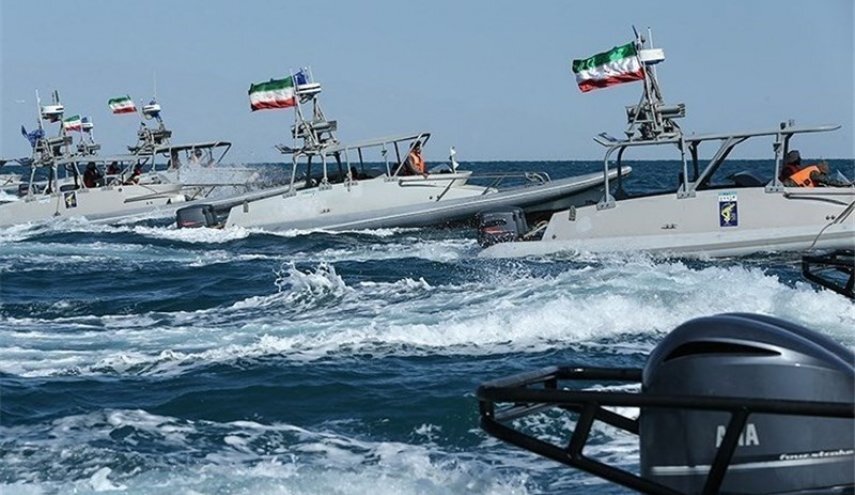
At approximately 09:53 UTC on 22 April 2026, the Islamic Revolutionary Guard Corps Navy announced the seizure of two container vessels in the Strait of Hormuz — the MSC-FRANCESCA and the EPAMINODES — marking the most significant Iranian interdiction of commercial shipping in the waterway since a series of tensions escalated in late 2025. The IRGC Navy stated that it had attacked and boarded both ships after they allegedly attempted to sail through the strait in violation of a self-declared blockade. One of the MSC vessels sustained heavy damage after its crew failed to comply with IRGC warnings, according to multiple Iranian-aligned sources reporting from the scene.
The Strait of Hormuz, the narrow mouth of the Persian Gulf through which roughly 20 percent of the world's oil flows daily, sits at the intersection of Iranian territorial claims, Omani sovereignty, and some of the world's most heavily trafficked shipping lanes. The IRGC transferred both vessels to Iranian territorial waters following the seizure. Iranian state-adjacent media identified the MSC-FRANCESCA as having alleged links to Israel — a designation that, if accurate, would place the ship within a category Tehran has repeatedly targeted since the broader Middle Eastern escalation of 2024. The EPAMINODES, a Greek-operated vessel according to available tracking data, was detained in the same operation. The captures, occurring during the morning hours of a Tuesday in a waterway that handles approximately 30 to 35 large-container vessel transits daily, immediately drew condemnation from Western governments and sent jitters through maritime insurance and futures markets.
The Immediate Scene: What the Sources Show
The sequence of events, as reconstructed from multiple Telegram-sourced reports published within a roughly twenty-minute window on the morning of 22 April 2026, points to a coordinated operation rather than an opportunistic interception. OSINTtechnicalIran reported at 10:18 UTC that the IRGC Navy had captured the two container ships after they attempted to sail through the strait that morning. Earlier dispatches from FotrosResistancee and wfwitness indicated that at least one of the MSC vessels had suffered heavy damage — specifically, after failing to comply with an IRGC warning to stop or alter course. The Middle East Spectator confirmed the same detail: the IRGC described the ships as attempting to violate a blockade of the strait, framing the seizure as enforcement of a legal claim rather than an act of piracy or aggression.
The language伊朗 state media used is notable. Rather than describing the operation as a capture or hijacking, the IRGC characterized it as the detention of vessels breaching a territorial or jurisdictional zone it claims the right to enforce. This framing is consistent with Tehran's long-standing position — articulated variously through the IRGC, the Iranian Foreign Ministry, and legal advisors close to the Raisi-era government — that the strait's western approaches fall under surveillance and enforcement authority that Iran does not recognize as limited by existing international maritime law conventions. The distinction matters because it signals that Tehran is not treating this as an isolated incident of leverage, but as a precedent-setting assertion of what it considers its lawful maritime posture.
The damage to at least one vessel complicates the legal and diplomatic picture. A ship that sustains heavy damage after ignoring warnings is a ship that was given an opportunity to submit to boarding — and did not. That detail will likely feature in whatever justification Tehran presents to international legal bodies or diplomatic interlocutors, but it does not alter the core fact: commercial vessels were attacked and diverted to Iranian ports against the explicit objections of their operators and, in the case of the MSC-FRANCESCA, presumably their beneficial owners.
Counter-Narratives: Tehran's Version versus the Open-Shipping Consensus
The Western and mainstream maritime industry framing of the seizure is straightforward: armed forces of a designated state actor intercepted lawful commercial traffic in an international waterway, detained the vessels, and damaged at least one in the process. This reading treats the strait as governed by the United Nations Convention on the Law of the Sea (UNCLOS), which Iran has signed but whose application to specific Iranian territorial claims remains contested, and which establishes the right of innocent passage through territorial seas and transit passage through straits used for international navigation. Under this reading, the IRGC operation was a violation of established international law.
Tehran's counter-narrative rests on a different legal premise. Iran has long argued that the security architecture of the Persian Gulf, including the strait's approaches, cannot be treated as a space of unconstrained Western or US-backed military presence. The IRGC's framing of the MSC-FRANCESCA as linked to Israel is not incidental — it is the operative justification. Tehran has maintained since 2024 that vessels with connections to Israeli interests, or those transiting in coordination with US naval assets in the region, forfeit the protections of ordinary commercial shipping status. This is a position no Western government or international tribunal has accepted, but it is held with consistency and is not new: Iranian forces have previously interdicted vessels they designated as "linked to Israel" in the Gulf and Arabian Sea.
A secondary Iranian argument concerns the broader context of sanctions and maritime sanctions enforcement. Iran has repeatedly asserted that Western sanctions regimes — and the commercial networks that support them — are themselves unlawful, and that actions taken in response to those sanctions fall outside the framework of ordinary international legal obligation. Whether this argument is made in formal diplomatic communications or merely serves as internal justification for operational decisions, it shapes how Tehran calculates the costs of an interception like Wednesday's. In Tehran's calculus, a seized Israeli-linked vessel is not a diplomatic liability; it is evidence of enforcement capacity.
The gap between these two framings is not merely rhetorical. It determines whether this incident is treated as a criminal piracy matter, a sanctions-evasion enforcement action, or an act of war. Western governments have, so far, treated it as a serious escalation requiring diplomatic and potentially military response. Tehran appears to be betting that the cost of that response — in a context where the US and its partners are managing multiple simultaneous global commitments — is manageable.
The Structural Context: Hormuz as Political Theater and Strategic Chokepoint
The Strait of Hormuz's significance to global energy markets is so well-established that it has become a cliché of geopolitics — and yet the cliché exists because it is true. Approximately 21 million barrels of oil per day transit the 21-mile-wide narrows between Oman and Iran, along with liquefied natural gas and the container traffic that feeds supply chains across Asia, Europe, and the Americas. Any disruption, whether from mining, naval interdiction, or the mere perception of risk, registers immediately in insurance premiums, tanker-rate indices, and crude futures.
This structural importance is precisely why Iran has, for decades, treated the strait not as a legal problem but as a political asset. The ability to threaten or demonstrate control over the waterway is Iran's most credible asymmetric leverage against a technologically superior adversary. US naval dominance in the Persian Gulf is a fact; IRGC naval capabilities, mines, small-boat tactics, and anti-ship missiles are a counterweight that US military planners have modeled extensively. Seizing two container ships — rather than, say, mining a lane or striking a tanker — is a calibrated escalation: it demonstrates the will and capacity to interfere with commercial shipping without triggering the kind of US military response that would follow an attack on American personnel or vessels.
The choice of a vessel linked to Israel is also structurally significant. It positions the seizure within the broader Middle Eastern pattern of Iranian-backed regional action — against the backdrop of ongoing hostilities involving Hamas, Hezbollah, and Yemen's Houthi movement — rather than as a direct Iran-versus-US flashpoint. This framing serves multiple Iranian interests simultaneously: it domesticates the action as resistance, internationalizes it as part of a wider front, and complicates any US response by tying it to the sensitivities of allied governments.
For the shipping industry, the structural lesson is already clear: the strait is no longer a corridor that can be treated as reliably open for business. Insurance underwriters, classification societies, and flag-state regulators will respond to the seizure by repricing risk, and that repricing will persist regardless of how the diplomatic situation resolves. Even a negotiated release of the vessels in the coming days will not erase the signal sent on 22 April.
Precedent: What History Tells Us About Iranian Ship Seizures
Iranian interdiction of vessels in the Persian Gulf is not unprecedented, though the scale and the specific targeting of a major carrier like MSC are notable. The most recent comparable incident occurred in 2019, when the IRGC seized the British-flagged Stena Impergo and other vessels amid heightened tensions over Iran's nuclear program and the US withdrawal from the Joint Comprehensive Plan of Action. Those seizures were resolved through diplomatic negotiations — not without difficulty, and not without a period of elevated risk — but they were eventually normalized. That precedent suggests a resolution pathway exists, but it does not predict the timeline or the conditions under which Tehran would release the current vessels.
The 2019 incidents were also notable because they occurred in a context where Iran faced maximum economic pressure from US sanctions. Tehran's calculus then, as now, was that the cost of Western retaliation was bounded by the same constraints that limit Western military escalation. The US was not prepared to go to war over a detained tanker; Iran calculated it could hold the vessel long enough to extract whatever diplomatic concession was available. The same calculation appears to be operating in 2026.
What is different this time is the regional environment. In 2019, the Hormuz seizure was an Iran-US bilateral flashpoint. Today, it occurs against a backdrop of active conflict in Gaza, Houthi interdiction of Red Sea shipping that has already diverted significant commercial traffic, and a broader deterioration of the Middle Eastern security order that Western governments have struggled to contain. Tehran's willingness to seize vessels linked to Israel, in this context, is less a departure from precedent than an adaptation of it to a more permissive operational environment.
There is also a precedent in what this pattern has meant for global shipping. Following the 2019 seizures and, more acutely, the Houthi Red Sea disruptions beginning in late 2023, major container lines — Maersk, MSC, CMA CGM — have progressively restructured routing to reduce exposure to the Bab el-Mandeb and, by extension, the approaches to the Suez Canal. The Strait of Hormuz has, until Wednesday, remained a transit point that carriers could not easily avoid. A sustained Iranian interdiction posture, even at the level of selective vessel seizures, changes that calculus for the longest-suffering segment of global trade.
Stakes and Forward View: Who Wins and Who Loses if This Pattern Holds
The immediate winners, if the seizure is not rapidly reversed through diplomatic pressure, are Iranian negotiators who can trade the vessels' release for concessions on sanctions, nuclear constraints, or regional standing. Iran's IRGC has demonstrated once again that it possesses both the capability and the willingness to reach into one of the world's most consequential waterways and extract what it wants. That demonstration has value independent of the specific outcome of the MSC-FRANCESCA and EPAMINODES seizures.
The immediate losers are the owners and operators of both vessels, whose cargoes are now held, whose crews face an uncertain detention, and whose insurance exposure has just expanded significantly. MSC, as one of the world's largest container carriers, will bear reputational and operational costs that go beyond the two seized ships. The broader shipping industry, already absorbing the costs of Red Sea avoidance routing, loses further reliability in a corridor that global supply chains have depended upon.
Western governments face a strategic bind. A military response — US or coalition naval escorts, strikes on Iranian maritime infrastructure, escalation of sanctions — carries costs that Iran has calculated are probably not worth paying over container ships rather than warships or human lives. A diplomatic resolution, on the other hand, is exactly the kind of accommodation that Iran has historically used to extract further concessions while presenting itself as the party acting within its rights. The US and its partners will need to decide whether to treat this as a solvable crisis requiring negotiation, or as an intolerable challenge to the rules-based maritime order requiring a more robust response.
For global energy markets, the stakes are contingent but real. A single day's seizure of container ships does not断了 oil flows. But if the pattern established on 22 April 2026 becomes the operating norm — selective interdiction of vessels Iran designates as linked to Israel, with damage to non-compliant ships — the insurance and routing consequences will be felt in crude prices, LNG spot rates, and the containerized goods that feed consumer markets from Rotterdam to Jakarta.
What remains uncertain, across all of these calculations, is whether Wednesday's seizure is an isolated assertion or the opening move in a sustained campaign. Iranian state media framed it as enforcement of a blockade; that framing implies a posture, not an incident. If the IRGC treats the strait as a zone it now actively controls for defined categories of vessels, the precedent set on 22 April 2026 will be the least of what follows.
This publication covered the seizure as a breaking regional security incident with primary sourcing from Iranian state-adjacent and OSINT feeds. The wire framing, as of this writing, treated the event as an escalation within the existing Israel-Iran shadow conflict; Monexus has sought to contextualize the seizure within the broader architecture of Persian Gulf maritime politics rather than reducing it to a single diplomatic flashpoint.
Wire provenance
This editorial synthesis draws on the following public wire/social posts:
- https://t.me/OSINTtechnicalIran/4821
- https://t.me/AMK_Mapping/3892
- https://t.me/FotrosResistancee/1147
- https://t.me/Middle_East_Spectator/2291
- https://t.me/wfwitness/9982