Islamabad's Quiet Diplomacy: How Pakistan Is Carving a Mediation Lane Between Washington and Tehran
As indirect talks resume in the Pakistani capital, Islamabad is leveraging its regional standing to present itself as a viable channel between two adversaries — at a moment when domestic constraints on both Washington and Tehran may finally make dialogue more attractive than escalation.
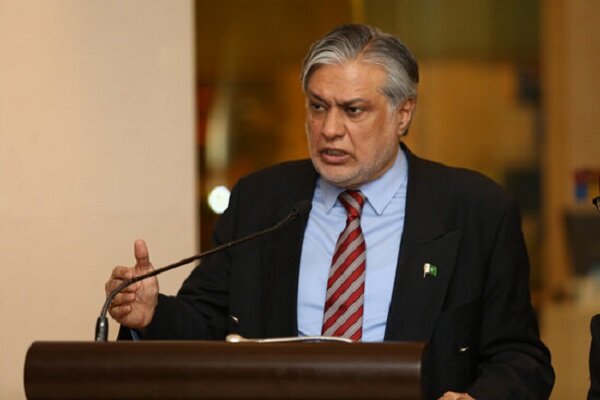
A Pakistani official confirmed on 22 April 2026 that talks between delegations from the United States and Iran are underway in Islamabad, expressing what one readout described as cautious optimism for a constructive outcome. The sessions, facilitated by Pakistani intermediaries, represent the most structured diplomatic contact between Washington and Tehran in recent memory — and they are happening at a moment when both sides face enough domestic pressure to make back-channel negotiation more palatable than it has been in years.
The Pakistani Foreign Ministry has framed Islamabad's role as that of a "bridge-builder," according to Reuters reporting that cited an unnamed Pakistani official. That official stated that Islamabad is attempting to reduce the gap between the two sides by taking into account the "sensitivities" of each party — diplomatic language that signals careful positioning rather than active brokerage. The official did not specify which sensitivities, though analysts following the file note that both Washington and Tehran operate under constituencies that punish concession-making.
What makes this round of talks structurally notable is not the venue — Islamabad has hosted regional shuttle diplomacy before — but the alignment of domestic pressures on both principals. In Washington, the political cost of a military strike against Iran has become a first-order question for an administration that must account for congressional dynamics, energy market sensitivity, and a vocal constituency that views another Middle Eastern entanglement as strategically ruinous. A separate readout attributed to American officials and circulated via the same Arabic-language wire services described the administration as operating with an acute awareness that domestic legitimacy for a strike on Iran does not currently exist within the United States.
The Domestic Arithmetic on Both Sides
Understanding why these talks are happening now requires mapping the domestic constraints on each delegation. In Washington, the strategic logic of maximum pressure — the sanctions regime that has governed Iran policy since 2018 — has produced diminishing returns. The Islamic Republic's nuclear programme has advanced beyond the thresholds that existed under the Joint Comprehensive Plan of Action. Yet military action, or the credible threat of it, has run into the same political resistance that has constrained American presidents on Iran for two decades: the absence of a clean endgame.
The domestic constraint works in Tehran's direction as well. The Iranian economy has absorbed significant structural damage under sustained sanctions, and the political leadership that oversaw the negotiation of the original JCPOA in 2015 — and its subsequent abandonment by the Trump administration — has cycled through multiple crises of legitimacy. An agreement that lifts sanctions without requiring visible concessions on the nuclear file would be politically explosive domestically. Iranian negotiators are therefore seeking language that allows both sides to claim partial victory.
Pakistan's value as an intermediary lies partly in its geographic positioning and partly in its relationship architecture. Islamabad maintains dialogue channels with both Washington and Tehran — a diplomatic portfolio that neither Saudi Arabia nor the UAE currently offers, given their own antagonisms with Iran over regional influence. Pakistan also has a direct interest in regional stability: a conflict between the United States and Iran would destabilise the Gulf, disrupt energy trade routes, and create refugee flows that Islamabad is poorly positioned to absorb.
What the Talks Are Not
It would be premature to characterise the Islamabad sessions as breakthrough diplomacy. The source material does not indicate that either delegation has moved on core demands: for Washington, the ceiling remains some form of nuclear constraint coupled with a rollback of uranium enrichment to levels that preclude a weapons-adjacent capability; for Tehran, the floor remains sanctions relief and recognition of Iran's right to a civil nuclear programme under international inspection.
The talks are also not a substitute for the formal track that previous administrations attempted — the European-mediated JCPOA restoration process that stalled repeatedly from 2021 through 2024. What Islamabad offers is a quieter setting: not a multilateral conference subject to press scrutiny, but a bilateral-plus-mediation format that allows both principals to explore language without formally committing to it.
There is also a risk of over-reading Pakistani optimism. The Pakistani official quoted in Reuters described the hope for the "best result" — language that is formulaic in diplomatic settings and does not indicate specific movement. Islamabad has previously hosted regional diplomatic efforts that produced initial optimism and ultimately limited concrete outcomes. The Qatar-mediated channel that operated through 2022 and 2023 produced several rounds of talks before stalling. What distinguishes the current moment is the stated awareness, on the American side, of domestic constraints — a framing that suggests the administration is entering the talks with a realistic assessment of what it can sell politically.
The Regional Architecture Beneath the Talks
Beyond the bilateral dynamics, the Islamabad talks sit inside a shifting regional architecture in which the traditional American order in the Gulf faces structural challenges. Gulf states have not broken with Washington, but they have diversified: Emirati and Saudi engagement with Beijing has a commercial and infrastructure dimension that has gradually produced a political undertone. The BRICS expansion that accelerated through 2024 and 2025 introduced new coordination mechanisms outside dollar-denominated trade settlement. The result is a Middle East in which the United States retains allies but exercises less exclusive influence over their strategic calculations.
This context matters for the Islamabad talks because it means that a negotiated outcome with Iran is not merely a bilateral problem — it is a regional problem with implications for how American credibility functions across multiple theatres. A successful deal, or a partial confidence-building measure, would alter the calculus not just for Iran but for other regional actors who have been watching the American posture toward Tehran as a proxy for broader commitment. A failed negotiation, by contrast, would likely produce renewed pressure on Washington to demonstrate resolve — a dynamic that historically produces escalation rather than retrenchment.
Pakistan, for its part, has an interest in being seen as a constructive regional actor precisely because its own bilateral relationship with the United States has undergone significant strain since 2021. American aid flows have been conditional on counterterrorism cooperation that Islamabad contests on sovereignty grounds. Hosting these talks offers Islamabad a way to demonstrate diplomatic utility to an audience that includes not just Washington but also Gulf partners and European mediators who have a stake in any Iran outcome.
The Forward View
The next 30 to 60 days will determine whether the Islamabad format produces any communicable language between the two sides — not necessarily a formal agreement, but at minimum a joint acknowledgement that talks will continue. The more optimistic scenario involves a phased confidence-building approach: initial measures on sanctions enforcement, followed by nuclear-site monitoring, followed by partial sanctions relief contingent on verified compliance. That scenario is politically plausible only if both administrations can control their domestic critics.
The pessimistic scenario — more consistent with the historical pattern of American-Iranian negotiations — involves a breakdown driven by domestic pressure, a leak that forces both sides to harden positions publicly, or an external shock that reorders priorities. The ongoing war in Ukraine, with its attendant energy market disruptions, remains a variable that neither side controls. A spike in oil prices driven by Gulf instability would simultaneously increase the political cost of a breakdown in the talks and increase the temptation for Tehran to extract maximum leverage before any agreement solidifies.
Pakistan's positioning is legible: Islamabad wants to be on the right side of a resolution, not left holding the cost of a failure. That is a defensible diplomatic posture. Whether the principals on either side can meet each other halfway — on nuclear language, on sanctions sequencing, on the definition of compliance — remains the open question that these Islamabad sessions are designed to begin answering.
This publication framed the Islamabad talks through the lens of Pakistani mediation and domestic political constraints on both Washington and Tehran. The dominant wire framing prioritised the "optimism" language from the Pakistani readout. Monexus directed attention instead to the structural conditions — domestic political cost of military action in the United States, Iranian economic constraints, regional diversification dynamics — that explain why these talks are happening now rather than six months ago or six months hence. The piece also noted that the absence of formal agenda disclosure in the source material means the specific substance of each delegation's proposals remains unclear.
Wire provenance
This editorial synthesis draws on the following public wire/social posts:
- https://t.me/alalamarabic/89234
- https://t.me/alalamarabic/89231
- https://t.me/alalamfa/84712
- https://t.me/mehrnews/120845
- https://en.wikipedia.org/wiki/Pakistan%E2%80%93United_States_relations
- https://en.wikipedia.org/wiki/Joint_Comprehensive_Plan_of_Action