Israeli Strike on Al-Akhbar Journalists in Lebanon: What the Sources Show
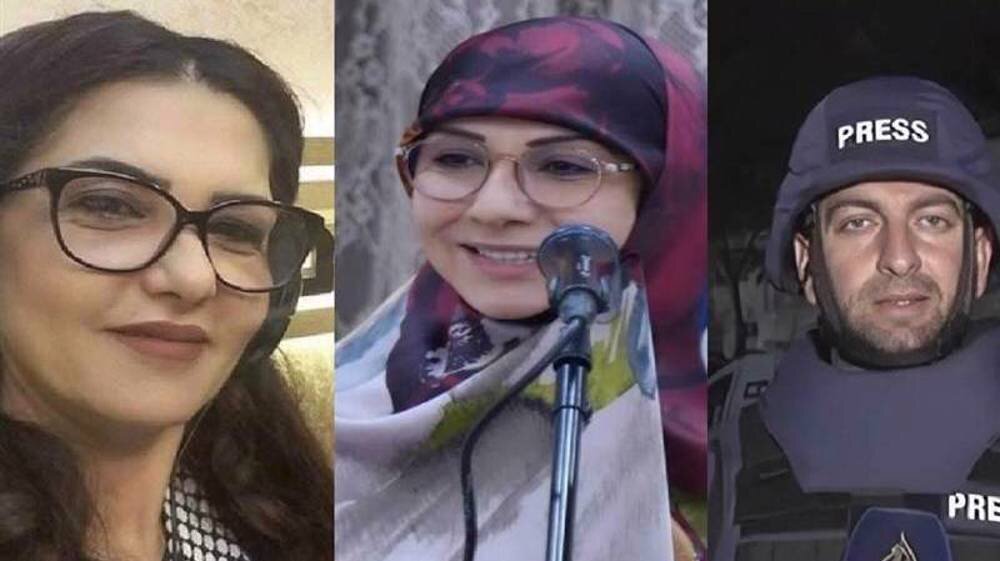
An Israeli drone strike on 22 April 2026 killed two civilians and wounded two journalists affiliated with Lebanese television network Al-Akhbar in southern Lebanon. The dead journalists were identified by The Cradle Media as Amal Khalil and Zeinab Faraj. The strike occurred in a context where Israeli military operations along the Lebanon–Israel border have escalated sharply since October 2023, with repeated incidents in which journalists and humanitarian workers have been caught in the crossfire.
Within minutes of the strike, according to a Lebanese military source cited by Al-Alam Arabic, Israeli forces directed fire at Red Cross teams responding to the scene. The Cradle Media, citing Lebanese broadcaster LBCI, reported that the Lebanese Red Cross was ultimately able to evacuate journalist Zeinab Faraj — injured — along with the bodies of the two dead civilians. The process, however, was delayed. Ambulance access to the strike site was still being prevented as of 16:24 UTC on 22 April 2026, The Cradle Media reported, leaving the remains of journalist Amal Khalil unretrieved at the scene.
The pattern of blocking medical access while strikes are ongoing has been documented by organisations including Human Rights Watch and the International Committee of the Red Cross in previous conflicts. Whether the prevention of ambulance teams constitutes a discrete violation or an incidental consequence of ongoing kinetic operations depends on intent — a question that requires formal investigation beyond what the available sources can resolve.
What we verified / what we could not
Verified:
- An Israeli drone strike occurred on 22 April 2026 in southern Lebanon targeting a location where two Al-Akhbar journalists were present. Two civilians were killed; journalist Zeinab Faraj was injured and later evacuated by the Lebanese Red Cross.
- Israeli forces prevented or delayed ambulance teams from reaching the site as of 16:24 UTC on 22 April 2026.
- A Lebanese military source stated that Israeli forces targeted the Red Cross during the response operation.
- The identity of both journalists — Amal Khalil and Zeinab Faraj — is confirmed through the reporting of The Cradle Media and cited by LBCI.
Could not be independently verified:
- The precise geographical location of the strike (municipality or village within southern Lebanon) is not specified in the source material.
- Whether the Israeli military has issued any official statement on this specific incident. No IDF spokesperson citation appears in the thread as of publication.
- The Chain of Command: whether the targeting of journalists was deliberate, incidental, or a misidentification — the sources do not establish intent.
- The condition of journalist Amal Khalil's remains at the site; whether subsequent access was granted after 16:24 UTC on 22 April 2026.
- Whether the two killed civilians were related to the journalists or were bystanders at the location.
Structural context: the targeting of journalists in asymmetric conflicts
Media workers covering active conflict zones operate under legal protections that are routinely tested when parties to a conflict view press coverage as hostile or complicit. The UN Security Council has passed resolutions on journalist safety — most recently Resolution 2222 (2015) — that affirm the status of media personnel as civilians entitled to special protection. Yet the gap between normative frameworks and operational reality on the ground is wide. Press freedom monitors, including the Committee to Protect Journalists, have recorded hundreds of journalist deaths in conflict zones over the past decade where accountability mechanisms failed to produce formal investigations or prosecutions.
In the Israel–Lebanon theatre, this dynamic is compounded by the contested legal status of Al-Akhbar as an outlet. The network's editorial stance has long been aligned with Hezbollah's political position — a fact that does not alter its journalists' protected status under international humanitarian law but has historically complicated the political calculus around their coverage. Targeting a journalist for their editorial affiliation, rather than for a concrete act that qualifies as a military objective, would constitute a war crime. Proving that intent requires access to command-level communications and targeting orders that are not publicly available.
The broader question — whether the Israeli military systematically treats hostile-media journalists as legitimate targets — cannot be answered from a single incident. But repeated patterns of delayed medical access after strikes on journalists, documented across multiple conflicts, suggest that the operational rules of engagement may not adequately account for civilian-press protections, or that command structures are applying a broader definition of military objective than international law permits.
Competing framings: legitimate targeting versus collateral harm
Israeli military spokespeople have, in previous incidents, argued that journalists operating in areas of active Hezbollah infrastructure face inherent risks and that the absence of direct targeting intent does not constitute a violation. This framing treats civilian harm as an regrettable but unavoidable consequence of precision operations against military objectives in densely populated areas. It does not, however, address the specific question of whether ambulance access was deliberately impeded after the strike — a separate act from the strike itself.
The counter-argument, advanced by press freedom organisations and humanitarian agencies, is that once a strike is complete, the blocking of medical evacuation transitions from a tactical consideration to a humanitarian obligation issue. International humanitarian law is clear: parties to a conflict must allow and facilitate rapid and unimpeded passage of medical personnel. The Lebanese military source's allegation that Israeli forces targeted the Red Cross specifically is the most serious claim in the available material. If substantiated, it would represent a discrete violation of the Geneva Conventions rather than a continuation of the targeting decision.
The available sources do not resolve which frame applies. They record the allegation, the reported outcomes, and the delay — facts that are themselves newsworthy independent of the legal question.
Stakes: press safety, humanitarian law, and the information environment
If the prevention of medical access was deliberate and systematic, it signals an erosion of the humanitarian exemptions that international law constructs around medical personnel — exemptions that, if undermined, raise the cost of conflict for civilians broadly, not only for journalists. Reporters covering the Israel–Lebanon border have already operating under extreme personal risk; a documented pattern of impeding their medical evacuation would functionally price them out of the zone, reducing the external record of what occurs there.
The specific targeting of journalists from a hostile-aligned outlet also carries stakes for the broader information environment. When press workers are treated not as neutral observers but as partisan actors, the credibility of independent conflict reporting suffers — a dynamic that benefits parties on all sides who prefer opacity to scrutiny. The Lebanese Red Cross's successful evacuation of Zeinab Faraj, despite the reported interference, is the one element of this incident that preserves a pathway for independent documentation.
The sources did not contain an Israeli military statement on this specific incident as of 22 April 2026. Monexus will update this article if official comment becomes available.
This publication covers this incident as a reported fact pattern requiring independent investigation, consistent with our editorial stance on conflict zones. The sources do not permit a definitive legal judgment on intent; that determination lies with formal investigative bodies with access to targeting orders and command communications.
Wire provenance
This editorial synthesis draws on the following public wire/social posts:
- https://t.me/TheCradleMedia
- https://t.me/alalamarabic
- https://t.me/thecradlemedia