Kevin Warsh's Confirmation Farce Proves the Fed's Independence Problem Has No Easy Fix
The president's pick for Fed chair spent his confirmation hearing denying he would be a puppet — a denial that revealed more about the job's new political subordination than he intended.
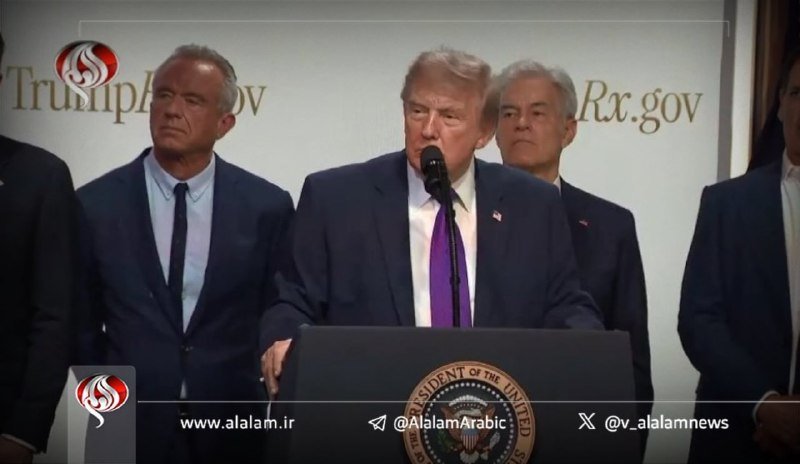
Kevin Warsh walked into the Senate Banking Committee on 21 April 2026 and said the words he thought would inoculate him. He would not be Donald Trump's puppet. He would not make interest-rate deals with the White House. He wanted — he volunteered the word unprompted — "regime change" at the Federal Reserve, meaning something other than continuity. None of this landed as reassuring. It landed as a confession.
Here is what happened: the president's nominee for the most consequential technocratic post in American economic life stood before elected representatives and spent two hours explaining why the job's most sacred attribute — institutional independence — did not apply to him in any way that should worry skeptics. He failed that test on multiple fronts simultaneously, and the uncomfortable question left hanging over the proceedings was not whether Warsh believes in Fed autonomy. It is whether the institution still exists in any meaningful sense when the person nominated to lead it treats "I won't be a puppet" as the highest bar to clear.
Warren's Intervention and the Independence Test
Senator Elizabeth Warren pressed Warsh on whether he had made private arrangements with Trump on interest-rate policy. Warsh denied it, repeatedly and in slightly different formulations each time. Warren then pivoted to a more revealing question: whether he held investments in vehicles set up by Jeffrey Epstein. Warsh's answer — that those assets would be sold if he were confirmed — sidestepped the premise. He did not deny the holdings. He offered a post-confirmation correction as though that resolved the question of what he held at the moment of his nomination hearing. The exchange exposed a man navigating a financial disclosure document exceeding one hundred million dollars while refusing to fully account for its contents. It was, on its face, a conflict-of-interest problem dressed in the language of procedural compliance.
Warren's sharper critique, however, ran deeper than the Epstein matter. She asked Warsh to demonstrate he could "stand up" to Trump — a formulation that framed the entire hearing around whether the nominee understood that resisting presidential pressure was not optional but foundational to the job. His answer described his independence as a personal disposition rather than a structural commitment. That distinction matters. A Fed chair who believes their independence is a personal virtue rather than a constitutional constraint will yield when the pressure becomes sufficiently specific.
The Regime Change Gambit
Warsh's most striking statement was his own. "I want regime change at the Fed," he said, framing it as a commitment to a different kind of policy direction rather than a wholesale restructuring of the institution's governance. But the phrase landed inside a confirmation hearing where the man saying it had been installed by a president who had spent months publicly pressuring the current Fed chair on interest rates and who had publicly mused about the political utility of lower rates during his first term. Inside that context, "regime change" does not read as ambition. It reads as loyalty display — a willingness to use the language of disruption to reassure the White House that the new Fed will not be the old Fed.
The structural problem is not that Warsh wants a different monetary policy than his predecessor. Policy preferences are legitimate grounds for nomination. The problem is that his framing — "I will not be a puppet," "I want regime change," "I will stand on my own" — treats presidential pressure as an obstacle to be managed rather than a condition the institution's design was specifically built to withstand. The Fed's political independence is not a reputation to be personally claimed; it is a functional separation of powers that requires the chair to behave as though the White House's preferences are simply one input among many, and not a primary one.
The Financial Disclosure Problem
The hundred-million-dollar financial disclosure is not a peripheral concern. It is a structural entanglement that the Senate Banking Committee has every right to examine in detail. A Fed chair who oversees the setting of interest rates operates inside a system where financial market movements translate directly into the value of personal holdings. Warsh's promise to sell problematic assets after confirmation does not answer the question of what conflicts currently exist during the confirmation process itself — a process during which he is, by definition, still in private life and still holding those positions.
The sources do not establish what specific vehicles Warsh holds or what interest-rate sensitivity those positions carry. That gap in the record is itself significant. A nominee with a disclosure of this size presenting himself as an independence paragon while simultaneously declining to fully detail the Epstein-linked holdings raises legitimate questions about the transparency of the process and whether the committee has the investigative tools to answer them before a vote occurs.
The Stakes Beyond the Hearing Room
The Federal Reserve's credibility as an independent monetary authority rests on actors outside the building believing that rate decisions reflect economic conditions rather than political calculation. Warsh's hearing did not destroy that credibility — not yet. But it moved the needle in the wrong direction. A nominee who uses "regime change" to describe his agenda, who carries hundred-million-dollar disclosure entanglement, who declined to fully answer questions about Epstein-linked investments, and who answered Warren's independence challenge with personal assurances rather than structural commitment is a nominee who has not demonstrated an understanding of what the job actually requires.
The counterargument — that Warsh is being held to an unfair standard because every Fed chair nominee is political in some sense — does not quite land. The standard is not unfair. It is the standard. Presidents have always nominated chairs whose policy views align with their economic philosophy. What has changed is the explicit, public, repeated pressure from the White House on rate decisions, and a nominee who responds to that pressure by declaring himself not a puppet while simultaneously signalling enthusiasm for a different policy direction is describing a job that has already become something other than what it was.
The Fed's independence problem does not begin with Kevin Warsh, and it will not end with his confirmation. But his hearing made clear that the next chair of the world's most consequential central bank understands the institutional problem only as a personal character question, not as a structural one. That is the most alarming thing said in the room all day, and it did not come from a senator.
This publication covered the Warsh hearing through the same procedural lens as the wire services but framed the conflict-of-interest questions as structural rather than personal — a distinction that matters when assessing whether the Fed's independence is a staffing problem or an institutional one.
Wire provenance
This editorial synthesis draws on the following public wire/social posts:
- https://x.com/polymarket/status/1912362840018493440
- https://x.com/unusual_whales/status/1912314562060841069