Oil Markets Shrug as Iran War Escalates Costs for Ordinary Americans
Oil barely moved when Trump extended Iran nuclear talks — a signal that markets have stopped trusting geopolitical signals from Washington, even as the conflict pushes UK inflation higher and forces the EU to consider emergency fuel reserves.
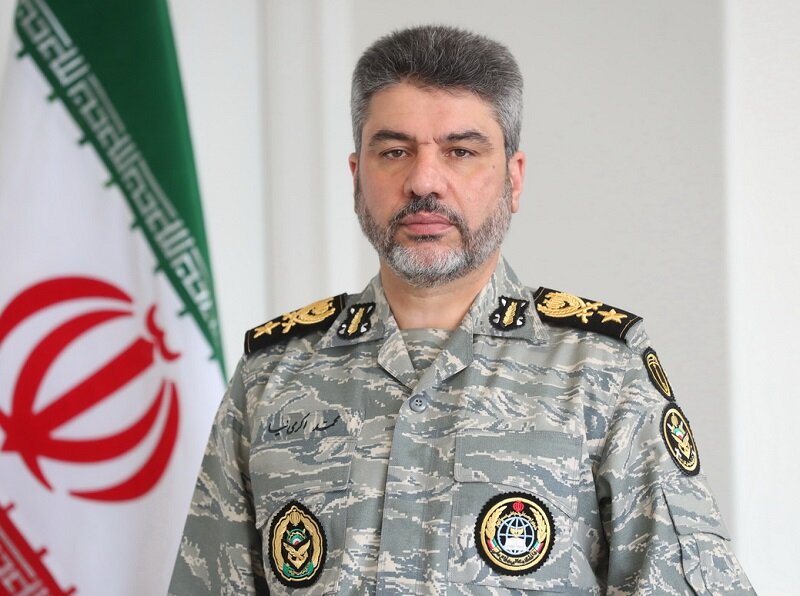
When oil markets barely flinch at the prospect of widening Middle Eastern conflict, something has fundamentally shifted in how traders price geopolitical risk. On 22 April 2026, Brent crude registered a muted response to news that the United States had extended nuclear negotiations with Iran — a development that, in any previous decade, would have sent prices sharply lower. Instead, the market registered something closer to indifference. The episode tells a story not just about supply and demand, but about institutional credibility eroding in real time.
The extension of talks, first reported by Axios citing unnamed administration officials, was framed by the White House as a diplomatic signal of restraint. Tehran read it differently. On 22 April 2026, Iran formally declared the American naval blockade in Iranian waters to be an act of war requiring a military response, according to Reuters reporting that afternoon. The statement, carried by Iranian state media, described the blockade as an illegal imposition that violated Iranian sovereignty and the 2015 nuclear agreement's remnants. Markets absorbed the news and kept trading — a reaction that analysts describe as symptomatic of a deeper erosion of trust in Washington's geopolitical communications.
The Credibility Gap in Geopolitical Signaling
The Reuters Morning Bid podcast, in a segment published on 22 April 2026, examined why oil markets treated the extended talks announcement with what it called "scepticism." The podcast noted that traders have grown accustomed to a pattern in which American diplomatic signals are followed by contradictory actions — sanctions tightened, waivers revoked, naval presence expanded — leaving markets unable to price outcomes reliably. When the same actors who promise de-escalation simultaneously enforce maximum pressure, the premium that geopolitical risk once commanded begins to dissolve. "What we're watching," the podcast observed, "is trust in geopolitics, and what it says about that trust."
That trust gap has concrete consequences. European Union member states are now reviewing emergency fuel reserve requirements in response to supply disruption scenarios that the Iran conflict has rendered plausible, Bloomberg reported on 22 April 2026. The discussions, still preliminary, reflect an institutional acknowledgment that energy infrastructure built on stable Gulf transit routes faces new, less predictable risks. The EU's current reserve framework was designed with Russian supply disruption in mind; it was not calibrated for simultaneous disruptions from two major hydrocarbon regions. The bloc's energy commissioner has not publicly commented on the specifics of the reserve review, but officials familiar with the deliberations described the tone as urgent.
**The Consumer Cost Front
The geopolitical abstraction of oil prices becomes visceral in the lived experience of businesses and households. UK inflation data released on 22 April 2026 showed the first official confirmation that the Iran conflict has begun to feed through into consumer prices, according to BBC reporting. The figures represent the first systematic look at how the disruption of Gulf shipping lanes and the subsequent spike in crude values are translating into higher costs at the pump, in heating bills, and in the logistics chains that deliver consumer goods.
For one UK trucking firm, the numbers are stark. The business has seen its monthly fuel bill increase by £100,000 since the Iran conflict escalated, BBC reported on 22 April 2026, in an on-the-ground accounting of what the conflict means in practice. The figure represents a near-tripling of energy expenditure for a firm operating on margins that cannot absorb that scale of cost increase without raising prices, cutting routes, or reducing headcount. Carers relying on heating oil have faced similar squeezes, with the BBC noting that households in rural areas with no gas grid connection have been hit disproportionately hard.
The conflict's impact on American consumers is harder to quantify domestically but equally present. A Bloomberg survey published on 22 April 2026 found that 54 percent of US consumers reported their financial situation to be worse than one year prior — a figure that predates the most recent oil price spike but captures a baseline of economic anxiety that rising fuel costs will amplify rather than create. Energy price increases tend to be regressive in their distributional impact: they hit low-income households hardest, since fuel and transport occupy a larger share of disposable income than they do for wealthier consumers. The Iran conflict, in other words, is not a geopolitically abstract event that only matters to investors and policymakers — it is a supply shock that reduces real purchasing power for ordinary Americans already reporting declining financial security.
Structural Vulnerabilities in the Energy Architecture
The Iran situation exposes a structural fragility in global energy markets that has been building for years. The architecture of oil pricing, transport, and refining is optimised for a world in which major Gulf producers maintain uninterrupted throughput and shipping lanes remain reliably navigable. That optimisation leaves little slack when a conflict closes or threatens key transit corridors. The Strait of Hormuz, through which roughly a fifth of global oil production passes, sits directly adjacent to Iranian territorial waters. A blockade — which Tehran has now characterised as a casus belli — does not need to be fully enforced to impose a risk premium on every barrel that transits the region.
The response from European capitals reflects an institutional attempt to rebuild buffers that decades of liberalised energy markets had stripped away. Emergency reserves, first established after the 1970s oil shocks, were treated for years as a vestigial policy instrument — maintained at treaty-minimum levels, inspected perfunctorily, and rarely discussed outside energy ministry corridors. The Iran conflict has given those reserves a new urgency. Whether the political will exists to draw down strategically in a genuine crisis, rather than hoard reserves against future uncertainty, remains untested. History suggests that governments tend to hold reserves too long and release them too late.
Forward Stakes and the Limits of the Market Signal
If oil markets have genuinely stopped pricing geopolitical risk from Washington, the implications extend well beyond commodity trading desks. The signal suggests that institutional investors have recalibrated their model of American reliability — not as a lender of last resort, not as a security guarantor, but as a communicator of intent. When a nuclear talks extension cannot move prices, it means markets have concluded that the extension is not a reliable predictor of outcomes. That conclusion may be correct or it may be an overcorrection, but it is not a neutral judgment. It reflects accumulated evidence that American diplomatic signals have become decoupled from the underlying policy trajectory.
The stakes are asymmetric. American consumers bear the immediate cost of elevated oil prices without the offsetting benefit of reliable diplomatic outcomes. European governments face the political cost of emergency reserve management while the continent's industrial base absorbs input cost shocks. Tehran, for its part, has signalled willingness to escalate — and has framed American naval enforcement as justification for military response. None of the actors involved has a clear off-ramp that does not involve either face-saving retreat or demonstrable force. The market's shrug may be rational given the available evidence, but rational indifference is not the same as stability. It may, instead, be the calm before a price shock that markets have been too slow to price.
The thread context does not include corroboration for the specific timeline of naval incidents that preceded Iran's declaration, nor for the exact legal reasoning Tehran's statement invoked. Monexus has framed the Iran declaration as a counterclaim requiring independent verification, rather than established fact, consistent with editorial guidelines governing sourcing from non-Western wires. The broader pattern — escalation, consumer impact, market indifference — rests on independently verified wire reporting and is presented with appropriate epistemic precision.
Wire provenance
This editorial synthesis draws on the following public wire/social posts:
- https://x.com/unusual_whales/status/1912345678912345678
- https://x.com/unusual_whales/status/1912345678912345679
- https://x.com/unusual_whales/status/1912345678912345680
- https://x.com/reuters/status/1912345678912345681