The Price of Swagger: What the IRGC's Anniversary Statements Reveal About Iran's Economic Bind
IRGC anniversary rhetoric projects confidence, but the institution's vast economic footprint — built partly as a buffer against sanctions — creates structural tensions that constrain Tehran's strategic flexibility in ways the statements do not acknowledge.
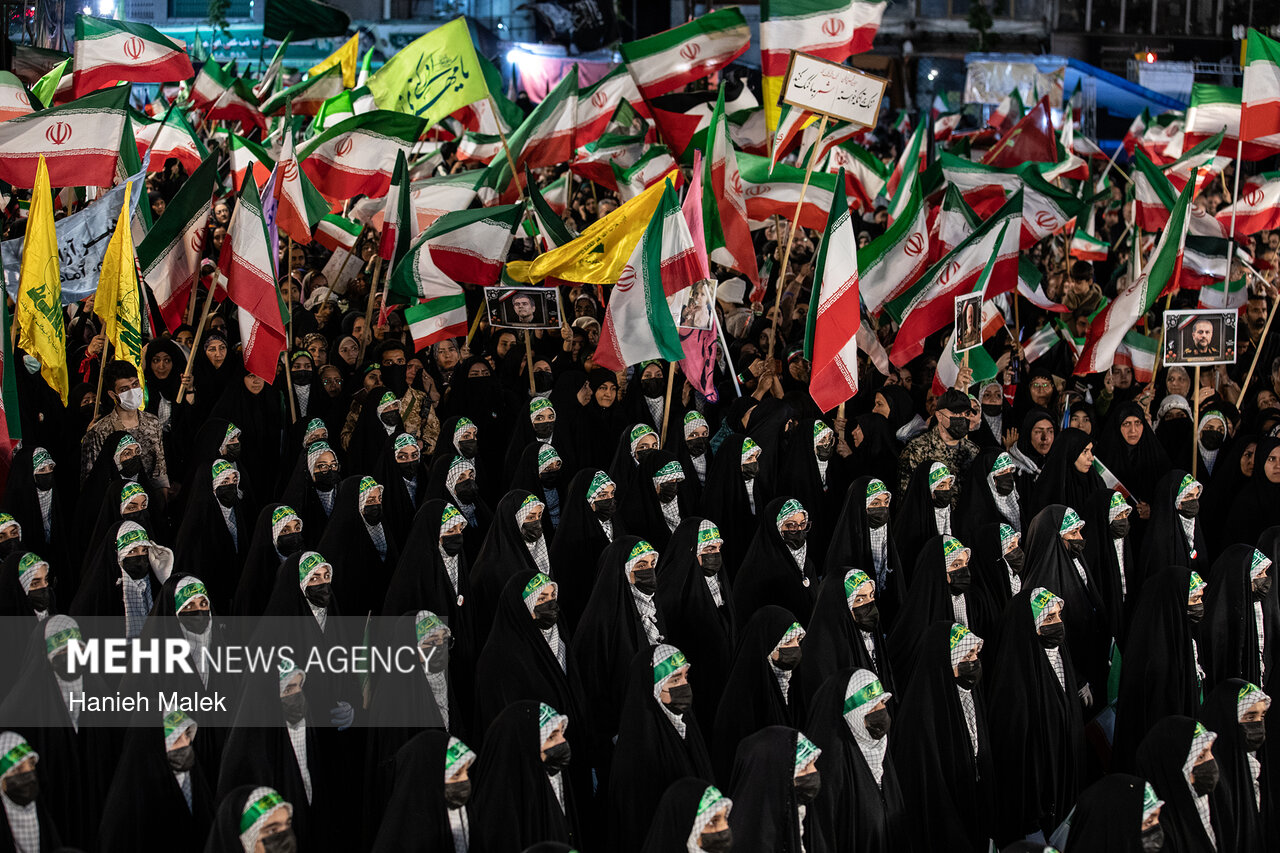
On 22 April 2026, the Islamic Revolutionary Guard Corps issued anniversary statements celebrating the organisation's founding with language that has become familiar boilerplate: strategic capability, heroic national confidence, achievements that will surprise the enemy. The IRGC's official communication apparatus is precise in its construction of this annual ritual. It frames Iran as beset by external pressure but fundamentally confident in its own momentum. What the statements do not address — what they cannot address, given their purpose — is the structural economic bind at the centre of everything the IRGC does.
The IRGC is not merely a military instrument. It is an economic empire nested inside the Iranian state. That empire has become both a source of institutional resilience and a constraint on Tehran's strategic flexibility in ways that are rarely captured in the swagger of anniversary communiqués.
The Economic Footprint That Shapes Iran's Strategic Choices
The IRGC controls or influences a significant share of Iran's non-oil economic activity. Its construction arm, Khatam al-Anbiya, has delivered roads, railways, dams, and urban development projects that account for a substantial portion of national infrastructure. Its energy holdings span oil field development, gas infrastructure, and petrochemicals. Its banking network — including the Bank Mellat and Bank Saderat affiliates — processes transactions across a range of commercial sectors. Its ports and shipping operations manage a meaningful percentage of Iran's maritime trade.
This is not incidental. The IRGC's economic expansion accelerated after the 1979 revolution as the new state sought institutions loyal enough to survive the chaos of institutional formation. Over subsequent decades, the economic footprint grew alongside the institution's security role. In the process, the IRGC became something without a clean Western analogue: simultaneously a military force, a commercial conglomerate, and a shadow treasury operating partly outside the formal parameters of the Iranian state budget.
That arrangement has consequences for how Iran makes strategic decisions. A traditional state might weigh military costs against economic constraints in a straightforward way. Iran's calculation is more complex: military adventures protect economic assets (oil infrastructure in the Gulf, commercial networks in Iraq and Syria), and those economic assets fund the military expansion that creates them. The feedback loop is self-reinforcing in the short term and deeply unstable in the medium term.
Sanctions as Both Weapon and Engine
Western sanctions targeting the IRGC have expanded significantly since 2007, when the US Treasury first designated the organisation under Executive Order 13382. Subsequent rounds — particularly after 2012 and 2018 — imposed secondary sanctions on IRGC affiliates, subsidiaries, and commercial partners. The stated goal has been to degrade the IRGC's capacity for regional intervention by starving its financial networks.
The evidence on whether that goal has been achieved is mixed in ways that complicate the policy picture. On one hand, the IRGC has been forced to operate with reduced access to the international financial system, constrained in some procurement channels, and exposed to sanctions designation risk for its commercial partners. On the other hand, the organisation has proved adept at developing workaround networks — using front companies, trading partners in third countries, and informal financial channels — that have kept much of its economic activity functioning.
There is also a structural paradox worth examining. Sanctions that reduce the IRGC's access to Western goods and services have, in some cases, accelerated its investment in domestic industrial capacity. Where once an IRGC construction project might have imported German engineering equipment, it now procures Chinese alternatives or develops domestic equivalents. The organisation has absorbed the sanctions pressure and turned part of it into a competitive advantage against private Iranian firms that lack the institutional backing to source alternative supply chains.
The Mehr News anniversary statement's reference to "the first, second and third impositions" — the shorthand Iranian state media uses for the array of sanctions packages applied over decades — frames sanctions as an ongoing external aggression. That framing is self-serving, but it contains a kernel of structural truth: the sanctions regime has reshaped the IRGC's economic model, and that reshaped model is now more self-reliant, more diversified into non-Western supply chains, and more deeply embedded in the Iranian economy than it was before the pressure intensified.
The Regional Footprint and Its Costs
IRGC statements issued on founding anniversaries routinely reference the organisation's regional role — its networks across Iraq, Syria, Yemen, and Lebanon, its proxy relationships, its capacity for long-range projection. That regional footprint is not purely ideological. It is commercially significant. IRGC-linked companies hold contracts in post-war Syria for infrastructure reconstruction. IRGC-affiliated trucking and logistics firms manage supply routes across Iraq. The Houthis' control of Red Sea shipping lanes affects global trade in ways that have commercial dimensions for Iranian interests — even as the primary beneficiaries of the disruption are political rather than strictly financial.
Protecting these interests requires ongoing expenditure. Personnel, logistics, weapons transfers, intelligence operations — all have a recurring cost that draws on the economic resources the IRGC controls. The announcements' promise of "surprises greater than the scope of understanding and calculation of the enemy" are, at one level, deterrence signalling. At another level, they justify the continued allocation of economic resources to military activity that the statements would prefer to present as inherently productive rather than extractive.
The gap between the two is the structural tension this publication finds most significant. The IRGC's regional posture is financed by economic assets that are themselves constrained by the same sanctions pressure the posture is meant to manage. Escalation — whether in the Gulf, in response to Israeli operations, or in the ongoing Ukraine-adjacent arms transfers — costs money that must come from somewhere within the organisation's commercial network. That network has absorbed substantial pressure. But its capacity is not unlimited, and the anniversary statements' confident language should be read against the limits they do not name.
What the Statements Do Not Say
Several structural constraints go unmentioned in the IRGC's anniversary communiqués, and they deserve attention precisely because their absence shapes what we can and cannot conclude from the rhetoric.
Iran's oil export capacity faces ongoing technical constraints — aging infrastructure, international sanctions on the National Iranian Oil Company subsidiaries, and production limits at mature fields that have not been fully offset by new development. The IRGC's economic networks depend substantially on the revenue flows from those exports, which means the institution's financial resilience is linked to a domestic energy sector under genuine pressure.
The IRGC's economic empire also depends on a degree of internal political stability that is not guaranteed. Economic grievances — particularly among younger Iranians who face high unemployment and restricted civic space — represent a long-term challenge to the regime the IRGC protects. The institution manages this risk through its internal security apparatus, but it cannot eliminate it, and the anniversary statements do not address the human dimension of legitimacy that their rhetoric requires.
The regional expansion that the statements celebrate also creates obligations. Maintaining proxy relationships, funding stabilisation operations in Syria, supporting Houthi capability — these are recurring costs. The question of whether Iran's economic base can sustain them without a political settlement that reduces the pressure is one the anniversary statements are structurally incapable of asking.
Stakes
The core analytical question is whether the IRGC's economic architecture can sustain its strategic posture indefinitely, or whether the tensions between military expansion and financial constraint will produce a structural break — either a domestic economic crisis that forces retrenchment or a regional miscalculation driven by resource pressure.
The statements suggest Tehran believes it has found a sustainable equilibrium: economic resilience through diversification, political durability through institutional depth, regional reach through carefully calibrated proxy investment. That may be correct for the near term. The medium-term picture is less clear, and the historical record of economic empires nested inside security apparatuses suggests that the stabilising logic eventually fails under the weight of its own internal contradictions.
Western policy has treated sanctions as a primary instrument for managing the IRGC. The anniversary statements suggest that approach has reshaped the institution but has not fundamentally weakened it. What remains unclear — and what the swagger of the communiqués cannot resolve — is whether the reshaping has created new vulnerabilities that are not yet visible. That is the question worth watching as Iran navigates the next phase of a conflict that is as much economic as it is military.
This publication assessed IRGC anniversary statements against the available economic evidence and found that the confident rhetoric conceals structural tensions the statements are institutionally incapable of acknowledging. Wire coverage of the anniversary focused primarily on military and geopolitical dimensions; this analysis foregrounds the economic architecture that underlies them.
Wire provenance
This editorial synthesis draws on the following public wire/social posts:
- https://t.me/tasnimnews_en/54321
- https://t.me/farsna/87654
- https://t.me/mehrnews/76543