Samsung's Dual Front: Labor Unrest and the AI Television Race Against Chinese Rivals
The Rally That Wasn't Supposed to Happen
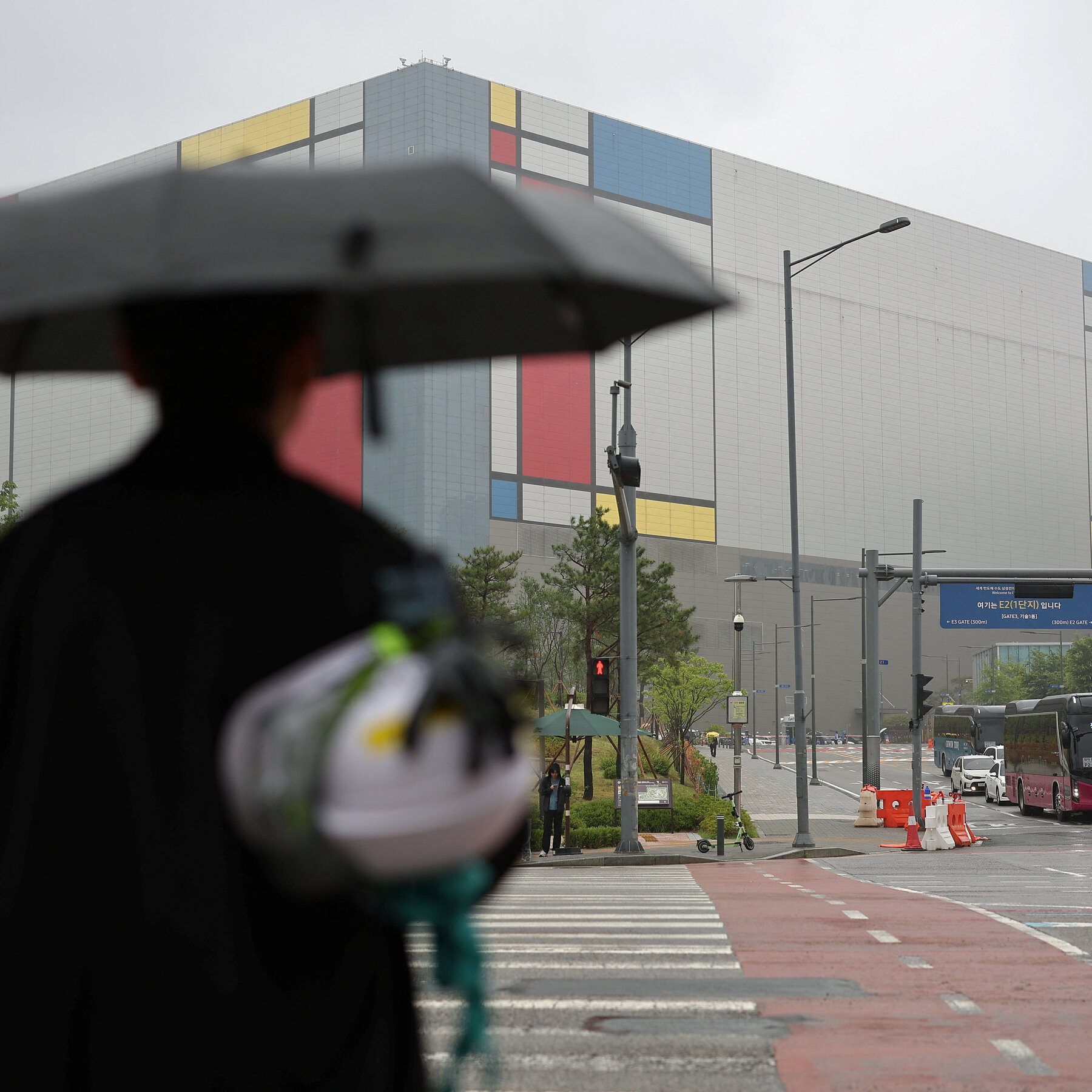
On 23 April 2026, Samsung Electronics will face what labor representatives are calling the most significant worker mobilization in the company's recent history. Workers are scheduled to rally outside company facilities, demanding changes to a compensation structure that ties bonuses to performance metrics unions argue disproportionately benefit management. The timing is not coincidental. Samsung has spent the past two years navigating a semiconductor downturn that compressed margins across its memory chip division — the business unit that has historically funded the company's generous wage and benefit package. Now, workers are pushing back against what they see as an erosion of compensation guarantees precisely when leadership is most focused on managing cost pressures.
The dispute centers on the shift from fixed bonus pools to a more market-linked performance pay model. Samsung has argued that tying compensation more closely to company performance creates alignment between workers and shareholders. The unions — which represent a significant portion of Samsung's South Korean workforce — counter that performance metrics in a cyclical industry like semiconductors leave workers bearing risks that executives are insulated from through fixed salary structures. The April rally will test whether Samsung's management can absorb labor discontent without conceding ground on a compensation architecture it has spent years trying to reform.
Defending the Television Fort
The same week as the labor showdown, Samsung unveiled a new lineup of televisions equipped with generative artificial intelligence capabilities. The launch represents Samsung's most ambitious attempt to date to reframe its television business as a technology platform rather than a hardware commodity. The sets can respond to natural-language commands, generate content recommendations based on viewing patterns, and integrate with smart home ecosystems in ways that previous generations of connected televisions did not attempt. Samsung framed the launch as a statement of intent: the company intends to remain the premium tier in global television manufacturing, not cede that position to the aggressive pricing coming out of Chinese factories.
The television business has been a paradox for Samsung. It generates substantial revenue and maintains global market leadership by volume, but the unit has long operated on thin margins. Chinese competitors — most prominently TCL, Hisense, and Xiaomi — have undercut Samsung on price across mid-tier and entry-level segments while matching or exceeding the Korean company's technology in key categories. Samsung's response has been to race up the value chain, investing in display technologies like MicroLED and quantum dot that Chinese manufacturers cannot yet replicate at scale. The AI-equipped televisions announced this week represent the next front in that strategy: turning the television into an AI-native device that justifies a premium price through software capabilities, not just hardware specifications.
The China Problem, Complicated
Chinese manufacturers have closed the technology gap in consumer electronics faster than most Western analysts predicted a decade ago. In televisions specifically, Chinese brands now account for a substantial share of global shipments and have moved aggressively into markets that Samsung once dominated. The structural advantage is not primarily intellectual property or design sophistication — it is industrial policy: Chinese manufacturers operate within an ecosystem of state-backed financing, subsidized component supply chains, and export incentive programs that make their cost structure difficult to match for foreign competitors competing on price.
That said, the picture is more complicated than a simple China-wins narrative. Samsung's AI push reflects a calculation that premium segments — where consumers will pay for demonstrably superior user experiences, build quality, and ecosystem integration — remain defensible against cost-focused competitors. Chinese manufacturers have made inroads in mid-market segments and have captured significant share in price-sensitive emerging markets, but Samsung's brand equity in high-end television remains intact in North America, Western Europe, and parts of Southeast Asia. Whether AI features represent a genuine capability advance or a marketing differentiation campaign remains to be seen in consumer adoption figures over the coming quarters.
Samsung also benefits from vertical integration advantages that smaller Chinese competitors cannot match. The company manufactures its own display panels, controls semiconductor supply for its processing chips, and runs software development in-house. That degree of control insulates Samsung from the component supply disruptions that periodically roil the consumer electronics industry and gives the company more direct control over the user experience it is promising to deliver through AI features.
The Convergence Problem
What makes the current moment particularly acute for Samsung is that the labor dispute and the competitive pressure on televisions are not separate problems requiring separate solutions. They are connected through the company's broader strategic challenge: Samsung must invest heavily in AI capabilities, display technology, and semiconductor diversification while simultaneously managing a labor force that feels the costs of that transformation are not being equitably shared.
The semiconductor business that funds much of Samsung's strategic flexibility has been under pressure. Memory chip prices, while recovering from 2023 lows, remain volatile, and the company's foundry operations — positioned to compete with TSMC in advanced chip manufacturing — have not yet achieved the yield rates or customer diversification that would make them a stable earnings driver. In this environment, the company has a limited ability to absorb both higher labor costs and the R&D spending required to stay ahead of Chinese rivals in consumer electronics. A concession to labor unions on performance pay structures would reduce management flexibility precisely when flexibility is most needed.
Conversely, alienating workers on compensation — particularly if the rally on 23 April generates significant public attention — creates reputational risk in South Korea, where Samsung's relationship with its workforce has historically been a point of corporate identity. The company cannot afford to be seen as abandoning its workforce while posting strong earnings from other business units, even if management argues that semiconductor market conditions justify the performance-linked pay approach.
The coming weeks will reveal whether Samsung can thread this needle. The April rally will be a measure of union strength and public sentiment. The consumer reception of AI-equipped televisions will be a measure of whether the technology differentiation strategy can hold the premium segment. Both questions will be answered before Samsung's next quarterly earnings report, making the current quarter a pivotal test of whether the company's strategic positioning can withstand simultaneous pressure from within and without.
This desk noted that the wire focused on Samsung's AI television launch as a product story. The labor union dispute — which will directly shape Samsung's cost structure and capacity to sustain premium R&D spending — received substantially less column-inches, despite its immediate proximity to the technology announcement. Monexus treats both as equally consequential for the company's near-term trajectory.
Wire provenance
This editorial synthesis draws on the following public wire/social posts:
- https://t.me/nikkeiasia/12458
- https://t.me/nikkeiasia/12459
- https://t.me/nikkeiasia/12456
- https://t.me/nikkeiasia/12457