Tehran Calls Ceasefire Extension 'Meaningless' as Trump Claims Iran Nuclear Sites Are Rubble
Iranian officials have dismissed the White House's latest ceasefire gesture as hollow even as President Donald Trump declared that Iran's nuclear infrastructure had been reduced to rubble — a claim that, if accurate, would represent a fundamental shift in the regional balance of atomic capability.
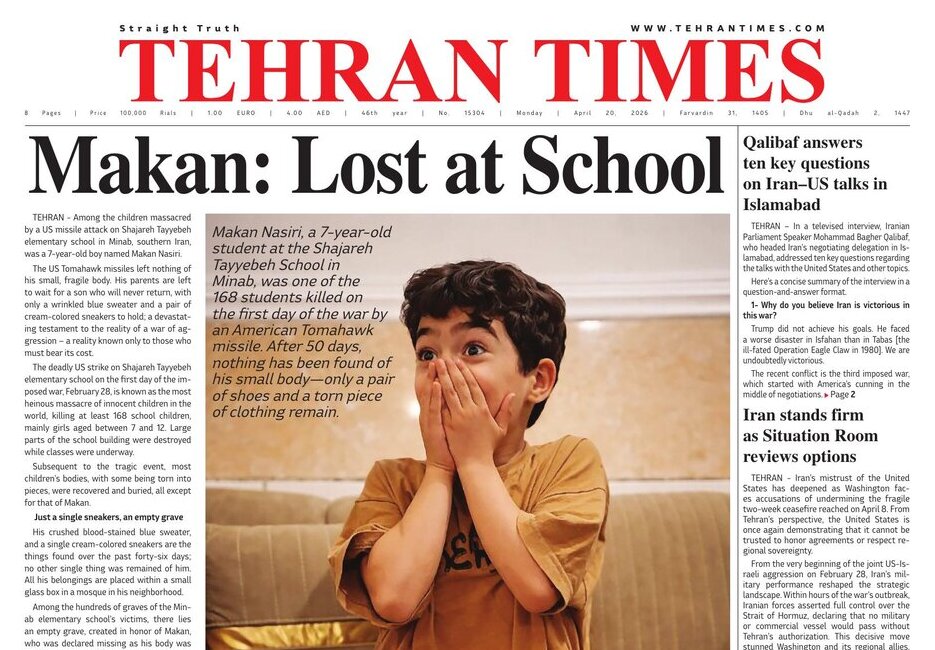
An adviser to Iran's parliament speaker said on 22 April 2026 that the Trump administration's extension of the ceasefire "means nothing," according to Middle East Eye. The dismissal came hours after President Donald Trump declared that Iran's nuclear sites had been reduced to rubble, adding that digging out the debris would be a long and difficult process.
The near-simultaneous release of competing framings — a declaration of physical destruction from Washington and a categorical political rejection from Tehran — underscores the deep incoherence at the centre of the current standoff. The ceasefire, whatever its scope, has not produced a diplomatic floor from which negotiations can proceed.
The rubble claim and its limits
Trump's assertion that Iran's nuclear facilities have been "completely destroyed" deserves careful treatment. The claim, reported by Zee News on 22 April 2026, frames the strikes that preceded the ceasefire as a decisive physical act. If the infrastructure of Iran's enrichment programme has been substantially degraded, that is a significant development — one that would narrow Iran's near-term breakout capability and alter the calculus of any future negotiation.
But physical destruction of a site is distinct from elimination of a programme. Open source analysts monitoring the situation note the distinction: Iran's nuclear architecture is distributed across hardened facilities whose full inventory of centrifuges, uranium stock, and technical personnel cannot be erased by air strikes alone. That does not mean the damage is negligible. It means the claim is doing political work that its literal language does not support. The framing — complete destruction — serves a domestic and diplomatic audience more than it describes a military outcome.
The same report notes Trump's own qualifier: digging out the debris would be "a long and difficult process." That phrasing implicitly acknowledges that rubble remains, that infrastructure recovery is unfinished, and that whatever was struck has not been returned to operational status. The qualifier is strategically placed, allowing the administration to claim total success while maintaining plausible deniability about whether the programme continues in reduced form.
Tehran's categorical rejection
Iran's response, channelled through the parliament speaker's office, is unambiguous. An adviser described the ceasefire extension as "meaningless." That is not the language of a party preparing to negotiate from a position of weakness — or at least not of a party willing to signal that it perceives itself as weakened.
The counter-narrative, presented by American commentator Dan Winslow and cited by Tasnim News on 21 April 2026, is that Trump "does not want to admit that he has completely failed." The argument holds that extending the ceasefire is itself an admission that further bombardment is unsustainable — that the original campaign objectives could not be met within the initial window, and that the administration is managing the optics of a stalemate.
That reading is not the only coherent one. The ceasefire extension could equally represent a genuine diplomatic off-ramp: an attempt to freeze the situation long enough for back-channel negotiations to begin. Whether either side intends to use that space is a separate question from whether the space exists.
What is clear is that Tehran has, at least publicly, no intention of treating the extension as a goodwill gesture. That severely constrains the negotiating environment. A ceasefire that one party regards as meaningless is a pressure tactic, not a pause.
The structural reality beneath the rhetoric
The pattern here is familiar: a military operation produces a physical outcome, an administration declares victory in absolute terms, and the target country refuses to read the same text. This sequence has played out across multiple flashpoints in the post-Cold War order. What differs is the stakes.
Iran's nuclear programme has been the subject of international diplomatic attention for more than two decades. The Joint Comprehensive Plan of Action — the 2015 agreement that the Trump administration exited in 2018 — was premised on the idea that Tehran's enrichment capacity could be constrained throughVerified international monitoring in exchange for sanctions relief. That architecture is gone, replaced by a period of "maximum pressure" that produced accelerated enrichment and a wider regional confrontation.
The current moment sits inside that longer arc. The strikes that preceded the ceasefire represent the most direct physical engagement with Iran's nuclear infrastructure that the United States or its allies have attempted. Whether the targets were selected for maximum operational impact or for their symbolic value — the Fordow facility deep inside a mountain, the Natanz enrichment hub — the political communication is identical: the programme is no longer invulnerable to force.
But invulnerability and existence are different things. Iran has had years to disperse, harden, and redundant its most sensitive capabilities. A ceasefire — even one dismissed by Tehran as meaningless — buys time for recovery, reconstitution, or relocation. The rubble that Trump described may conceal material that is recoverable. It may conceal capabilities that were moved before the strikes.
What comes next
The immediate forward path is murky. The Trump administration appears to want a negotiated settlement that can be presented as the product of pressure rather than of deadlock. Tehran appears unwilling to enter any room that has not been explicitly framed as an acknowledgement of victory by the other side.
There are no publicly confirmed diplomatic channels. There is a ceasefire that one party has publicly deselected as a framework for talks. And there is rubble — whose significance is disputed, whose contents are not publicly known, and whose clearance will take months regardless of whose version of events a reader finds credible.
The sources do not specify what, if any, private communication has passed between Washington and Tehran. They do not establish whether the ceasefire covers only the struck sites or a broader geographic area. They do not clarify the operational status of Iran's remaining nuclear facilities. Those gaps matter, because the public record currently offers two mutually exclusive narratives: total success, or complete failure. The truth almost certainly sits between them, but the evidence currently available does not allow a confident placement.
For regional allies watching from Riyadh, Ankara, and across the Gulf, the priority is straightforward: they need to know whether Iran retains a meaningful enrichment capability and whether the ceasefire is stable. On both counts, the available evidence is insufficient. That uncertainty is itself a form of pressure — on the countries that neighbour Iran, on the administration that declared victory, and on Tehran, which has chosen defiance over de-escalation as its public posture.
This publication's wire coverage led with the physical destruction claim, treating Tehran's rejection as a secondary development. Monexus has invertsed that emphasis, treating the Iranian political response as the more analytically significant data point for understanding whether the ceasefire can function as anything more than a tactical pause.
Wire provenance
This editorial synthesis draws on the following public wire/social posts:
- https://zeenews.india.com/hindi/world/donald-
- https://twitter.com/Osint613/status/2046740394084384874/photo/1