Trump Claims US "Totally Controls" the Strait of Hormuz — and Argues Iran Has No Incentive to Close It
President Trump asserted on 22 April that the United States fully controls the Strait of Hormuz, a vital chokepoint through which roughly a fifth of the world's oil passes, while simultaneously arguing Iran lacks the economic incentive to follow through on its periodic threats to close the waterway.
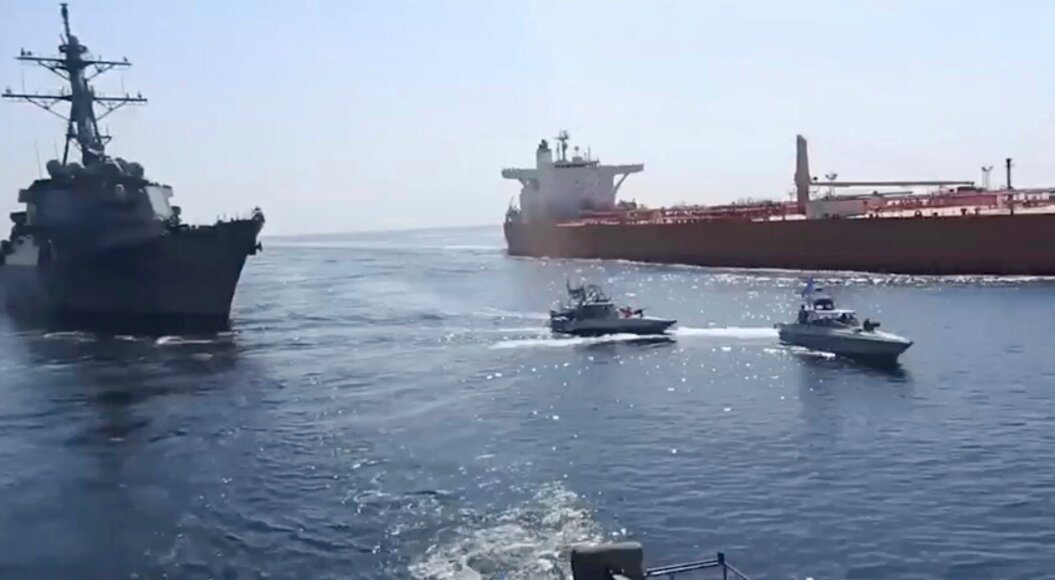
President Trump declared on 22 April that the United States fully controls the Strait of Hormuz — a claim that sits awkwardly with the underlying logic of his own negotiating posture toward Iran. The statement, delivered as administration officials work to extract concessions ahead of any ceasefire extension, frames the Hormuz question as a matter of American dominance rather than mutual economic dependency. The Strait carries roughly a fifth of the world's oil trade. Disruption there would move markets immediately across Europe and Asia. What Trump is banking on is that Iran's rulers share that calculation — and that the financial weight of keeping the waterway open is heavier than any coercive leverage Tehran thinks it holds.
A Shifting Tone on Hormuz
Trump's public posture toward the Strait has oscillated over the course of his current term. His first administration treated Middle Eastern maritime chokepoints as legacy entanglements; his return has produced a more straightforward assertion of US control. Administration officials, according to sources who have briefed on internal discussions, have told the president that closing the Strait would require military capabilities Iran has not demonstrated and would invite immediate retaliation. The 22 April statement was calibrated to reinforce that deterrence publicly — and to signal to Gulf allies that the US naval presence in the Persian Gulf remains the guarantor of regional energy flows.
But the framing has a countervailing risk. Asserting full US control of a 34-mile international waterway shared with Oman and Iran sits uneasily with international law governing innocent passage and with longstanding Omani sovereignty over its territorial waters. Gulf analysts note that the US Fifth Fleet, based in Manama, Bahrain, has operated continuously in these waters since 1949 — but that the legal architecture of the Strait itself, governed by transit passage norms under UNCLOS, does not confer exclusive control to any single state.
Tehran's Leverage, Revisited
The more operative question is not whether the US Navy can keep the Strait open, but whether Iran has reasons to close it. Trump's own framing contains the answer he wants to reject: Iran earns significant revenue from oil shipments transiting the Strait. Administration officials say Tehran makes approximately $500 million per day from flows through the waterway — and that this figure is the reason Iran has never followed through on its periodic threats to seal it. The argument is economic rationality. Tehran can threaten, can posture, can occasionally test the thresholds of what the international community will tolerate. But the moment it closes the Strait, it closes the pipeline that funds its government.
That reasoning has limits the administration has not publicly addressed. Iran's oil export capacity has been squeezed by sanctions architecture that the Trump administration has in some cases tightened rather than eased. If the financial argument for keeping the Strait open depends on Iran's ability to sell its oil, then reducing Iran's export options reduces the very incentive Trump is citing. The sources reviewed do not specify what concessions the administration is demanding from Tehran in exchange for allowing Iran to continue earning that revenue — and that gap matters. The US can guarantee freedom of navigation. It cannot guarantee Iran the right to earn $500 million a day through it.
The Ceiling on Deterrence
Trump's statement on 21 April that he does not want to extend the Iranian ceasefire frames the Hormuz comments in sharper relief. The ceasefire — whatever its precise terms — has kept military confrontation from escalating into a broader exchange that both sides have periodically signalled they want to avoid. Extending it would require something from Tehran: either behavioural constraints on its nuclear programme, limits on support for regional proxy forces, or some other concession the administration deems sufficient. The 22 April Hormuz statement suggests the administration believes it holds the stronger hand — that Iran needs the Strait more than the US does.
That calculation is not universally shared. Regional states with significant exposure to Hormuz — Saudi Arabia, the UAE, Kuwait — have not publicly endorsed the most confrontational version of Trump's posture. Their energy infrastructure depends on the Strait remaining open under any scenario. A US strategy that treats Hormuz control as a card to be played rather than a shared interest to be managed carries risk for those allies. The administration appears to be gambling that economic pressure, reinforced by naval presence, will keep Iran at the table — and that keeping Iran at the table is sufficient to keep the Strait open.
Oil Markets and the Next Sixty Days
The stakes for global energy are immediate. Roughly 20-25% of traded oil passes through the Strait. Even a temporary closure — or the credible threat of one — would move crude prices in a way that touches every economy dependent on imported energy. Europe, which imports significant volumes from the Gulf, and Asia, which depends heavily on the same route, have limited short-term alternatives. The Spratly Islands transit route and the Cape of Good Hope detour offer partial redundancy at substantially higher cost. If the ceasefire breaks down and Iran responds to increased sanctions pressure by tightening the Strait, the administration would face a choice between military escalation and a concession that undermines its negotiating position.
Trump's backers in the energy sector have argued that a successful deterrence posture keeps oil prices lower than a renewed Iran deal would, and that the $500 million daily calculation is precisely the kind of economic logic that should govern Tehran's decision-making. The counter-argument — that Iran has absorbed economic pressure for four decades and may calculate that a cornered government has less to lose than an expanding one — has not been answered in the administration's public messaging. The Strait remains open. Whether it stays that way depends on what the ceasefire negotiations produce in the coming weeks, and on whether Iran's hardliners decide that the financial cost of closure is outweighed by the political cost of appearing to accept American dominance over a waterway Tehran has historically treated as a red line.
This desk covered the Trump Hormuz statements against the backdrop of ongoing ceasefire negotiations; wire framing focused on the negotiating leverage the comments appear to generate. The structural dimension — that asserting control over an international waterway is not the same as guaranteeing Iranian compliance with economic logic — received less emphasis in the initial reporting cycle.
Wire provenance
This editorial synthesis draws on the following public wire/social posts:
- https://t.me/wfwitness/1898
- https://t.me/rnintel/847
- https://x.com/unusual_whales/status/1912835421980459169
- https://x.com/unusual_whales/status/1912833876203827351