Trump Declares Victory Over Iran as Ceasefire Ends and Debris Remains
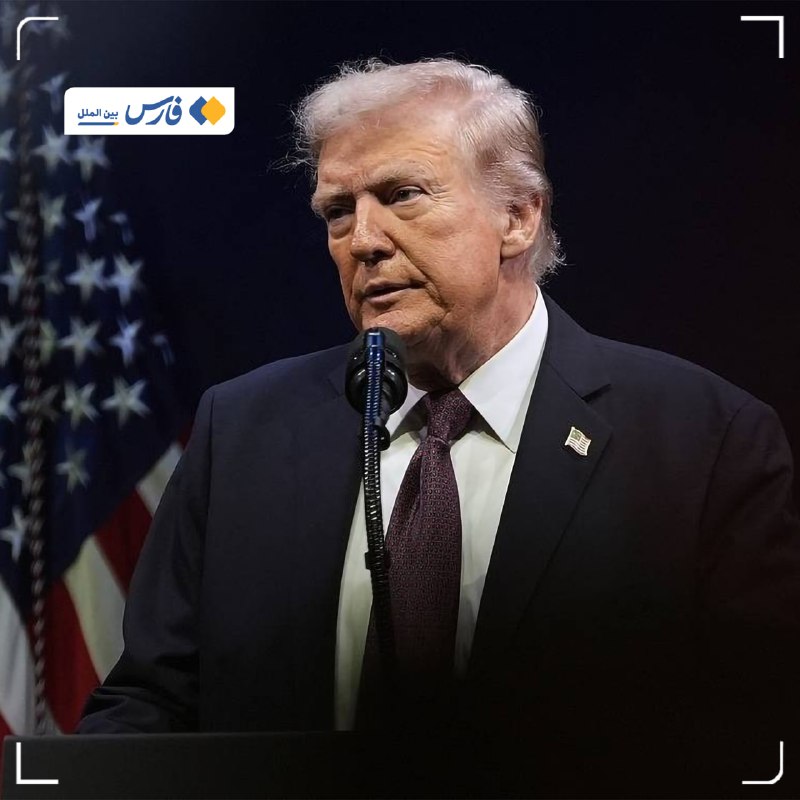
On 21 April 2026, President Donald Trump announced that the United States had "totally won" its confrontation with Iran. Twenty-four hours later, the ceasefire that had briefly paused strikes on Iranian nuclear infrastructure appears to have run its course — and the language coming out of Tehran suggests the Islamic Republic was not impressed by American declarations of success.
"Iran's nuclear sites completely destroyed... Trump said that digging out the debris would be a long and difficult process." That framing, carried by Zee News India citing the president's own remarks, captures the administration's preferred narrative: the facilities are gone, and the work of excavation is simply a logistical matter now. But whether the destruction of buried sites can be verified from open sources, and whether Tehran shares the interpretation of a concluded conflict, remains far less settled.
What Trump Claimed — and What Remains Unresolved
Trump's declaration that his administration achieved total victory rests on two pillars: the physical destruction of uranium enrichment facilities at Fordow and Natanz, and the collapse of Iranian negotiating leverage once those sites were struck. Speaking at the White House on 21 April, the president argued that the strikes had accomplished what diplomacy had not in years of on-and-off negotiations over Iran's nuclear programme. The administration published no independent damage assessment alongside the claim.
Tehran's response has been cooler than the language of defeat that Washington appears to have expected. According to commentary attributed to Iranian officials, Iran concluded that the American position contained an empty threat at its centre — what one source described as the "whole TACO thing." The phrase, reportedly adopted by Iranian analysts monitoring American signals, appeared to suggest that Tehran had correctly assessed which elements of the administration's posture were coercive bluff and which were not. Whether that assessment was accurate, and what specific capability or commitment Iran identified as the bluff, is not disclosed in the available sources.
Iran's Nuclear Programme: Destroyed or Dispersed?
The distinction matters enormously. Open-source analysts tracking Iran's nuclear activities have long noted that the most sensitive elements of the programme — uranium conversion and early-stage enrichment — are designed to be difficult to eliminate comprehensively from the air. Fordow, buried under a mountain south of Qom, was specifically hardened against conventional airstrikes. Whether the strikes that reportedly hit it achieved "complete destruction" or inflicted damage that Iran can partially repair is not independently confirmed in the sources Monexus has reviewed.
There is a structural reason to treat the administration's victory claim with caution. Destruction of fixed infrastructure does not eliminate the knowledge, personnel, or supply chains required to rebuild enrichment capacity. The Fordow site in particular was subject to American and Israeli planning for more than a decade precisely because its underground construction made it resistant to bombing campaigns. Iran's official news agencies have not published casualty figures or damage assessments; Iranian state media framing is notably absent from the current wire inputs, which limits the ability to assess the Tehran side of the ledger.
The administration's own language — that digging out the debris would be a long and difficult process — implicitly concedes that the job is not finished. Debris removal at a hardened underground site is a months-long engineering problem. Whether that work proceeds under ceasefire conditions or resumes under a renewed bombing campaign is the most immediate unresolved question.
The Ceasefire Ended. What Comes Next Is Unclear.
The ceasefire that paused operations around the nuclear sites has apparently expired without a formal extension. No announcement from the Pentagon or the State Department confirming the deal's collapse is visible in the wire materials reviewed. The silence itself is informative: a successful ceasefire would typically produce joint statements from both parties or at minimum diplomatic acknowledgments. The absence of such confirmation is consistent with a breakdown, though the available sources do not specify terms, duration, or whether either side formally renounced it.
The stakes of that ambiguity are significant. If the strikes resume, the administration has already exhausted its most publicly celebrated target set. If the strikes do not resume, Iran faces either a negotiated normalization — which neither side has indicated is imminent — or a continuation of the current limbo, in which damaged facilities sit unexcavated and the nuclear programme's status remains formally frozen but practically ambiguous.
Structural Context: When a Ceasefire and a Victory Declaration Don't Match
There is a pattern in modern military coercion — visible across multiple administrations — in which the political need to declare success outpaces the military reality on the ground. The gap between "we have won" and "the conflict is over" creates diplomatic and operational confusion that adversaries can exploit. Iran appears to have identified exactly that gap. Whether Tehran's read of American intentions is correct, or whether the administration has reserves of leverage not yet deployed, is a question the available sources cannot answer.
The broader implication extends beyond bilateral relations. An administration that declares total victory and then faces a resumption of hostilities — or an Iranian programme that reconstitutes despite declared destruction — carries credibility costs that affect deterrence calculations with North Korea, in ongoing negotiations with Russia over Ukraine, and in the broader assertion of American willingness to use force as an instrument of nonproliferation policy. Those costs are not hypothetical; they compound with each instance in which declared outcomes and observed realities diverge.
What remains certain as of 22 April 2026 is that the strikes happened, the facilities are at minimum damaged, the ceasefire has expired, and both sides are talking past each other. The debris will be excavated. The political claims will be scrutinized. And the question of who actually prevailed will not be answered by either party in the short term.
Desk note: Wire coverage of this story focused on the administration side, leading with Trump's victory declaration. Monexus leads instead with the ceasefire expiration and the Iranian counter-signal, treating the president's claim as one data point in a contested narrative rather than as established fact.
Wire provenance
This editorial synthesis draws on the following public wire/social posts:
- https://twitter.com/unusual_whales/status/2046776195321057462
- https://twitter.com/TheWarMonitor/status/2046776195321057462/video/1