Trump extends Iran ceasefire as Asia's oil appetite deepens sanctions rifts
The White House signalled it will hold fire on Iran for another fortnight while pursuing parallel diplomatic tracks on a nuclear deal and women's rights — even as Asian buyers continue propping up Tehran's oil revenues.
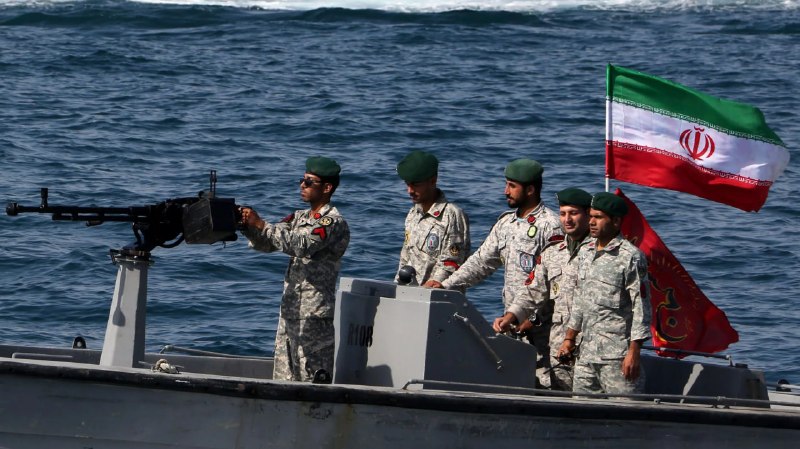
When the White House announced it would extend the existing ceasefire with Iran on 22 April 2026, it framed the decision as a diplomatic olive branch extended in good faith. President Donald Trump said the halt to strikes would hold while talks with Tehran progressed. Yet the announcement came on the same day his administration publicly demanded that Iran release eight women who, according to US officials, face imminent execution — a demand that Iran state media has not confirmed and that reflects the friction running through every layer of the bilateral relationship.
The two moves illustrate a White House pursuing simultaneous and sometimes contradictory tracks: sanctions relief negotiations tied to nuclear commitments, and a separate human-rights ultimatum that sits awkwardly within the same diplomatic frame. The ceasefire extension buys time. Whether it buys a deal is a different question.
Ceasefire without a framework
The pause in strikes has been in place for roughly two weeks. During that window, oil markets have registered the uncertainty without collapsing under it. Brent crude fluctuated in a narrow band across the week of 14–21 April, reflecting traders' inability to price in either a normalisation deal or a resumption of hostilities. The BBC reported on 22 April that Trump would extend the ceasefire pending progress in talks, without specifying what progress would look like or who would measure it.
For Gulf Arab states and their Western partners, the priority is the nuclear file — Iran's enrichment activities, the status of advance notice provisions, and the verification architecture that any deal would require. Those negotiations, according to officials briefed on the process, remain in preliminary stages. No framework has been agreed, and no timelines have been publicly committed to.
The women's rights demand inserts a complication. Trump and his advisors have raised the case of the eight women in recent public statements, framing it as a test of Tehran's willingness to signal de-escalation in cultural and judicial dimensions as well as military ones. Iranian officials have not addressed the specific claims in any public forum, and state-linked media have not reported on court proceedings related to those individuals.
Asia's hunger for oil
The geopolitical theatre sits alongside a quieter and more durable reality: Asian buyers are purchasing Iranian oil at levels that complicate any US strategy of maximum pressure. According to reporting by Nikkei Asia on 21 April 2026, Iran's crude exports in March rose more than 5 percent compared with the prior twelve-month average, with Russia's exports climbing by a similar margin. India, South Korea, and several Southeast Asian refineries were cited as customers increasing intake during that period.
That increase reflects a structural shift in Asian energy procurement that has been building for years. Western sanctions created a discount on Iranian barrels. Asian state refineries, operating under their own national calculations about energy security and price sensitivity, have taken those barrels in volumes that the US treasury has found difficult to police through secondary sanctions alone. The enforcement architecture exists; the political will in consuming states to comply with it varies.
India's position is instructive. New Delhi has consistently argued that energy security is a sovereign concern and that Iranian oil supplies are commercially rational given the discount and the proximity. The Indian foreign ministry has not publicly acknowledged any Washington request to reduce purchases and has declined to confirm specific import volumes in recent statements. The gap between the theoretical maximum of the sanctions regime and the practical floor of enforcement has allowed Iran's oil revenues to recover faster than US officials anticipated.
The tariff paradox
Trump's broader trade agenda adds a layer of contradiction. His administration has simultaneously pressured Asian trading partners to reduce their exposure to Iranian and Russian energy while waging a tariff offensive that destabilises the same partners' economic calculus. Countries that might otherwise be more responsive to US requests for energy-supplier diversification are managing domestic economic strain from duties on their own exports, which reduces their appetite for further accommodation on unrelated foreign-policy asks.
The effect is most visible in the India–US relationship and in the posture of several Southeast Asian states. India has continued importing Russian-origin crude throughout the 2025–2026 period, a pattern that US officials have publicly noted and privately pressed. The Indian government's position has been consistent: energy deals are commercial, not political, and New Delhi will not negotiate energy policy in public forums.
For Iran, the dynamic is more acute. Tehran depends on oil revenues to fund a government budget that carries significant obligations — military commitments, social spending, and the patronage networks that sustain the political economy of the Islamic Republic. The sanctions relief that a nuclear deal would provide is not simply a diplomatic prize; it is a fiscal necessity. That urgency on the Iranian side creates negotiating leverage for the US, but it also creates pressure to accept a deal that may not resolve the underlying enforcement problem.
What comes next
The ceasefire extension gives both sides a window. The US wants a verifiable nuclear agreement and a visible gesture on judicial practices. Tehran wants sanctions relief and normalisation of banking channels. Neither want to be seen as the party that broke the pause.
The harder problem is structural. Even if the nuclear talks produce a framework document, the flow of Iranian oil to Asian buyers will not reverse automatically. The refineries that have adapted to Iranian crude have done so because it is cheaper and more available than alternatives. A sanctions waiver is a political act; a supply-chain reorientation is a commercial decision made by private actors. Washington can offer waivers; it cannot compel Asian refineries to switch suppliers if Iranian barrels remain cheaper.
The eight women whose fate Trump has raised remain the sharpest diplomatic edge of this negotiation — not because they are the central issue, but because their treatment exposes the gap between what a deal can promise and what Tehran's domestic politics will actually allow. A government under international pressure can concede on enrichment ratios and inspection timelines. Judicial decisions affecting individuals in domestic courts are harder to gesture away without appearing to bend to foreign demands.
The ceasefire buys two weeks. It does not buy a resolution. And Asia's appetite for Iranian oil continues regardless of what the White House announces from the podium.
This article reflects how Monexus covered US-Iran diplomatic posturing and Asian energy demand dynamics in the same frame — a structural connection the wire services typically treat as separate stories.
Wire provenance
This editorial synthesis draws on the following public wire/social posts:
- https://t.me/LiveMint/28456
- https://t.me/nikkeiasia/14203
- https://t.me/nikkeiasia/14203