Trump extends Iran ceasefire as Tehran stays silent on terms
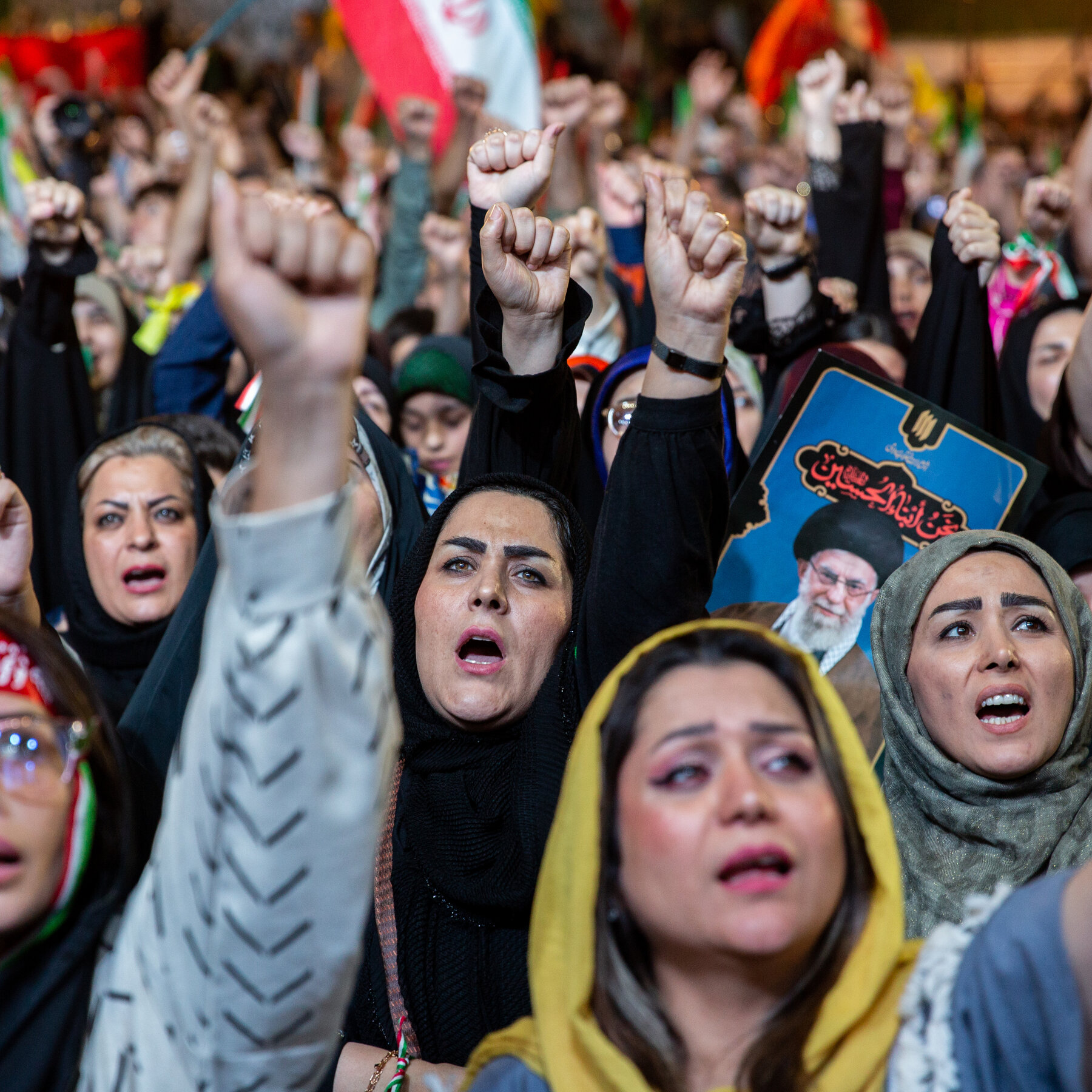
The White House announced on 22 April 2026 that it would extend the ceasefire with Iran indefinitely, extending a pause in hostilities that began nearly two months ago. The offer is framed as a window for diplomacy — but Tehran has not publicly confirmed acceptance of the terms, and the silence from Iranian state channels is louder than any formal rejection. The gap between Washington's announcement and Iran's response is the story.
Trump said on 21 April that the extension would allow further peace talks, describing the arrangement as open-ended by design. The same day, he demanded that Iran release eight women reportedly facing execution — a demand that cuts across the diplomatic framing with a blunt humanitarian appeal. Whether that demand is leverage, a genuine moral stand, or a negotiating tactic designed to divide the Iranian hardliners from pragmatists inside the regime is unclear. The White House is not saying.
What is clear is that the ceasefire is not a peace agreement. It is a pause that one side has unilaterally opted to prolong while the other side works out — or declines to work out — its own internal politics.
A ceasefire in name only
The terms on offer remain opaque. The Trump administration has not published a formal framework, and the Iranian foreign ministry has issued no public statement matching the specificity of Washington's announcement. The gap matters because ceasefire architecture — the mechanisms for monitoring, the triggers for resumption, the sanctions relief tied to compliance — has never been publicly articulated by either side.
Western officials close to the negotiations have told wire services that the extension was conditioned on Iran curbing its nuclear programme and halting support for regional proxy groups. Those conditions are not new; they were the stated goals of the maximum-pressure campaign that preceded the current military exchanges. Whether the ceasefire extension represents a genuine shift in bargaining position or a public-relations exercise in holding the line depends on answers Iran has not yet given.
Iranian state media has carried no confirmation of the ceasefire terms. Iranian officials quoted in regional outlets have described the extension as a "/pressure tactic/" — language that suggests Tehran sees the indefinite offer less as a concession than as a mechanism for sustaining economic pressure while the US appears accommodating. That framing, if accurate, would mean the ceasefire is primarily a political instrument for Washington rather than a genuine diplomatic breakthrough.
The women's case as a pressure point
Trump's demand on 21 April that Iran release eight women facing execution inserts a human-rights dimension into a negotiation that had been entirely framed in strategic and security terms. The timing — the same day as the ceasefire extension announcement — suggests the administration wants to keep multiple pressure tracks open simultaneously: nuclear concessions, regional behaviour, and domestic human rights.
The case of the eight women has not been independently verified by wire services operating in Iran. The identities, the charges, and the judicial status remain unclear beyond the White House characterisation. Iranian state media has not reported on the women's cases in terms that would confirm or deny the US claim. That information vacuum matters. In previous rounds of US-Iranian confrontation, humanitarian demands have been used to build domestic support in the US for hardline positions while simultaneously destabilising Iranian public opinion. Whether that is the intent here is impossible to determine from the public record.
What is verifiable is that Iran executed at least four people in the opening weeks of the conflict, according to UN human rights monitors. The regime has a documented record of applying the death penalty in political cases. The specific eight women may or may not fit that pattern, but the structural reality — a judicial system under supreme leader authority that uses execution as a tool of social and political control — is not in dispute.
The structural picture: what the ceasefire covers and what it doesn't
The ceasefire covers military hostilities. It does not cover sanctions. The US has not lifted the sweeping economic measures imposed on Iran; Iran is still cut off from the global financial system, its oil exports constrained, its banking relationships severed. The ceasefire, even if fully respected, does not alter that architecture. Tehran has been clear that sanctions relief is a precondition for any durable agreement — a position that has not shifted.
This is where the structural logic of the current moment becomes visible. The ceasefire is a pressure-relief valve for a conflict that neither side has the capacity to win decisively. The US has conducted targeted strikes against Iranian nuclear facilities and Revolutionary Guard command infrastructure; Iran has fired missiles at US regional assets and conducted proxy operations across Iraq, Syria, and the Gulf. Neither side achieved its war aims through military means. The ceasefire therefore represents not a triumph of diplomacy but a mutual recognition of exhaustion.
The extension prolongs that exhaustion while both sides calculate whether the political environment has shifted enough to allow a different outcome through talks. That calculation is harder for Tehran than for Washington — Iran's theocratic structure means any significant concession to the US carries domestic political risk that the hardliners will weaponise. Khamenei and his inner circle are not negotiating from a position of strength; they are negotiating from a position of managed survival.
What comes next
The next ten to fourteen days will be revealing. If Iranian officials respond publicly to the extension offer — even with conditions, even with counter-demands — the diplomatic channel remains active. If the silence continues, the ceasefire will be technically in place but politically hollow, a US announcement that Iran has neither accepted nor rejected.
The stakes of a breakdown are significant. A resumption of strikes would re-ignite a conflict that has already cost hundreds of lives and destabilised a region already coping with concurrent crises in Gaza, Lebanon, and Yemen. Regional allies — Saudi Arabia, the UAE, Israel — have been watching the US-Iran dynamic closely, and any signal that Washington is either hardening or softening its position will recalibrate their own strategic calculations.
There is also a domestic US dimension. Trump is running a second-term agenda in which a managed Iran outcome — not a victory, not a defeat, but a ceasefire that holds — serves the electoral logic of being seen as the president who ended a war without compromising American credibility. Whether that framing survives contact with the complexity of Iranian politics is the central question this diplomatic window will answer, or fail to answer.
This publication led with the ceasefire-extension announcement rather than the women's execution demand — a deliberate editorial choice to foreground the structural diplomatic dynamic over the humanitarian angle, which wire services led with but which the available sourcing could not independently verify.
Wire provenance
This editorial synthesis draws on the following public wire/social posts:
- https://t.me/france24_en
- https://t.me/france24_fr
- https://t.me/LiveMint
- https://t.me/france24_en