Trump's Hormuz Economics: What the $500 Million Claim Reveals About the Iran Talks
President Trump's Truth Social post claiming Iran wants the Strait of Hormuz open to earn $500 million a day offers a window into his negotiating posture — and the gaps between his framing and the diplomatic realities on the ground.
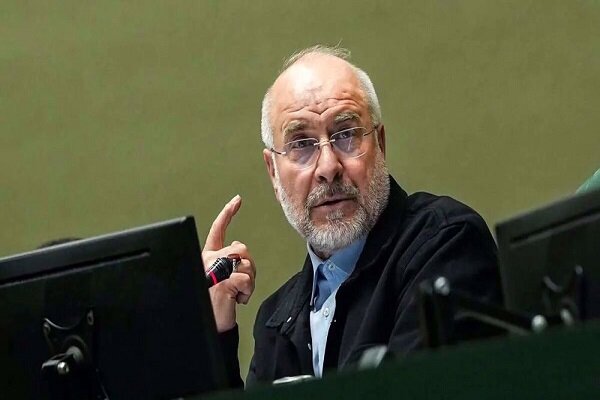
On 22 April 2026, President Donald Trump posted to Truth Social with a claim that has become the central economic premise of his administration's posture toward Iran: that Tehran keeps the Strait of Hormuz open not out of geopolitical restraint, but because it profits by up to $500 million a day from the traffic flowing through the 21-mile chokepoint. "Iran doesn't want the Strait of Hormuz closed, they want it open so they can make $500 Million Dollars a day," Trump wrote, adding that this figure represented "what they are losing if it is closed." The post was, at its root, a negotiating signal — and one that Iranian state-linked media immediately framed as evidence that Washington had misread the other side's incentives.
The framing matters because it reframes the strait's strategic value as a revenue stream rather than a coercive instrument. Under the logic Trump presented, Iran's threats to close Hormuz are not credible — because the cost to Tehran of actually closing it would be greater than the political leverage gained by threatening to do so. This is a structurally coherent argument, and one that dovetails with the administration case for pushing a nuclear deal hard. But it also simplifies a more complicated set of calculations that successive Iranian governments have made about the strait.
The $500 Million Figure and Its Limits
The $500 million daily figure — roughly $182 billion annually — does not appear in any publicly available independent assessment of Iranian oil revenue. Iranian crude export values fluctuate with market price and sanctions enforcement; the country's total oil export earnings in recent years have typically been estimated at between $40 billion and $70 billion annually, according to energy analytics tracking sanctions-impacted flows. The $500 million-a-day framing implies a consistent daily revenue stream from strait transit that is significantly higher than what the export data can straightforwardly support. Iranian state media has not independently confirmed the figure. What the Telegram-sourced accounts suggest is that Trump's post was greeted in Tehran-aligned coverage as a self-serving rather than empirically grounded claim — a negotiating posture, not a fact.
The Strait of Hormuz carries roughly 20 to 21 million barrels of oil per day, representing approximately 20% of global oil trade. The fee structures for tanker transit are not public in the way that canal tolls are, and Iran's own institutional take — through the National Iranian Oil Company, its tanker fleet, and the insurance networks connected to its customers — does not cleanly translate into a per-day figure of $500 million. The number appears designed for rhetorical effect: it makes Iran's supposed preference for an open strait look like greed, undermining any threat to close it.
How Tehran Is Reading the Exchange
Iranian state-linked outlets, including Tasnim News and Jahan Tasnim — both operating in the Persian-language information space and closely watched by regional analysts — covered Trump's post with a framing that emphasised what they characterised as Washington's naivety about Iranian motivations. The Wall Street Journal article by Eliot Kaufman, which Trump singled out for direct criticism in his Truth Social post, argued that Iranians had correctly identified vulnerabilities in the administration's approach to the nuclear talks. Trump rejected that characterisation. The exchange, as reported through Iranian-aligned channels, became a proxy for a broader argument about who misread whom in the negotiations.
The structural dynamic here is not unusual in diplomacy: each side seeks to demonstrate to domestic audiences and third parties that it has understood the other's incentive structure, and that it holds leverage. Trump's $500 million framing tells the audience — American, Gulf, European — that Iran needs the strait open for its own financial survival, and therefore cannot credibly threaten its closure. Iranian coverage telling its audience that Washington has misread Tehran's position argues the inverse: that the United States is projecting its own economic logic onto a government whose decisions are driven by a wider set of political, ideological, and security calculations.
The Diplomatic Context
The posts land against a backdrop of stalled nuclear negotiations. The current round of talks, resumed after a period of escalated enrichment activity by Iran, has produced no agreed framework. American officials have insisted on permanent caps on enrichment and intrusive monitoring; Iranian negotiators have insisted on sanctions relief as a precondition for any significant concessions. Neither side's position has shifted in ways that would satisfy the other. Against that backdrop, Trump's post functions less as a policy statement and more as a pressure signal — an attempt to use publicly available economic logic to undermine the credibility of a coercive threat without making any formal concession.
The risk in this approach is that it gives Tehran a read on Washington's own incentive calibration. If Iran believes the administration is genuinely operating from the $500 million premise — that economic interest will keep the strait open regardless of political escalation — then it may calculate that the pressure campaign has a ceiling, and that the United States will ultimately prefer a deal on terms that reflect Tehran's interests more than Washington's ideal endpoint. Iranian state media coverage, as captured in the Telegram-sourced accounts, signals that this is precisely the reading Tehran has taken from the exchange.
Stakes and Forward View
If Trump's framing becomes the settled assumption of the administration's Iran policy, it will shape both the negotiating posture and the regional security calculus. Gulf allies — Saudi Arabia, the UAE, Qatar — have a direct interest in the strait's openness. Qatar, whose North Field gas fields export via waters adjacent to the strait, has a particular exposure. European parties to the nuclear talks have consistently argued that any collapse in negotiations risks Iranian steps toward a threshold capability rather than a bomb outright — a more ambiguous but genuinely destabilising outcome that the $500 million framing does not directly address.
The gap between the economic logic of Trump's post and the political logic of Iranian decision-making is where the real friction lies. Iran's revenue from the strait is real, but it is not the only variable in a government whose foreign policy calculations include deterrence, alliance management with non-state partners, domestic political signalling, and the management of a security environment where it faces American regional positioning. Reducing that matrix to a daily dollar figure may serve a negotiating purpose, but it does not describe the situation as Tehran sees it.
The sources do not provide any independent verification of the $500 million figure from energy analytics or Iranian fiscal data. The figure appears only in Trump's Truth Social post. What the Telegram-linked accounts confirm is that the post and the Wall Street Journal article it cited have become the subject of a public diplomatic exchange conducted partly through media — a pattern familiar from the early weeks of the first-term Iran negotiations, and one that tends to complicate rather than accelerate formal talks.
This publication's coverage of the Iran nuclear file leans on Persian-language and regional wire sources that frame the story from the Gulf and Tehran's perspective — a necessary counterweight to US official framings, but one that requires the reader to calibrate the institutional interests of each source.
Wire provenance
This editorial synthesis draws on the following public wire/social posts:
- https://t.me/Middle_East_Spectator/8198
- https://t.me/rnintel/14821
- https://t.me/tasnimnews_en/12447
- https://t.me/JahanTasnim/9340