Trump's Hormuz Gambit: The Ceasefire, the Strait, and the Architecture of Coercive Diplomacy
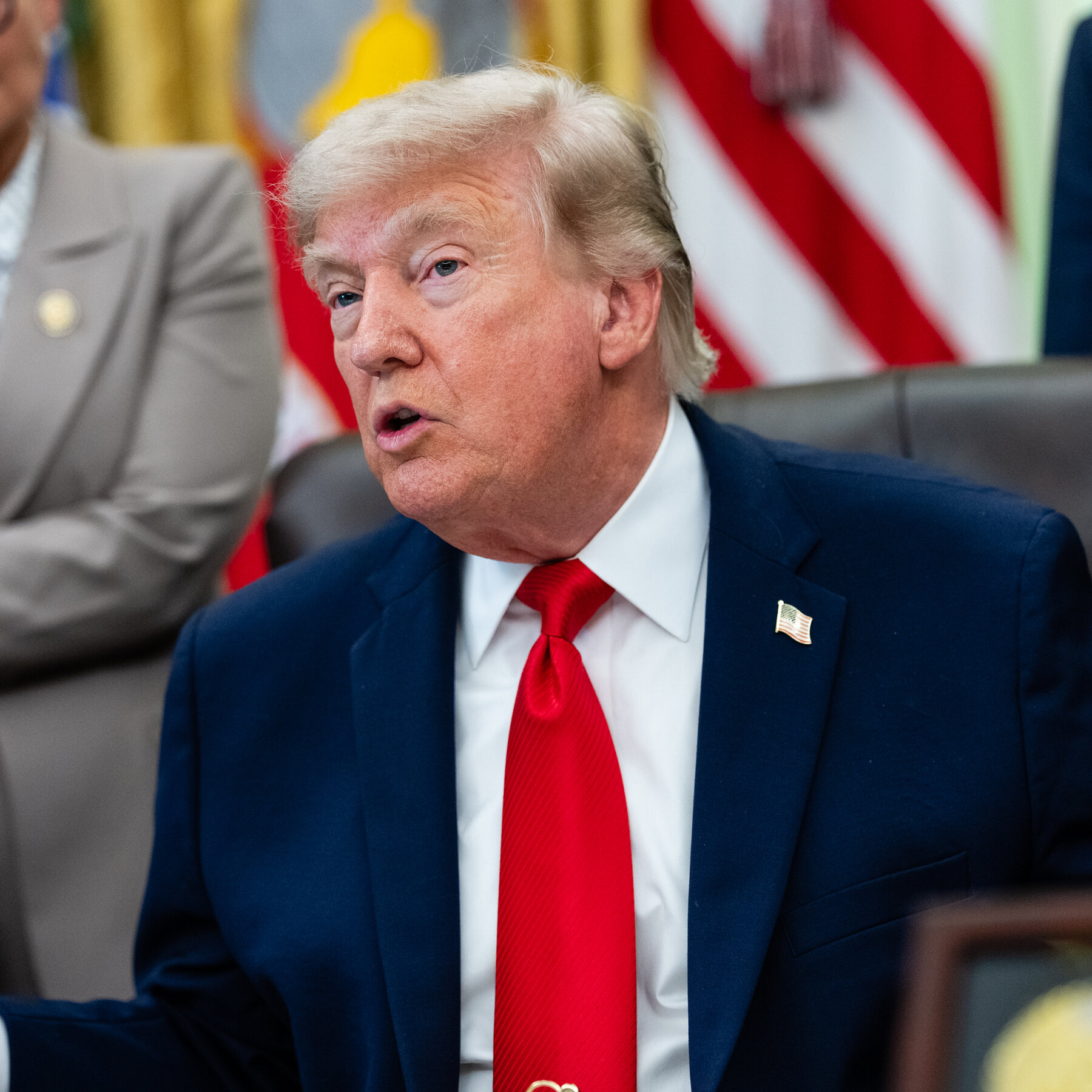
The brief pause in hostilities between the United States and Iran, announced on 21 April 2026, appeared at first glance to be a concession. According to reporting carried by Al Alam Arabic citing Fox News sources, President Trump decided not to resume strikes on Iran at that time, a decision described as an accommodation to Pakistani mediators who had reportedly been working to broker de-escalation. The ceasefire, such as it was, carried an explicit shelf life: sources close to the administration indicated the pause would be short-lived unless a broader agreement could be reached quickly. That framing—concession framed as leverage—is the central logic of the Trump administration's approach to Iran, and it is worth examining closely.
What the White House has proposed is not a negotiation in any conventional sense. It is a structured ultimatum. Trump stated publicly that the United States would not accept the reopening of the Strait of Hormuz as part of any settlement, arguing that such a concession would eliminate the economic pressure that makes Iran receptive to talks in the first place. The administration, according to Axios reporting cited by Al Alam Arabic, was simultaneously weighing an extension of sanctions exemptions to allow continued US oil shipments—a pragmatic carve-out that acknowledges the interconnectedness of global energy markets while maintaining maximum pressure on Tehran. The message to Iran is consistent: close the strait and face military consequences; open it and forgo the only leverage you have.
The Strait as both Threat and Target
The Strait of Hormuz is not merely a shipping lane. It is the world's most critical chokepoint for oil exports, with roughly one-fifth of global crude oil flowing through its narrow passage between Oman and Iran. For Tehran, the threat to close the strait—or to destabilise it sufficiently to disrupt transit—has long served as its most credible asymmetric response to superior US conventional forces. For Washington, the strait represents the inverse: a single point of leverage over an adversary whose economy is heavily dependent on hydrocarbon exports, and whose regime stabilisation depends on the revenue those exports generate.
The Trump administration has inverted the traditional dynamic. Rather than treating the strait's continued openness as a US strategic interest to be defended, the White House has made the strait's closure a latent threat it holds in reserve—not to execute, but to price into every Iranian calculation. The administration does not want the strait closed. It wants Iran to believe the US administration wants it closed, and to behave accordingly. Asian markets registered the distinction immediately. According to Nikkei Asia reporting, equity indices across the region wobbled on the morning of 22 April 2026 as traders absorbed the ceasefire news, moving lower before recovering as the extension of the pause reassured investors that the most catastrophic scenario remained averted.
This is economic coercion in its mature form: not the blunt instrument of complete isolation, but a calibrated pressure campaign that leaves an adversary just enough room to negotiate while denying them any narrative of victory. The Pakistani mediation layer adds a diplomatic fig leaf that allows both sides to claim process without surrendering substance. Trump cited respect for Pakistani intermediaries as the reason for the pause; Tehran, for its part, gains a regional back-channel that it can present domestically as diplomatic validation rather than capitulation.
The Exemption Architecture
The Axios report on oil shipment exemptions deserves particular attention. Sanctions exemptions of this kind are not incidental carve-outs; they are strategic signals. The Trump administration is, by all available evidence, maintaining restrictions on Iranian oil exports while simultaneously ensuring that US companies and their partners retain sufficient access to alternative supplies—or to the financial infrastructure that processes those alternatives—to prevent domestic price shocks. This is a delicate balance. Complete sanctions effectiveness would collapse OPEC+ discipline by creating a supply vacuum that rival producers fill. Incomplete effectiveness, however, undermines the credibility of the pressure campaign.
The exemption on oil shipments is therefore best understood not as a concession to Iran but as a concession to the global energy architecture that the United States still, despite considerable erosion of dollar hegemony, dominates. Washington needs the strait open not out of altruism toward Tehran but out of self-interest: a prolonged closure would spike oil prices globally, damage US consumer sentiment ahead of mid-term electoral cycles, and hand leverage to competitors—Russia, in particular—whose economies are similarly structured around hydrocarbon rents. The exemption is, in this reading, a defensive measure taken to prevent the strait from becoming a weapon turned against the US itself.
The Structural Logic of Coercive Diplomacy
The approach the White House is deploying fits a recognisable pattern in great-power statecraft: the phased ultimatum. In this model, military force is held in reserve not for deployment but for its deterrent value. The ceasefire announced on 21 April 2026 is not a peace agreement; it is the suspension of a threat pending an assessment of whether the threat alone is producing the desired behaviour change. Iranian compliance with economic restrictions—specifically, the cessation of nuclear programme advancement and the reduction of regional proxy activity—would render the military option unnecessary. Non-compliance would not necessarily trigger strikes immediately but would reset the political conditions under which strikes become politically viable.
This framework has limits that the available evidence does not resolve. It assumes the target state—Iran—has a rational-cost-benefit calculus that the threatening power can accurately model. Iran's leadership has, in prior cycles, demonstrated a willingness to absorb significant economic pain in exchange for strategic persistence, particularly on nuclear infrastructure. The 2015 Joint Comprehensive Plan of Action was itself a product of that persistence: Tehran negotiated not because sanctions had made compliance costless but because the deal offered a structured partial relief without capitulation on core programme elements. The current administration has abrogated that framework and is attempting to renegotiate from a position it believes is stronger than in 2018. Whether that belief is warranted is a question the available sources do not resolve.
The Pakistani mediation track introduces an additional variable. Islamabad has long occupied an uncomfortable position in US-Iranian dynamics: a nuclear-armed state with deep economic ties to both Washington and Tehran, with a domestic politics that requires careful management of both relationships. Pakistani intermediaries giving Trump cover to pause strikes serves Islamabad's interest in preventing a regional conflict that would destabilise its western border. Whether Pakistani interlocutors have genuine leverage with Tehran or are primarily serving as a convenient channel for US communication is a distinction the sources do not clarify.
The Market Signal and Its Limits
The reaction of Asian equity markets on 22 April 2026 offers one measure of how external observers are pricing the situation. The Nikkei Asia reporting shows that traders moved lower initially and then recovered as the ceasefire extension provided short-term reassurance. This is not calm confidence; it is conditional relief. Markets are pricing in elevated volatility, a standing risk premium that reflects the underlying structural instability of a region where the world's most consequential energy corridor sits alongside a regime that has repeatedly demonstrated willingness to absorb severe economic punishment rather than capitulate to external pressure.
The deeper problem for markets—and for the diplomatic logic of the White House strategy—is that Hormuz is a shared vulnerability. Iran cannot close the strait without also harming itself; the United States cannot maintain maximum pressure without risking precisely the energy price spike that would destabilise its own political environment. Both sides are operating inside a shared constraint, and the ceasefire, however temporary, represents an acknowledgment that neither can achieve its maximum objective without triggering costs it is unwilling to absorb.
Stakes and Forward View
If the current pause collapses without a negotiated outcome, the most probable scenario is not immediate military escalation but a further intensification of the economic pressure campaign. Secondary sanctions on third-country buyers of Iranian oil—already the most effective lever—would be expanded. The exemptions currently under consideration would be revoked. Iranian crude exports, already suppressed to historically low levels, would face near-complete restriction, with cascading effects on a regime whose budget depends on hydrocarbon revenues at a time when oil prices are elevated but output capacity is constrained.
For the United States, the stakes are domestic as much as strategic. Energy price stability is a political imperative. The current elevated but contained market reaction reflects investor belief that the strait will remain open and that the ceasefire is a prelude to negotiation rather than a precursor to military action. That belief is fragile. A single incident—a provocative IRGC naval movement, an attack on shipping in the Gulf, a miscalculation on either side—could collapse the pause and restart the escalatory dynamic that Asian markets are already pricing against.
What the sources do not establish is whether the administration has a negotiated endpoint it would accept, or whether the goal is indefinite containment without a diplomatic resolution. The Pakistani channel provides process. The Hormuz ultimatum provides structure. The oil exemption provides breathing room for markets and for US allies in the Gulf who would bear the immediate consequences of any military exchange. Whether any of this constitutes a strategy or merely a sequence of tactical improvisations remains, for now, an open question that neither the ceasefire announcement nor the reporting that has followed it resolves.
This publication's coverage of the Iran-US standoff proceeds from the established fact of Iran's nuclear programme advancement and the US withdrawal from the 2015 nuclear agreement as the background conditions for the current crisis. Monexus will continue to track the Pakistani mediation track, the extension or withdrawal of oil shipment exemptions, and any further ceasefire developments as they are reported.
Wire provenance
This editorial synthesis draws on the following public wire/social posts:
- https://t.me/alalamarabic
- https://t.me/alalamarabic
- https://t.me/alalamarabic
- https://t.me/alalamarabic
- https://t.me/wfwitness
- https://t.me/nikkeiasia
- https://t.me/alalamarabic
- https://t.me/alalamarabic