Trump, Iran, and the Islamabad Gambit: What the Second Round of Talks Actually Means
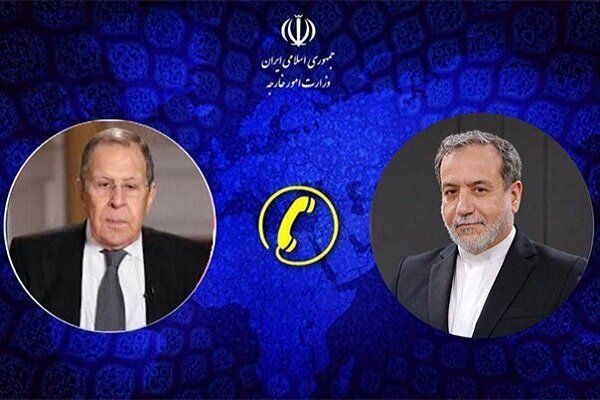
On 22 April 2026, the White House transmitted a calibrated signal into global markets and foreign ministries alike: a second round of American-Iranian negotiations could begin within days. President Trump, speaking to the New York Post, described the prospect of renewed contact as "good news" and confirmed a negotiation meeting was possible "as soon as Friday." A simultaneous message from his administration carried a single emphatic word: "It's possible!"
The Iranian response, delivered through the Foreign Ministry in Tehran on the same day, was notably cooler. The ministry's official spokesperson told reporters that Tehran had not yet decided whether to participate in talks scheduled for Islamabad, and would only commit to attending if doing so served Iran's national interest. The gap between Washington's evidently choreographed enthusiasm and Tehran's measured non-answer is the most revealing fact in the story.
What the sources do not tell us is whether the two governments have privately resolved the fundamental incompatibilities that have historically derailed nuclear negotiations: the scope of sanctions relief, the verification architecture for Iran's enrichment program, and the question of what leverage either side is prepared to use to enforce compliance. The public record, as of 22 April, offers the shape of a diplomatic process without its substance.
The Trump Administration's Diplomatic Opening
The White House approach to Iran in the second Trump term has combined aggressive public posturing with a genuine, if unsteady, willingness to negotiate. Officials in Washington have made clear through multiple channels that the President's preference, stated publicly on several occasions, is for a deal rather than a military confrontation. The New York Post interview of 22 April fits that pattern: it signals interest in progress without committing to specifics.
That style carries risks. A senior administration official, speaking to Axios in March 2026, acknowledged that early round negotiations often produce "noise before signal" — statements designed to test an adversary's floor rather than establish a genuine negotiating position. The White House's public framing of potential Friday talks as "good news" is consistent with that testing strategy. It puts pressure on Iran to respond substantively rather than defer again, while leaving the administration's own bottom line unstated.
The first round of these renewed talks — the location and precise format has varied in reporting — established that both sides were willing to sit in the same room. That is non-trivial. The previous Biden-era JCPOA revival effort collapsed in part because internal American politics made the concessions required from Washington politically unsustainable. The Trump team's different political position — the President has described himself as a deal-maker rather than a regime-change advocate — may create space for an agreement that his predecessor could not sell to domestic critics.
But the sources do not confirm that the substance of a potential deal has been agreed in any form. The Friday framing appears to be an aspiration, not a fixed agenda item with agreed terms.
Tehran's Calculus: Interest, Not Enthusiasm
Iran's Foreign Ministry spokesperson, speaking on 22 April, delivered a statement notable for what it omitted as much as what it included. Tehran did not reject the Islamabad venue. It did not rule out talks. It simply said no decision had been made and that participation would depend on whether the meetings served Iran's interest. That formulation is the diplomatic equivalent of a conditional — it keeps the door open without creating an obligation to walk through it.
The structural reasons for Iranian caution are not difficult to identify. Iran enters these negotiations having watched the JCPOA's collapse, having endured maximum-pressure sanctions under both the first Trump administration and the Biden-era "maximum pressure 2.0" phase, and having absorbed years of economic contraction as a result. Tehran has a sophisticated understanding of what Western negotiators call "negotiating leverage" — and understands that Washington's willingness to talk is itself partly a function of the current administration's transactional worldview rather than a fundamental shift in the balance of power.
The Islamic Republic's bottom line, as articulated through various official channels over recent months, has remained consistent: sanctions relief must be meaningful, not cosmetic; any agreement must include verifiable guarantees against re-imposition; and the Iranian enrichment program — currently operating at levels far exceeding what the original JCPOA permitted — is not a subject for complete surrender. Those positions are not obviously compatible with what American officials have described publicly as their preferred endpoint: a comprehensive deal that ends all pathways to a nuclear weapon.
Iranian state media, including Tasnim and PressTV, have covered the American negotiating posture with a mixture of institutional caution and explicit domestic-politics awareness. Reporting from Tehran during previous rounds has noted that hardliners within the Iranian political system remain deeply skeptical of American intentions regardless of who occupies the White House. Any agreement reached will need to survive scrutiny from factions that view engagement with Washington as an inherent concession.
The Verification Problem That Hasn't Gone Away
The nuclear question — Iran's enrichment capacity, the status of its stock of 60-percent uranium, the status of facilities at Fordow and Natanz — sits at the center of any potential deal. The sources reviewed for this article do not contain specific current figures on Iran's enrichment status as of April 2026. However, the structural picture is well-established: Iran has built and sustained a substantial enrichment capability that did not exist before 2015, and any deal that intends to prevent a nuclear weapons capability must address that capability directly.
The verification architecture for such an agreement is technically complex and politically sensitive. It requires not only Iranian cooperation with International Atomic Energy Agency inspectors but also agreement on what constitutes compliance, how violations are identified and adjudicated, and what consequences follow from non-compliance. The JCPOA's experience — the United States withdrew citing the deal's sunset provisions and Iran's alleged non-compliance on the access question — demonstrated that even a detailed agreement can collapse when political will on either side weakens.
The question for the Islamabad round is whether the two governments have moved beyond the abstract expression of willingness to negotiate toward an actual framework on verification. The sources do not answer this. What is clear is that a Friday meeting, if it occurs, will need to produce enough early agreement on scope and process to demonstrate that the two sides share a minimum understanding of what they are trying to achieve.
Structural Context: Why This Round Matters Differently
American-Iranian negotiations have failed before, sometimes spectacularly. The JCPOA itself — hailed as a diplomatic achievement in 2015 — became a casualty of American domestic politics and was formally abandoned by the Trump administration in 2018. The subsequent years saw Iran's enrichment program accelerate and the diplomatic space between the two governments narrow to the point where military contingencies were discussed seriously in Washington.
What is different about the current moment is not the absence of those tensions but the changed configuration of the broader geopolitical environment. The United States is simultaneously engaged in managing relationships with both China and Russia that carry strategic rivalry without necessarily implying direct military conflict. The Middle East in 2026 is a region where Arab states that previously viewed Iran primarily through a security-prism have moved, to varying degrees, toward pragmatic engagement with Tehran. Saudi Arabia's own diplomatic trajectory — normalization discussions, backchannel contacts — has changed the calculus for all parties.
For Iran, negotiating a deal with the United States in a context where Arab neighbors have already started normalizing relations reduces the political cost of a potential agreement. Iran no longer faces a fully unified regional front; there is more diplomatic space, not less. For the United States, the calculus is different but not entirely dissimilar: a nuclear deal, if achievable, would remove one volatile variable from a regional environment where American attention is stretched across multiple theatres.
That structural change does not resolve the fundamental tensions between the two governments' positions. But it changes the incentive structure in ways that the first Trump administration's "maximum pressure" strategy did not exploit. Whether the current White House is capable of converting that structural opportunity into a verifiable agreement is the question the Islamabad round will begin, at minimum, to test.
Stakes and What Comes Next
If the Friday meeting occurs and produces a credible process framework — not necessarily a deal, but a genuine negotiating agenda with agreed timelines and substantive working groups — it would represent one of the more significant diplomatic openings in the Middle East in recent years. Markets, already attentive to the signals of 22 April, would likely respond positively to early confirmation. The broader regional dynamic — including the positions of Saudi Arabia, the UAE, and Israel — would shift in response to credible progress.
If the talks collapse, or if Iran declines to attend, the political cost for the White House will depend heavily on the public framing of what happened. A unilateral cancellation by Iran would be politically manageable for an administration that has consistently described itself as open to negotiation. A breakdown following substantive engagement would be harder to spin and would likely increase pressure for alternative approaches, including increased sanctions or, in the most pessimistic readings, military contingency planning.
What the sources reviewed for this article indicate, as of 22 April, is that the diplomatic door remains open on both sides. Whether it leads somewhere depends on whether the gap between Washington's public enthusiasm and Tehran's careful non-answer narrows in the days ahead. The Friday framing — "as soon as Friday," "it's possible" — is a signal, not a guarantee. The ball, for now, is in Tehran's court.
Monexus covered the Islamabad round with emphasis on the Iranian calculus and the structural context of regional normalization — a framing that wire reporting, which tended to lead with the White House announcement, did not foreground.
Wire provenance
This editorial synthesis draws on the following public wire/social posts:
- https://t.me/ClashReport
- https://t.me/englishabuali
- https://t.me/tasnimplus
- https://t.me/abualiexpress
- https://t.me/intelslava
- https://t.me/amitsegal
- https://en.wikipedia.org/wiki/Joint_Comprehensive_Plan_of_Action
- https://en.wikipedia.org/wiki/Nuclear_program_of_Iran