Trump Targets Wall Street Journal Over Iran Editorial, Escalating War of Words With Legacy Media
President Trump used Truth Social on 21 April 2026 to personally attack a Wall Street Journal editorial board member over a piece critical of his Iran policy, in the latest episode of a pattern that observers say blurs the line between official White House communication and political counter-messaging.
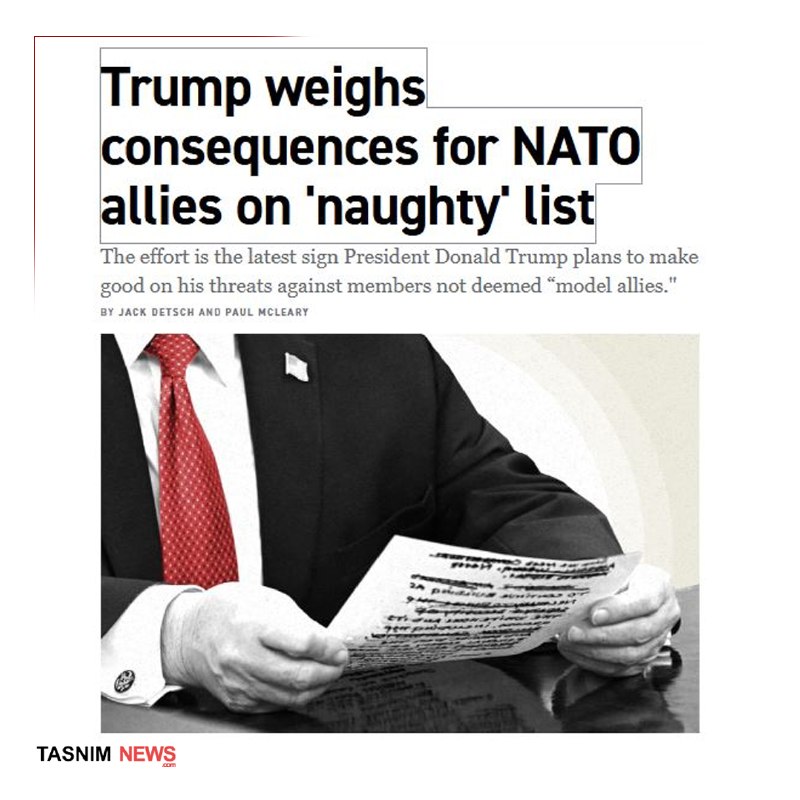
On 21 April 2026, President Donald Trump posted a lengthy attack against the Wall Street Journal on Truth Social, targeting the newspaper's editorial board and singling out associate editor Elliot Kaufman by name over a piece critical of the administration's Iran policy. The post, which the President's official account published in the late evening UTC hours, marked another entry in a running catalogue of confrontations between the White House and legacy media outlets that have characterized this term.
The substance of the dispute traces to an op-ed published by the Journal's editorial board that questioned the coherence of the administration's approach to Tehran, arguing that the public messaging around nuclear negotiations had created diplomatic ambiguity that weakened Washington's leverage with allied partners. The President's response—delivered not through a press secretary or structured press briefing but via the social media platform he controls—returned to a familiar register: blanket condemnation of the newspaper as institutionally compromised, paired with a direct personal attack on the author.
The Wall Street Journal declined to issue a public response to the substance of the President's critique, citing standard editorial policy of not engaging in running disputes via social media. A spokesperson for the paper noted only that the editorial in question represented the board's institutional view, independently reached, and that the paper stood by its coverage of Iran policy since the beginning of the administration.
That reticence is understandable given the asymmetry of the forum. Truth Social functions as an official White House communication channel in practice, if not in formal designation, with statements posted there regularly forming the basis of policy announcements and diplomatic signaling. The Journal's editorial page operates under no equivalent institutional shield. A reply on the platform would have required the paper to engage the President on terms that are inherently unequal: one side speaks from the formal apparatus of executive power, the other responds as a private actor. Journalism organizations have long noted that this dynamic—combining the reach of executive communication with the personal veneer of social media—creates a structural advantage for incumbents that is difficult to counter through institutional press operations alone.
The specific subject of the dispute, Iran's nuclear program and the framework of any future agreement, remains unresolved. Negotiations between Washington and Tehran have produced no publicly confirmed breakthrough, and administration officials have offered conflicting signals over whether the goal is a comprehensive deal, a temporary freeze, or something short of formal talks altogether. The Journal's editorial board argued that this ambiguity, rather than projecting strength, had left allied capitals uncertain about American intentions at a moment when regional partners—principally Israel and Gulf states—were pressing for clarity on whether Washington would maintain maximum-pressure constraints or move toward relief.
The broader context for the attack is a documented pattern. Over the preceding months, the administration had extended similar criticism to multiple outlets covering Iran policy: Al Jazeera English for its regional coverage framing, Reuters for reporting on diplomatic backchannel discussions, and BBC News for a segment on civilian nuclear implications. In each case, the pattern followed a consistent shape—a report or editorial generated a response from the President's official account that framed the coverage as hostile, dishonest, or politically motivated, without engaging the specific factual claims. Observers of executive-media relations note that this approach serves a dual function: it satisfies a political base that has been conditioned to view critical coverage as illegitimate, and it creates a chilling effect on the willingness of sources to speak on record with journalists whose work might attract presidential opprobrium.
Iranian state media, for its part, has noted the exchange, framing it as evidence of internal division within the American policy apparatus. PressTV and affiliated outlets carried the President's post in translation, presenting it as confirmation that Washington lacks a coherent strategy. That framing is self-serving and should be read as such, but it reflects a genuine feature of the situation: the President's public treatment of the media as an adversary rather than an information channel does, in practice, generate talking points for foreign governments who benefit from ambiguity about American intentions.
The stakes of this dynamic extend beyond the immediate dispute. Press freedom advocates warn that the routinization of presidential attacks on individual journalists—naming them by name, characterizing their work in personal terms—increases the risk of harassment directed at those individuals and their families. The Committee to Protect Journalists has documented an uptick in hostile contact following high-profile criticism from officials, a pattern that does not require the President's explicit encouragement to manifest once the targets are publicly identified. Separately, diplomatic analysts note that the absence of a clear, institutional voice on Iran policy—replaced by ad hoc social media posts—creates uncertainty among allied governments who rely on consistent signaling rather than presidential instinct as the baseline for their own planning.
What remains unclear is whether this episode produces any institutional response. The Journal's editorial page operates under the same legal protections as always, and there is no indication that the paper intends to alter its coverage. Congressional Republicans have largely declined to comment on the specific incident, aligning with the broader party posture toward the President's media engagements. The press office at the White House did not respond to a request for comment on the tone or substance of the post.
The episode sits within a longer history of executive hostility to critical coverage, but its specific features—the naming of an individual, the use of an official communication platform, the subject matter of an unresolved foreign policy dispute—mark it as a significant data point in an ongoing pattern rather than a singular event. How it is covered, and whether it is treated as routine or as notable, will itself shape the norms that govern the next iteration.
Desk note: The Monexus desk covered this as a media-governance story with Iran as the immediate subject matter. The wire services framed it principally as a Trump-vs-Journal personality dispute. This piece foregrounds the structural implications for executive-media relations and diplomatic signaling alongside the editorial disagreement.
Wire provenance
This editorial synthesis draws on the following public wire/social posts:
- https://t.me/GeoPWatch/686c193c95
- https://t.me/Middle_East_Spectator/686c193c95
- https://t.me/wfwitness/686c193c95