Venezuela's National Mobilization Tests Regional Alliances and Domestic Cohesion
A nationwide mobilization launched from three border states on Sunday has drawn attention to Caracas's capacity to rally popular support — and to the limits of that strategy under mounting economic pressure.
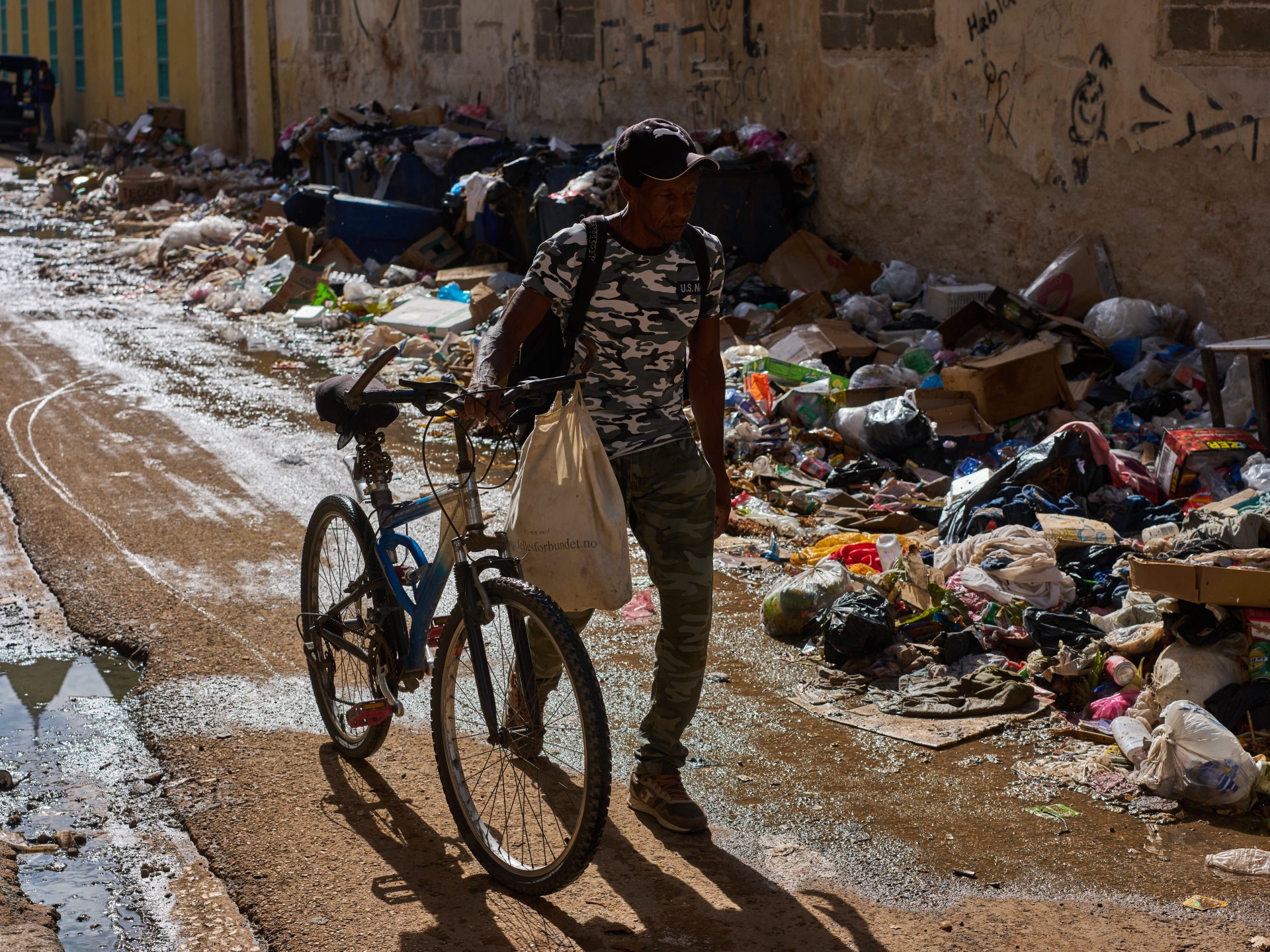
A nationwide mobilization launched from three border states on Sunday has drawn attention to Caracas's capacity to rally popular support — and to the limits of that strategy under mounting economic pressure. State broadcaster Telesur reported that activities began in Zulia, Táchira, and Amazonas simultaneously, drawing in what it described as diverse sectors of Venezuelan society. The timing and geographic spread of the event suggest a deliberate signal: the government retains organizational reach, even as the country grapples with a prolonged economic contraction that has few precedents in the modern era.
The mobilization follows a period of heightened diplomatic activity across the region. Colombian President Gustavo Petro has been among the most vocal advocates for normalizing relations with Caracas, arguing that isolation has failed to produce political change and has instead accelerated migration flows northward. That position has put Colombia at odds with Washington, which maintains extensive sanctions against the Venezuelan oil sector and has shown limited appetite for wholesale sanctions relief without demonstrable movement on political prisoners and electoral reform. The gap between Petro's posture and the US position defines the broader tension in regional diplomacy right now — and Sunday's mobilization sits squarely inside that tension.
The three states selected for the launch carry particular weight. Zulia borders Colombia and has historically been a transit corridor for both licit and illicit trade. Táchira shares a frontier with Colombia's Norte de Santander department, one of the most contested stretches of border territory in the hemisphere. Amazonas, though less populated, abuts both Colombia and Brazil, placing the mobilization in a geopolitical triangle rather than a single corridor. From a military-strategic standpoint, the choice suggests an intent to demonstrate operational presence across the entire western flank of the country rather than concentrating forces in a single location. Whether that intent translates into a coherent deterrence posture — or merely a show of institutional stamina — remains unclear from the available reporting.
On the economic front, the picture complicates the political narrative. Venezuela's GDP contracted sharply through the mid-2010s and early 2020s, and while some recovery has been recorded in recent years, the International Monetary Fund and the World Bank both estimate that GDP per capita has not returned to pre-crisis levels. The country's oil production, once the engine of Latin American development, has yet to fully recover to the output levels that defined the Chávez era. Sanctions on the state oil company have created bottlenecks that are structural rather than cyclical — they constrain the financing available for maintenance and exploration regardless of where oil prices sit. For a mobilization organized around the idea of national cohesion, the material conditions driving public frustration are not trivial. The sources do not specify what demands or grievances, if any, participants in the mobilization articulated; state media framing is not a reliable proxy for popular sentiment in a context where independent polling is limited and civil society operates under constraint.
The regional calculus is equally layered. Petro's government in Bogotá has moved to restore full diplomatic relations after years of cool distance. That reset has been accompanied by a quiet reopening of the border crossings that had been largely inactive since the Colombian conflict spilled across the frontier in the early 2000s. Whether Sunday's mobilization strengthens Petro's hand — by demonstrating that engagement with Caracas does not require ignoring the country's internal politics — or complicates it — by giving critics in Washington a fresh display of state-directed public activity — depends partly on how the event is interpreted in US policy circles. The available sources do not indicate how the Biden or Trump administrations have responded, if at all.
One structural feature worth noting: the Venezuelan state's ability to organize nationwide events of this kind is not simply a function of repression or political manipulation. It reflects institutional capacity that survives even deep economic crises — a capacity built over two decades of state expansion in social services, community councils, and municipal governance. Whether that infrastructure serves primarily as a vehicle for genuine popular participation or as a mechanism for political surveillance is a question the sources do not resolve. Both functions can coexist, and the same organization that delivers food aid or medical supplies in a poor municipality may also serve as an early-warning network for the intelligence services. The available reporting does not attempt to disaggregate these functions, and no single event of this kind is sufficient to do so.
The stakes are not abstract. A mobilization that succeeds in demonstrating government reach and popular backing may buy time in the short term, delaying harder choices about economic policy and political opening. But if it fails to address the underlying grievances driving emigration and domestic discontent — or if it is perceived as a performance rather than a policy response — it may deepen the sense that Caracas is managing decline rather than reversing it. The geopolitical dimension is harder to dismiss. With Petro building a case for normalized relations and with China's interests in Venezuelan oil remaining substantial despite the country's production challenges, the mobilization carries a message for multiple audiences simultaneously. What those audiences take from it — and what leverage they choose to exercise as a result — will shape the trajectory of the region well beyond Venezuela's borders.
This article drew on Telesur's reporting as the primary source of record for the mobilization's timing, geographic scope, and official framing.
Wire provenance
This editorial synthesis draws on the following public wire/social posts:
- https://t.me/telesurenglish/2046918803330609153