Wembanyama Is Already in a Category of His Own — and the NBA Knows It
Victor Wembanyama's unanimous DPOY win isn't just a milestone — it's a referendum on how the league values defense in the post-Analytics era. At 22, he has already reshaped the debate.
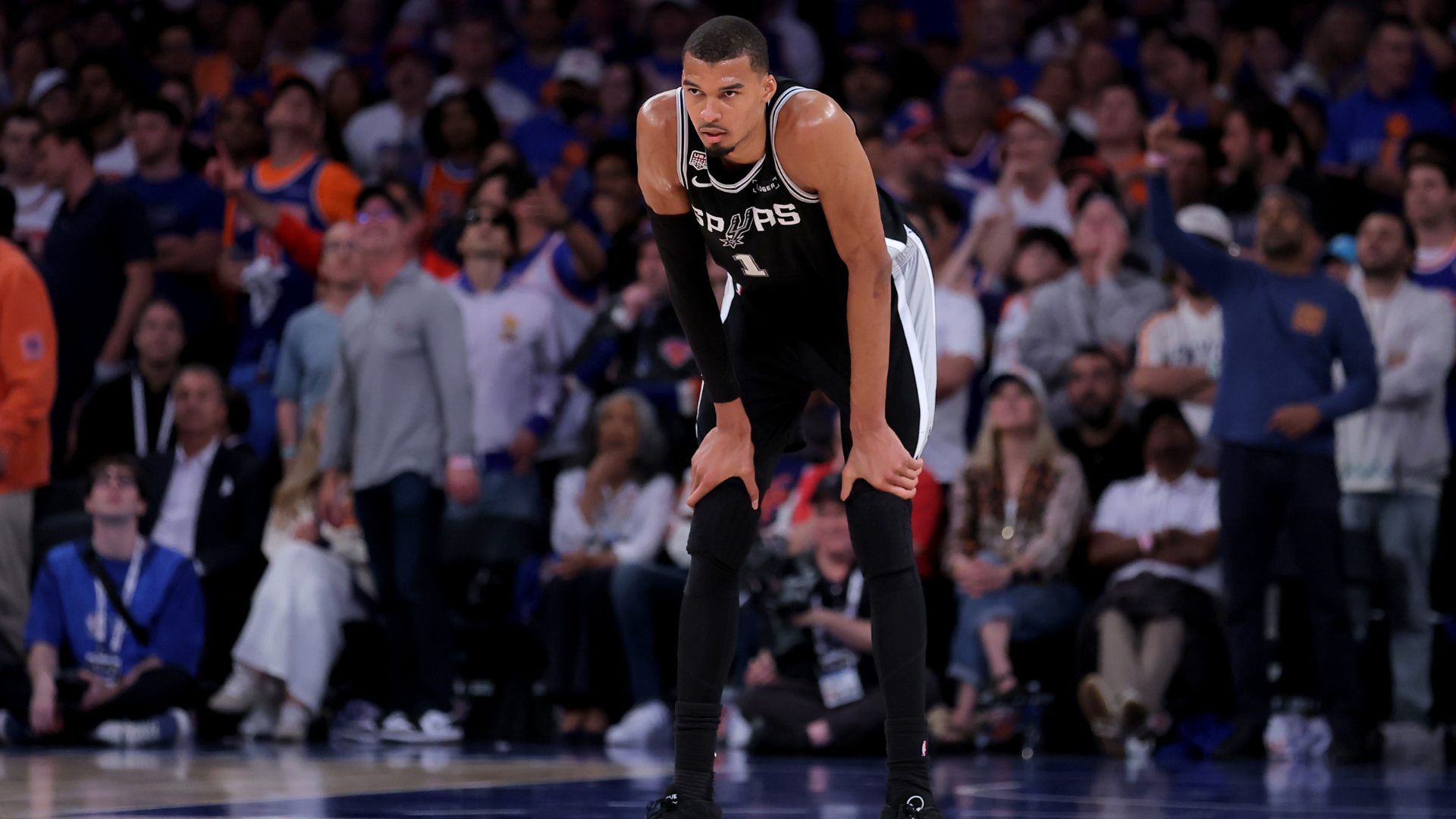
The NBA announced on 20 April 2026 what had been apparent to anyone who watched him for sixty seconds: Victor Wembanyama had won Defensive Player of the Year. Not narrowly. Not controversially. Unanimously — the first player in the award's forty-year history to receive every single first-place vote. He is twenty-two years old. He has been in the league for two seasons.
The magnitude of this tends to get lost in the immediate celebration. An award with a track record of rewarding veteran big men — Rudy Gobert, Jaren Jackson Jr., Evan Mobley — went to a twenty-two-year-old rookie-elite whose counting stats alone were historically anomalous. Wembanyama averaged 3.8 blocks per game while playing in a Spurs system that finished twenty-ninth in defensive rating, a contradiction that would have sunk most candidates. It didn't sink him. Because the eye test, the contextual film, and the advanced metrics all pointed in the same direction: he was changing the geometry of the game on every defensive possession, whether his team was positioned to capitalize or not.
The case for Wembanyama rests partly on volume — 3.8 blocks is not a small number — but mostly on ripple effect. His presence in the paint warps opponent shot selection. Per Synergy tracking data cited across multiple outlets, teams attempted nearly five fewer shots per game within five feet of the basket when Wembanyama was on the floor compared to off it. That pressure doesn't show up in a block count. It shows up in opponent efficiency differentials that even the most analytics-skeptical coach cannot ignore.
What makes the unanimous vote remarkable is that DPOY voters have historically been reluctant to award the honor to anyone with a shred of positional ambiguity. Wembanyama is 7-foot-4 — but he covers ground that makes traditional positional labeling useless. He guards one through five. He rotates from the perimeter to the rim in the same sequence. Defensive schemes that require a single coordinator to account for him require more than a slide; they require a philosophical reworking of spacing assumptions. That kind of positional fluidity has been celebrated in All-NBA voting for years. Defensive Player of the Year has been slower to adjust.
Until now.
There is a structural argument here that the voting signals something broader about how the league is recalibrating its defensive value systems. The 2020s offensive explosion — driven by three-point volume, pace, and shot quality optimization — created a generation of schemes that prioritized rim protection and recovery speed. That environment produced exceptional individual defenders who fit existing molds: drop coverage bigs, switchable wings with low center of gravity. Wembanyama does not fit the mold. He is the consequence of a league that evolved to challenge his archetype, and then found he had outgrown the challenge. The award is not just about what he accomplished; it is about the league deciding it has to account for a new category of defender it hadn't fully priced in.
That recalibration has real stakes for the Spurs' organizational trajectory. San Antonio won thirty-one games this season. Wembanyama's on/off differential in net rating was in the mid-teens — the kind of gap that separates a team in the play-in range from a team in the lottery. Gregg Popovich has structured the roster around developmental assets, with no urgency to rush competitive readiness. The DPOY award validates that patience. It says the cornerstone is real, that the surrounding construction can proceed on its own timeline.
The counterargument — that a player on a losing team should not be Defensive Player of the Year — is not a fringe view. It has been the operative assumption behind the award for most of its history. A defender's job, by this logic, is to anchor a system. If the system bleeds points, the anchor bears responsibility. Wembanyama's case tests that assumption in a specific way: his individual metrics hold regardless of the team context, which implies the problem is not his defensive impact but everyone else's. That is a harder case to make in a voting room full of coaches and writers accustomed to evaluating team outcomes first and individual process second.
The vote went the other way. Unanimously.
That matters beyond the trophy. It signals that the league's evaluative apparatus has moved far enough to recognize a defender who makes everyone around him worse by comparison without making the team better as a result. That gap — between individual impact and team success — has been at the center of advanced metrics debates for a decade. The DPOY vote suggests the consensus has shifted: impact is quantifiable, and it belongs in the award criteria even when the win column tells a different story.
The CBS Sports assessment — that this should be the first of many — carries weight because Wembanyama is twenty-two. His physical profile will change. His understanding of NBA offensive scheming will deepen. The areas where his timing and positioning still show developmental trace — the occasional blow-by, the over-rotation on the perimeter — are fixable. The physical tools are not going anywhere. The question is not whether he wins again but how many times, and what the vote margins look like when he does.
What the award does not answer is the harder question: whether Wembanyama's individual defensive dominance is a reliable predictor of team-building success in a conference where the standard for elite is now contested by multiple generational talents in their own right. The DPOY is a personal honor. The Spurs' future is a team project. The gap between those two things is where the real evaluation begins.
At twenty-two, he has already closed the gap more than anyone expected. The question now is how far he can push it.