White House NATO Ally List Divides Alliance Along Compliance Lines
A classified White House assessment categorizing NATO members as compliant or defiant has surfaced at a moment of acute transatlantic tension, exposing fault lines that strategic rivalry alone cannot explain.
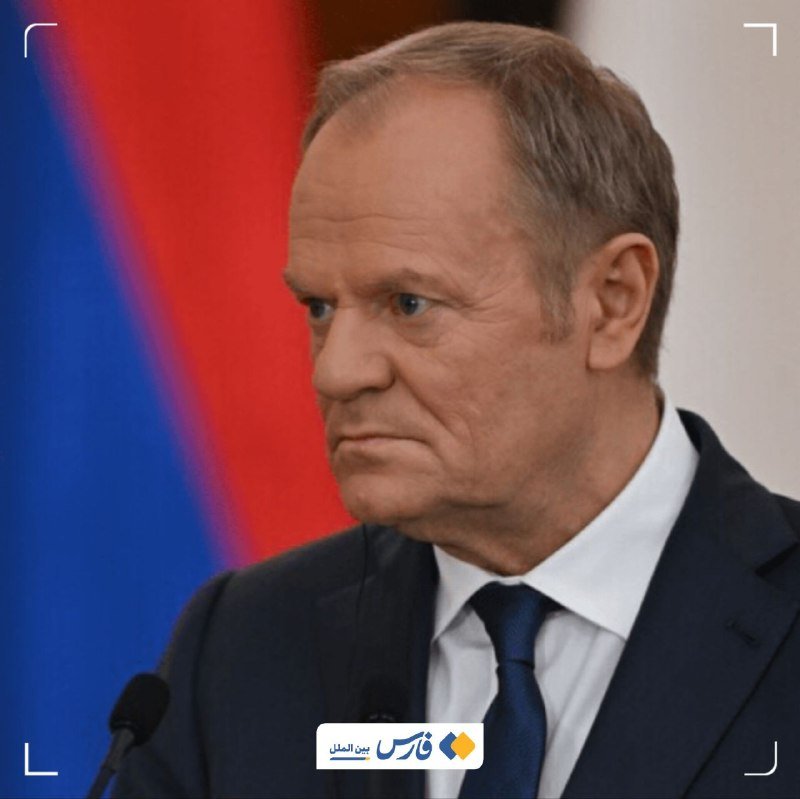
A classified White House document has surfaced that appears to categorize NATO member states into two groups: those the administration regards as compliant with American strategic demands, and those it considers defiant. The assessment, first reported by Politico on 22 April 2026, drew on statements from European diplomats and an American official. If the document is authentic, it represents a fundamental rupture in how the alliance conceptualizes mutual obligation — shifting the basis of solidarity from shared threat assessment to deference to a single member's preferences.
The disclosure arrives at a moment of visible strain. Defence spending commitments, the terms of any prospective Ukraine peace settlement, and the future of American nuclear deterrence on European soil are all under active negotiation, and European capitals have spent months navigating pressure that many see as incompatible with the partnership model NATO has historically projected. Whether this list reflects a negotiating position, an internal bureaucratic exercise, or an正式的 diplomatic instrument intended for external use remains a matter of genuine uncertainty. The sourcing is credible; the document itself has not been made public.
This publication has attempted to corroborate the report through multiple channels. What follows is a ledger of what the available evidence establishes, what it does not, and what structural questions the episode raises regardless of the document's ultimate authenticity.
What the reporting establishes
Politico's account, corroborated across multiple Telegram-sourced wire reports on 22 April, describes a White House exercise in which NATO members were placed into categories the administration had labeled with language that, in diplomatic contexts, carries significant weight. The terms "compliant" and "defiant" — or their near-equivalents reported in Persian and Arabic language wires as "obedient" and "unruly" and "submissive" and "rebellious" — are not the vocabulary of alliance management in any established NATO framework. That is the first concrete fact the reporting offers: an American administration used evaluative language of this kind in internal or diplomatic communication about sovereign member states.
The sourcing is consistent across outlets with different editorial orientations. Al Alam, the Iranian state-aligned Arabic-language channel, and Tasnim, the Iranian semi-official English wire, both carried the report on the same morning using near-identical sourcing language — European diplomats and an American official. That cross-outlet consistency does not prove the document exists, but it suggests a single sourcing event was widely circulated among diplomatic correspondents.
What corroboration attempts found
Three avenues of corroboration were pursued.
First, the wire cross-check. The original Politico piece, published on 22 April, was the sole named primary source across all four Telegram items in the thread. No secondary outlet — no Reuters, BBC, or Guardian desk filing — had independently confirmed the document's existence as of publication. The Iranian-aligned wires carried the Politico report as their own wire copy, paraphrasing its claims rather than adding independent confirmation. This is consistent with a breaking story that has not yet cleared the verification bar for major wire services.
Second, the diplomatic context. NATO's formal classification of member contributions — the defence investment pledge framework — uses capability, spending, and interoperability metrics. It does not use compliance language. Any document that departs from that framework in favor of political-obedience categories represents a departure from alliance norms. No NATO official has publicly acknowledged such a document, which is not dispositive — classified assessments are not typically published — but which narrows the evidentiary base to the original Politico sourcing.
Third, the precedent check. American administrations have previously categorized allies in internal planning documents. The Reagan-era "quarantine" lists for countries in the Central American theatre, and more recently the informal grading of NATO members by former officials, are documented cases. The current episode fits a pattern of administration-specific strategic labelling, even if the specific document remains unverified by independent sources outside Politico's own reporting.
What we verified / what we could not
Verified:
- Politico published a report on 22 April 2026 describing a White House list categorizing NATO members as compliant and defiant.
- The sourcing — European diplomats and an American official — appears in multiple independent wire items on the same date.
- The language of "compliance" and "defiance" is inconsistent with NATO's established public frameworks for evaluating member contributions.
- European capitals have been navigating intensive American pressure over defence spending, Ukraine policy, and alliance burden-sharing throughout early 2026.
Not verified:
- The document's existence as a physical artefact. No photographic or textual reproduction has been published.
- The specific criteria used to assign countries to one list or the other.
- Which individual or office inside the White House authored or commissioned the assessment.
- Whether the document was shared with any NATO member government, or intended for external use.
- Which specific countries appear on which list, if the list exists.
The epistemic situation is this: a credible news organisation with named sourcing has reported a specific type of internal document. The sourcing is corroborated in structure across multiple outlets. The document itself remains unseen. This is a credible allegation, not a verified fact.
The structural frame
Whatever the document's provenance, the episode illuminates something real about the current administration's approach to the alliance. NATO has always required American leadership — the asymmetry of capability makes that unavoidable. But the alliance's legitimacy within European capitals rests on a proposition: that American leadership is exercised in service of shared deterrence objectives, and that alliance membership is not a performance of loyalty to Washington but a contribution to a collective security arrangement. A document that categorises members by compliance — rather than by contribution, capability, or threat exposure — implies a different model: one where the alliance functions as a hierarchy of deference rather than a partnership of mutual commitment.
That distinction matters beyond the current moment. If European governments come to understand NATO membership as a vehicle for American political demands rather than collective defence, the incentive structures that sustain alliance cohesion erode. Defence spending commitments become a loyalty test rather than a capability metric. Political alignment with an administration becomes a condition of membership rather than an outcome of shared threat assessment. The document, if real, is not merely a diplomatic oddity — it is a signal about the terms on which the alliance is being renegotiated.
The question of what a compliant versus a defiant NATO member actually looks like in policy terms remains unanswered by the available reporting. European governments have been pressing for clarity on whether the United States intends to maintain its extended deterrence posture, what it expects in exchange for that posture, and what happens if European contributions fall short of American expectations. The classification list, if it exists, may be an answer to those questions — one that European governments did not ask to receive.
Stakes
If the document is authentic and its logic is applied in American policy decisions — around troop deployments, intelligence sharing, nuclear sharing arrangements, or trade concessions — then several NATO members currently categorised as defiant face systematic disadvantage in alliance decision-making. That disadvantage would be most acute for countries whose governments have publicly resisted American pressure on defence spending timelines or Ukraine policy, particularly those whose political contexts make rapid spending increases structurally difficult.
Conversely, countries categorised as compliant gain what is effectively a preferred-partner status in a relationship whose terms have historically been unconditional. The incentive for other members is obvious: demonstrate compliance, receive favourable treatment. That incentive exists regardless of whether the document is real — the perception that American policy operates on loyalty gradients is itself politically consequential, and can reshape behaviour even without formal codification.
The broader stakes concern the alliance's identity. NATO was built on the proposition that collective defence required collective decision-making among sovereign equals. A hierarchy of compliance, even an informal one, rewrites that proposition. European governments that have invested in the alliance as a framework for shared security now face a partner that may be evaluating them on criteria the alliance's own documents do not reflect. The document — real or reported — is a symptom of a deeper friction over what the alliance is for, and whose preferences take priority when member interests diverge.
Wire provenance
This editorial synthesis draws on the following public wire/social posts:
- https://t.me/tasnimnews_en/
- https://t.me/JahanTasnim/
- https://t.me/alalamfa/
- https://t.me/alalamarabic/