EU Triggers Emergency Fuel Reserves as Iran Tensions Reshape Global Energy Markets
Brussels is moving to hold emergency fuel reserves as Middle East tensions tighten supply chains. A parallel surge in global fertilizer costs — driven by India's sharp uptake in urea import prices — suggests the crisis is already transmitting into food production systems worldwide.
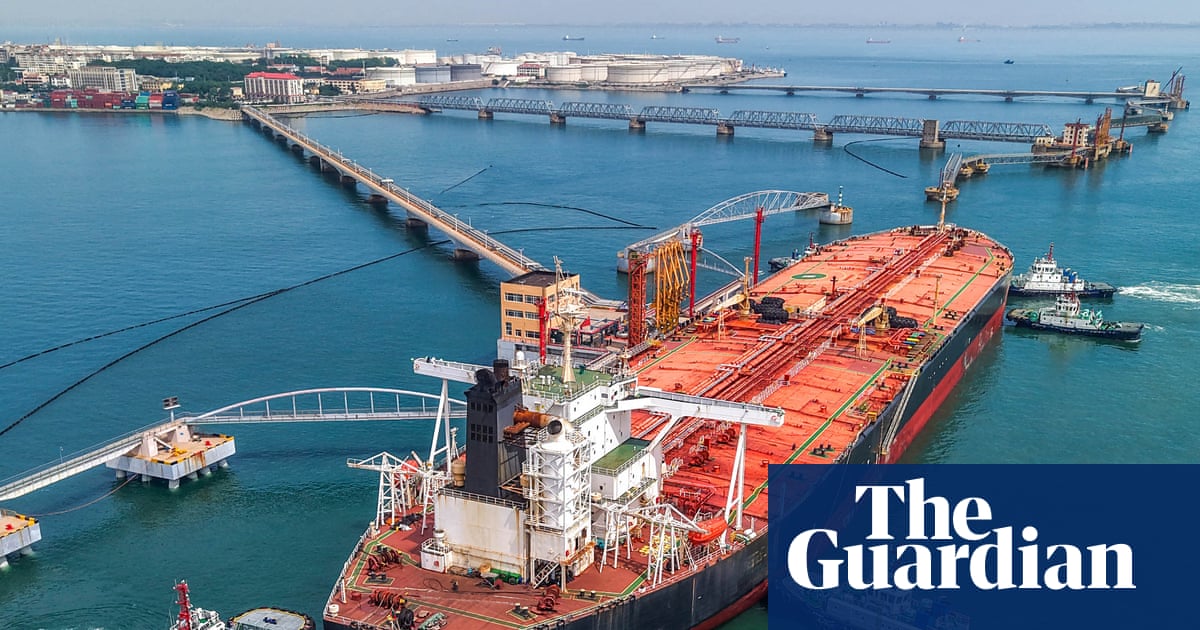
The European Union is accelerating plans to designate specific member states as hosts for emergency fuel reserves as tensions linked to the Iran war threaten to disrupt energy supply chains, according to reporting by Bloomberg on 22 April 2026. The move marks a significant policy escalation for a bloc that spent years reducing its dependence on Russian pipeline gas following the full-scale invasion of Ukraine in 2022.
The timing is not incidental. Concurrent reporting by Bloomberg on 23 April 2026 showed that India — the world's largest importer of urea, the nitrogen-based fertilizer critical to agricultural output — agreed to purchase the commodity at sharply higher prices than in a previous tender. That price uplift, if it holds, will translate into higher input costs for farmers across South Asia, Africa, and Latin America, regions that depend heavily on imported fertilizer to maintain crop yields.
The combination of EU reserve-building and spiking fertilizer costs frames a moment of intersecting vulnerabilities: European governments fortifying themselves against supply disruption while the global food system absorbs cost shocks that originate in the same Middle Eastern instability.
Immediate context: how the Iran crisis reached European energy planners
The trigger is the widening conflict involving Iran. With military operations ongoing and Strait of Hormuz transit routes under threat, EU energy commissioners have concluded that the bloc's exposure — through oil and refined products rather than gas this time — warrants precautionary action. Bloomberg reported on 22 April 2026 that Brussels is weighing which member states possess sufficient refining capacity and storage infrastructure to host coordinated reserves.
The EU's emergency fuel framework, which operates under the Oil Stockholding Agency agreements, allows member states to share reserve obligations rather than maintaining purely national stockpiles. Officials in Berlin, The Hague, and Warsaw are understood to be in active discussions about expanded obligations. The geographic distribution matters: concentrating reserves in fewer facilities creates efficiency but also concentration risk if those facilities become targets or access points are disrupted.
The bloc has recent experience with coordinated reserve releases. During the energy shock that followed Russia's invasion of Ukraine, the EU and International Energy Agency jointly released strategic stockpiles of diesel and gasoline to blunt price spikes. That mechanism worked — but it was finite, and it drew down inventories precisely when global demand was elevated by post-pandemic recovery. Energy commissioners are reportedly more cautious this time, prioritizing reserve maintenance over premature release.
Historical parallels: when oil shocks reached food systems
The 1973 Arab oil embargo and the 1979 Iranian Revolution both produced sharp spikes in energy prices that cascaded into agricultural costs. Fertilizer production is energy-intensive: ammonia, the base for urea, requires natural gas as both feedstock and process input. When energy prices rise, fertilizer prices follow — sometimes with a lag of one to two growing seasons.
The 2022-23 energy crisis demonstrated this mechanism again. European fertilizer producers curbed output as gas prices surged, reducing global supply just as farmers were contending with the aftermath of Ukraine-related grain market disruptions. Several large nitrogen facilities in France, Germany, and the United Kingdom either shuttered temporarily or shifted to reduced-capacity operation. The structural lesson from that period is that energy and food security are not separate policy domains — they are tightly coupled, and a shock to one transmits rapidly to the other.
The current situation differs in origin but resembles it in structure. The Iran-linked disruption does not directly affect Russian gas flows, but it creates risk premium in global oil markets and threatens the refined product supply chains that many European and Asian economies rely upon.
The fertilizer transmission mechanism
India's urea tender outcome, reported by Bloomberg on 23 April 2026, is the most concrete signal yet that cost pressures are already building in global agricultural input markets. India imports roughly 30 percent of its urea requirements and is the world's largest buyer of the commodity. When New Delhi pays more, it competes with other import-dependent nations — Bangladesh, Vietnam, and a cluster of Sub-Saharan African countries among them — for constrained supply.
Higher urea prices do not immediately appear in grocery stores. Fertilizer is applied to fields, crops grow or fail based on weather and soil conditions, and the harvested commodity reaches markets after months of processing and distribution. But the economics are arithmetic: higher input costs for farmers mean higher production costs per tonne of grain, rice, or vegetables, and those costs migrate through supply chains with near certainty. The lag makes the impact predictable even if it is not immediately visible in current price indices.
US consumer sentiment data, also reported by Bloomberg on 22 April 2026, adds a layer of demand-side fragility. Fifty-four percent of US consumers described their financial situation as worse than a year prior. American purchasing power — even with a relatively strong dollar — is under pressure, and households already contending with elevated food costs have limited capacity to absorb further increases. A global fertilizer price shock, transmitted through crop input costs and eventually retail prices, would land in a consumer environment already showing strain.
Forward view: managing compounding crises
The EU's reserve strategy addresses one dimension of the problem — it insulates European economies from the immediate supply disruption risk. But it does not resolve the underlying dynamic: energy markets and food markets are under simultaneous stress from a conflict that shows no signs of de-escalation.
European policymakers face a structural tension. Releasing reserves too early depletes the buffer before the crisis peaks. Holding reserves too long allows price signals to transmit into food and consumer markets without offset. The window for calibrated action is narrow.
For import-dependent regions — South Asia, Sub-Saharan Africa, parts of Southeast Asia — the outlook is more bleak. These nations have limited strategic reserve capacity for either energy or fertilizer. When global prices rise, they pay more or they reduce application rates; reduced fertilizer use means lower yields; lower yields mean tighter food supplies. The chain is linear and the outcome is predictable.
What remains uncertain is the duration and depth of the Iran-linked supply disruption. EU officials have not specified trigger conditions for reserve release, and the Bloomberg reporting indicates the bloc is in a preparatory rather than operational phase. The next two to four weeks — covering the next scheduled urea tender cycles and any further Iranian regional actions — will determine whether Brussels moves from contingency planning to actual deployment.
This article prioritised EU institutional and Bloomberg wire reporting over alternative regional framings. Monexus covered the reserve announcement as a supply-chain story with global food-security implications rather than as a narrowly European energy policy item.
Wire provenance
This editorial synthesis draws on the following public wire/social posts:
- https://t.me/unusual_whales/284321
- https://t.me/unusual_whales/284343
- https://t.me/unusual_whales/284322