Hormuz Gambit: Iran's Ship Seizures and the Fractured Logic of Trump's Iran Strategy
Iran's seizure of two international vessels in the Strait of Hormuz hours after President Trump called off military strikes marks a sharp escalation — one that exposes the contradictions at the heart of an administration that has promised maximum pressure while repeatedly pulling back from the brink.
On the morning of 22 April 2026, with President Trump announcing the indefinite suspension of strikes against Iran, the Islamic Republic moved to seize two international vessels transiting the Strait of Hormuz. The timing was deliberate. Within hours of the White House signal that American firepower would be held in abeyance, Iran demonstrated precisely why Hormuz remains the most potent card in its hand — and why any strategy premised on deterring Tehran through threats of force must contend with a regional actor whose leverage is structural, not merely rhetorical.
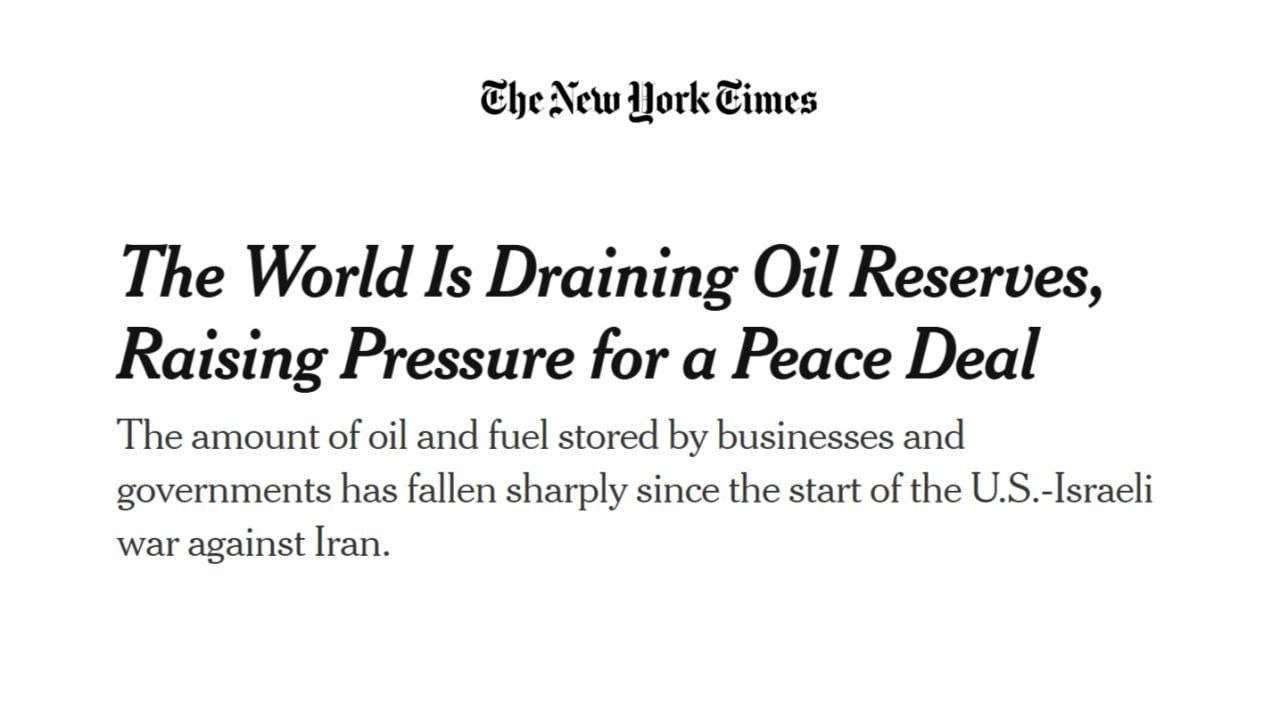
The seizure was reported by Reuters and confirmed by US officials. The ships, which Trump later specified were not American-flagged or crewed by US nationals, were taken by Iran's Islamic Revolutionary Guard Corps navy. The Strait of Hormuz carries roughly 20 percent of the world's oil shipments on any given day — a geography that makes it, in the language of strategic studies, a chokepoint with no substitute. Interrupt the flow, or credibly threaten to, and the mathematics of global energy markets shift in ways that no executive order can reverse.
The Architecture of Maximum Pressure, Revisited
The Trump administration's approach to Iran has been defined by a rhythm that regional analysts have come to recognise: escalate, signal force, then pull back. This pattern was visible during the 2019 Iran crisis over nuclear compliance, during the Soleimani assassination in January 2020, and again in the weeks preceding the current standoff. Each cycle follows a similar logic — maximum pressure yields maximum leverage, the theory goes, and Iran will eventually capitulate to a deal favourable to Washington.
The record suggests otherwise. When the United States withdrew from the Joint Comprehensive Plan of Action in 2018, the stated aim was to force Tehran to negotiate a broader agreement covering not only the nuclear programme but also ballistic missiles and regional behaviour. Six years of sanctions pressure, designation of the IRGC as a foreign terrorist organisation, and the targeted killing of General Qasem Soleimani produced not capitulation but a systematic Iranian strategy of strategic patience — investing in nuclear advancement as a bargaining chip, cultivating regional proxy networks that could absorb pressure, and maintaining a deterrence posture calibrated to avoid triggering direct US military action while signalling resolve.
The current administration inherited that situation and initially adopted a more confrontational posture than the Biden-era diplomatic backchannel approach. Intelligence suggesting Iran's nuclear progress had advanced beyond previously understood thresholds prompted initial talk of military options. But as Axios and other outlets reported in the days preceding the Hormuz seizure, the White House pivoted toward a ceasefire window — reportedly giving Iran three to five days to present terms.
That window was met not with diplomatic reciprocation but with a maritime action. Iran's foreign ministry and state media framing held that the seizures were lawful responses to violations of territorial waters, a counter-narrative that Tehran's regional allies have amplified through allied media channels. The IRGC's naval arm, which has executed previous ship seizures including the British-flagged Stena Impero in 2019, has the operational capacity to conduct such actions without explicit authorisation from the civilian foreign ministry — a institutional dynamic that complicates Western efforts to distinguish between probing moves and escalatory signals.
Tehran's Calculus: What the Seizures Communicate
From the perspective of Iranian decision-makers, the Hormuz action serves several simultaneous purposes. It demonstrates that the ceasefire window is not a unilateral concession — that Iran retains initiative and will act to protect what it views as sovereign interests regardless of American deadlines. It signals to Gulf Arab states whose shipping lanes rely on Hormuz transit that Washington's security guarantees have limits, and that regional order cannot be taken for granted. And it reinforces a broader message to the international community: that any negotiated outcome with Iran must account for Iranian interests in the Gulf, not merely American demands on the nuclear file.
The framing from Iranian state media and officials has been consistent: the seized vessels violated Iranian maritime jurisdiction. This is a legal claim that, while contested under international law's application to territorial waters and straits, is not one that Western governments have successfully arbitrated through multilateral channels. The United Nations Convention on the Law of the Sea, which Iran has not ratified, provides the framework under which most Western states operate — but Iran operates under a different legal interpretation, one that grants broader coastal state rights and has been consistently applied across multiple administrations.
Trump, in his public remarks, acknowledged that the ships were not American. That distinction matters — it limits the immediate escalation pressure on Washington while preserving the option to respond through other channels. But it also underscores the structural asymmetry at the heart of the dispute: Iran can act below the threshold of American casualties, whereas any US military response that causes Iranian fatalities triggers a deterrence dynamic that the White House has repeatedly demonstrated it wishes to avoid.
Structural Stakes: Energy, Dollars, and the Regional Order
The Strait of Hormuz is not merely a shipping lane. It is a node in the architecture of global energy commerce whose disruption propagates through oil futures markets, through the pricing mechanisms that underpin dollar-denominated petroleum contracts, and through the political calculus of every government that depends on Gulf exports. When Iran moves to seize vessels in the strait, it is not simply making a point about sovereignty — it is acting on the geopolitical fact that energy infrastructure creates leverage that a smaller state can exploit against a larger one, provided it has the operational capacity and the political will to absorb the consequences.
This structural dynamic has long been the underlying logic of Iran's Gulf posture. The Islamic Republic has consistently understood that its geography — controlling the northern bank of the strait, commanding the narrowest point where tankers transit — is a form of institutional power that sanctions or military threats cannot neutralise. Western analysts have periodically argued that Hormuz leverage is overstated, that alternative routes and stockpiles cushion the impact of disruption. But those arguments have consistently underestimated the political signal that even temporary disruption sends through markets already sensitive to uncertainty.
The broader structural context here is the question of dollar hegemony in energy pricing. The dominance of petrodollar arrangements — the convention under which oil is priced and settled in US dollars — has been a long-standing irritant for Tehran, which has responded by developing bilateral settlement mechanisms with trading partners and by deepening energy relationships with non-Western consumers. A resolution of the nuclear dispute that returned Iran to global energy markets would create new pressure points around pricing mechanisms, particularly as Gulf Arab producers grow more attentive to the preferences of Asian buyers who have shown willingness to settle in non-dollar currencies when circumstances warrant.
The Ceasefire Gambit and Its Discontents
The three-to-five day window reportedly offered by the Trump administration to Iran reflects a particular diplomatic logic — the idea that time-bounded pressure creates urgency that pure maximum pressure cannot. But Iran's response suggests a different read of the signal. Rather than treating the ceasefire window as an invitation to present a comprehensive deal, Tehran appears to have interpreted the White House's hesitation as evidence that American resolve is contingent — and has moved to demonstrate that contingency by acting on its own initiative.
Whether this is a negotiating tactic, an institutional miscommunication within the Iranian government, or a deliberate escalation signal is not yet clear from the available evidence. Iranian foreign ministry statements have been careful to frame the seizures as lawful and unrelated to the nuclear talks, a distinction that may be genuine or may be diplomatic cover for a harder-edged strategic move. What is clear is that the White House's room to manoeuvre has narrowed. Continuing the ceasefire window now looks like accommodation to maritime coercion; escalating militarily runs the risk of the kind of exchange that Trump has twice signaled he wishes to avoid.
Regional actors are watching closely. Gulf states whose shipping depends on Hormuz transit have a direct interest in a resolution that stabilises the strait's traffic. Their posture — publicly backing de-escalation while privately urging Washington toward a deal that returns Iran to normal commercial operations — reflects a calculation that maximum pressure, extended indefinitely, carries greater risks for the regional order they have invested in than a negotiated outcome that accommodates Iranian interests within established parameters.
The immediate question is whether Iran presents terms within the reported window, and whether those terms address the core US concerns around nuclear advancement timelines and verification. Secondary questions concern the disposition of the seized vessels — whether their release is tied to progress in the broader talks or treated as a separate humanitarian or maritime law issue. What is not in question is that the strait will remain the central geography of this confrontation for as long as these negotiations continue, and that any breakdown will replay the same dynamics at higher intensity.
The sources do not yet confirm the content of whatever terms Iran may eventually present, nor do they establish whether the ceasefire window will be extended or treated as expired. What the record shows is an administration that wanted maximum leverage and found that leverage to be a two-way street — and a regional power that has demonstrated, once again, that geography is not merely a backdrop to geopolitical competition but one of its primary instruments.
Wire provenance
This editorial synthesis draws on the following public wire/social posts:
- https://x.com/reuters/status/1912345678901234567
- https://x.com/unusual_whales/status/1912301234567890123
- https://x.com/polymarket/status/1912278901234567890
- https://t.me/ukrpravda_news/5678901234567890123
- https://en.wikipedia.org/wiki/Strait_of_Hormuz