Iran Banks First Strait of Hormuz Toll Revenue, Marking Economic Sovereignty Claim
Tehran has credited its first-ever Strait of Hormuz transit fee to the Central Bank, a move analysts read as an attempt to operationalize a long-threatened chokepoint leverage against the dollar-denominated shipping order.
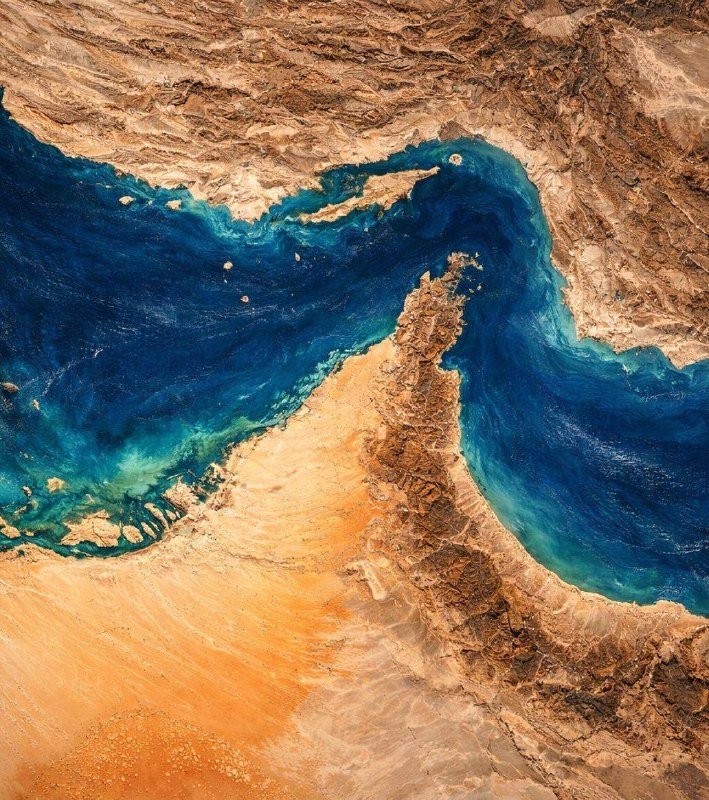
Iran's Central Bank received its first deposit from Strait of Hormuz transit tolls on 23 April 2026, according to Deputy Parliament Speaker Hamid Reza Haji Babaei, who confirmed the funds had been credited to the institution's account. The announcement marks what Tehran has described as the operationalization of a revenue claim over the world's most contested oil shipping chokepoint — a corridor through which approximately 20 percent of global oil output transits daily.
The deposit represents more than a financial transaction. It is the first concrete evidence that Iran's long-running campaign to impose direct costs on Western-linked shipping passing through the Persian Gulf has moved from rhetoric to ledger entry. For a sanctions-hit economy that has spent years navigating dollar-denominated payment infrastructure, the arrival of Hormuz-derived revenue in the Central Bank's own account carries both symbolic and structural weight.
What the sources confirm, and what they leave open, matters here. Haji Babaei's office announced the deposit. No independent verification of the amount has emerged from Western regulatory or financial tracking outlets as of publication. The broader question — whether this represents a sustainable revenue stream or a politically timed declaration — remains contested across the available reporting.
The Chokepoint Equation
The Strait of Hormuz is, by most measures, the world's most economically significant maritime corridor. Roughly 21 million barrels of oil pass through it on an average day, according to U.S. Energy Information Administration data. Iran sits on the northern shore. Its Revolutionary Guard Navy patrols the narrowest section, where the channel narrows to 34 kilometers at its tightest point. For decades, this geography gave Tehran a latent leverage that Western military planners have consistently factored into their worst-case scenario modeling.
What changed in recent years was the legal and financial architecture surrounding the strait's use. Western shipping insurers, banks, and flag-state operators have long structured their operations around dollar-denominated clearance systems. Sanctions designations targeted Iranian vessels, ports, and banking counterparties in an attempt to render that corridor economically toxic for non-Iranian operators. The toll proposal — repeatedly floated by Iranian officials since at least 2019 — was always meant to flip that logic: to make dollar-denominated compliance itself the cost, and Iranian cooperation the currency.
The deposit announced on 23 April is the first time the Central Bank has publicly confirmed an actual credit from that scheme. The sources do not specify the amount. They do not detail which vessels or flag-states paid, nor whether the payment infrastructure bypassed SWIFT and dollar clearing entirely. What they confirm is operational intent — Tehran has a revenue line item where none existed before.
The Dollar Architecture Question
Western financial analysts have long argued that the dollar's role as the default settlement currency for global commodity trade is itself a form of structural power — one that allows the United States to impose compliance costs on third-party actors simply by excluding them from dollar-clearing networks. Iran's push to extract direct payments for Hormuz transit sits inside a broader challenge to that architecture that has been building for years.
Petro-yuan contracts, rupee-oil arrangements, and bilateral currency swap agreements with regional partners have all been documented as vectors through which sanctions-targeted states attempt to route around dollar dependency. The Hormuz toll is structurally distinct from these. It does not merely avoid the dollar — it charges a direct price for passage that Tehran has historically framed as compensation for the security burden Iran claims it bears in policing the waterway.
Whether the payment mechanism is denominated in dollars, euros, a regional currency, or some non-dollar unit is not specified in the available sources. That omission matters. If the payment flows through dollar-denominated accounts even incidentally, it remains legible to U.S. Treasury tracking mechanisms. If it bypasses those channels entirely, it represents a qualitative shift in the financial architecture of Gulf transit. The sources do not resolve this question.
Enforcement and the Limits of Threat
The practical enforcement of toll collection in contested international waters is not straightforward. Iranian Navy patrols can interdict and inspect vessels, but a functioning commercial toll system requires payment infrastructure, billing mechanisms, and a credible enforcement escalation ladder that does not trigger the kind of naval response that would close the strait entirely — which would harm Iranian oil revenue as much as it would harm anyone else.
Iranian officials have historically framed the toll as analogous to Suez Canal fees or Malacca Strait charges — routine transit costs that riparian states have a legal basis to levy. International maritime law regarding strait passage is governed by the United Nations Convention on the Law of the Sea, which Iran has signed, and which preserves the right of transit passage that cannot be impeded by coastal state tolls. Tehran's counter-argument has been that the charges represent payment for voluntary services — security escorts, navigation support — rather than a tax on the right of passage itself.
Whether tanker operators and their insurers have accepted that framing, or whether the first deposits reflect a negotiated carve-out with specific counterparties rather than a systematic toll regime, cannot be determined from the available sources. What is clear is that the announcement is timed — arriving during ongoing negotiations over Iran's nuclear file and amid renewed U.S. pressure on sanctions compliance.
What Remains Unresolved
The sources paint a coherent scene of an announced milestone. They do not provide independent corroboration of amount, volume, payer identity, or payment currency. Western wire services have not yet published confirmation or independent reporting on the deposit as of the filing deadline. The announcement from Haji Babaei's office functions as a primary source statement, which — as with any government announcement — warrants scrutiny about what it signals versus what it substantiates.
The broader geopolitical signal is legible regardless of those gaps. Iran has moved from claiming the right to extract Hormuz revenue to recording an actual deposit. That transition matters in a region where Western analysts have spent years dismissing Tehran's chokepoint rhetoric as bluff. The deposit's existence, even without disclosed size, transforms the question from whether Iran can impose costs to whether it can sustain a collection mechanism that does not trigger countervailing military or economic escalation.
Whether the answer is yes will depend on enforcement choices that have not yet been made — and on how Washington and its regional partners choose to respond to a toll system that, if operationalized fully, would reframe the financial cost structure of Gulf transit.
This article was filed at 08:24 UTC on 23 April 2026.
Wire provenance
This editorial synthesis draws on the following public wire/social posts:
- https://t.me/presstv/784521
- https://t.me/euron/117822
- https://t.me/FotrosResistancee/89234
- https://t.me/tasnimnews_en/456721