Iran Claims First Hormuz Toll Revenues as Trump Vows to Keep Strait Sealed
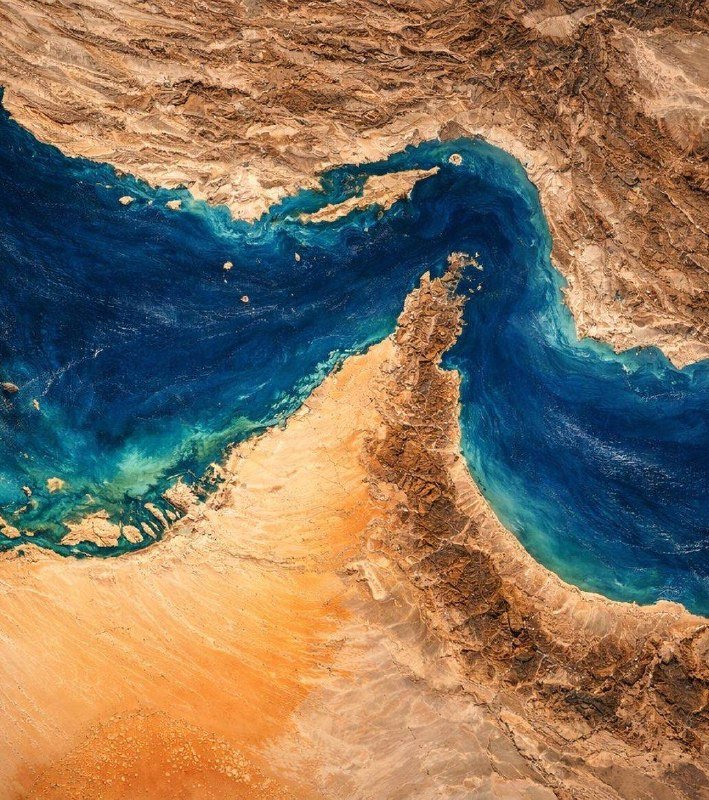
On 23 April 2026, Iran's Central Bank confirmed that revenues from the newly imposed Strait of Hormuz shipping toll had been deposited in the treasury, according to Iranian state media. The announcement was accompanied by a statement from a member of the Iranian parliament's presidency, who said the fees collected from vessels passing through the strait had been deposited in the form of cash currency. The development arrived on the same day President Trump told reporters that the strait was "sealed up tight" and would remain so until Iran reached a nuclear agreement with Washington.
The dual signals — Tehran counting toll revenues into its central bank, Washington insisting the waterway is effectively blockaded — define the current collision course over one of the world's most strategically sensitive maritime chokepoints. Roughly a fifth of global oil production transits the Strait of Hormuz daily, making any sustained disruption a matter of immediate consequence for energy markets worldwide.
What Iran announced
According to PressTV, Iran's Central Bank confirmed receipt of the Hormuz toll revenues on 23 April 2026, citing the member of the Iranian parliament's presidency speaking to ISNA, Iran's official news agency. The fee structure applies to all vessels transiting the 33-kilometre-wide waterway separating Oman from Iran. Iranian officials have framed the charges as a legitimate exercise of sovereign rights under the United Nations Convention on the Law of the Sea (UNCLOS), which Tehran ratified in 2019 — a position that remains contested under international law given that the US itself has not ratified UNCLOS.
Iranian state media have presented the tolls as a direct response to what Tehran characterizes as American economic warfare: sanctions that have restricted Iran's oil exports and constrained its banking sector. The revenue deposited in the Central Bank, according to the parliament official, represents the first visible return on what Iranian officials describe as a lawful countermeasure against unilateral sanctions pressure.
The American position
Trump's statements on 23 April 2026 left no ambiguity about Washington's posture. "Hormuz is sealed up tight until Iran can make a deal," he told reporters, a formulation that frames the tolls not as a sovereign right but as an illegal coercion that justifies American counter-pressure. Separately, the President ordered that mine-sweeping operations in the strait be "tripled," according to reporting from Polymarket citing an original disclosure. The order, if implemented, would represent a significant escalation in the US military presence in one of the world's most densely trafficked waterways.
The US position rests on the principle of freedom of navigation — the idea that no single coastal state may extract fees from vessels in international straits without bilateral agreement. American officials have long maintained that Hormuz is an international waterway subject to customary international law, not a revenue-generating zone for the adjoining state. Tehran's tolls, in Washington's view, represent an attempt to weaponise a geographic advantage that international law does not endow.
The discrepancy between Iran's framing — a sovereign right exercised under multilateral convention — and the American framing — an illegal levy backed by coercive military posturing — reflects a deeper contest over who defines the rules of the maritime order.
The structural stakes of the strait
The Strait of Hormuz is not a abstraction in global energy economics. Approximately 21 million barrels of oil cross the waterway each day, according to US Energy Information Administration data. For Asian refiners — particularly in China, India, Japan, and South Korea — the strait is a daily operational reality. Any toll, any delay, any perception of danger immediately reprices freight insurance and Gulf crude benchmarks.
This is precisely why the confrontation carries systemic weight beyond bilateral US-Iran diplomacy. If Iranian tolls become a durable feature of Hormuz transit, shippers and flag-state insurers will factor an additional cost into every voyage. If the US responds by positioning naval assets more aggressively, the risk premium on Gulf oil rises in parallel. Neither side appears to have an interest in full closure — Iran depends on its own oil exports traversing the same corridor — but both appear willing to use the threat of disruption as negotiating leverage.
The geopolitical backdrop matters here. Iran is navigating a period of acute internal uncertainty. Polymarket markets as of 23 April 2026 priced the probability of Reza Pahlavi — the exiled son of the former Shah — entering Iran before the end of June at just 14 percent, suggesting traders assign low odds to imminent regime change. But even a 14 percent probability in a market is notable: it signals that some investors consider the current Iranian government vulnerable to political reconfiguration, a factor that may shape both the toll revenue calculation and the nuclear negotiating posture.
Forward view
The immediate question is not whether Hormuz will close entirely — both sides have too much to lose — but whether the toll system matures into a normalised revenue mechanism or becomes a flashpoint for a naval incident. If Iran's Central Bank continues to report incoming revenues, it will be cited domestically as evidence that the toll policy is working. If US mine-sweeping operations intensify, Iran will point to the military build-up as evidence that Washington is preparing coercive intervention.
International shipping insurers and LNG charter rates will be the most immediate barometer. A sustained rise in war-risk premiums for Gulf transits would confirm that the toll regime has permanently altered the cost structure of one of the world's most critical energy corridors.
What remains unclear is whether the revenues Iran is reporting represent the full scale of what it intended to collect, or whether the tolls have so far applied to a limited subset of vessel traffic — particularly those reluctant to transit without Iranian clearance. The sources do not specify the dollar amount deposited or the volume of vessels charged. That information, when it emerges, will determine whether the Hormuz toll is a diplomatic instrument with limited reach or a genuinely structural shift in the economics of Gulf energy transit.
This article was filed from the business desk. Wire coverage of the Hormuz toll announcement focused on the US military posture; Monexus placed the Iranian fiscal claim — confirmed by Tehran's own Central Bank — alongside it, treating both as operative facts in a negotiation in which neither side has signalled willingness to step back.