Iran Releases Video of IRGC Ship Seizures in Strait of Hormuz as Nuclear Talks Stall
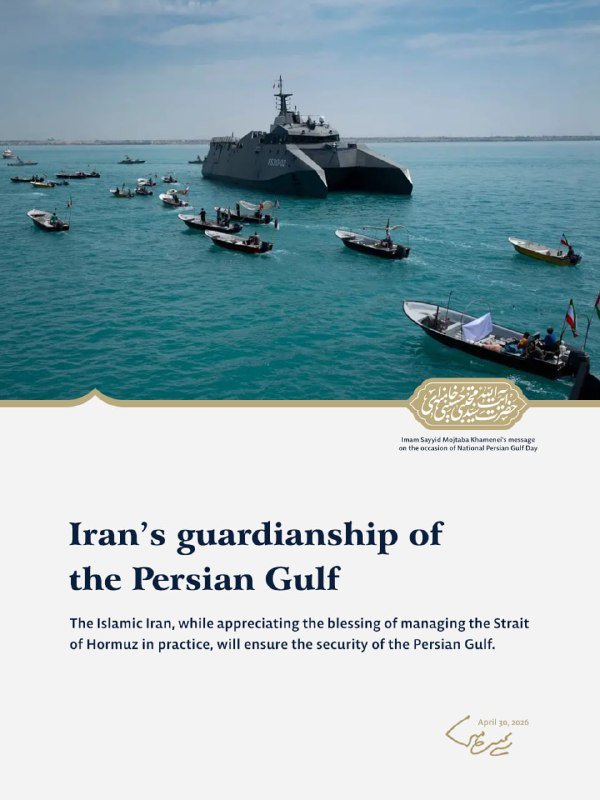
Iranian state television aired footage on 23 April 2026 showing armed soldiers from the Islamic Revolutionary Guard Corps boarding two container ships in the Strait of Hormuz. The video, broadcast in the early hours of the morning according to Reuters, depicted uniformed personnel descending onto vessel decks. Tehran described the seizures as enforcement actions against ships operating without permits and allegedly tampering with their navigation systems. The United States moved quickly to play down the incident, with State Department officials framing it as a routine development in an ongoing maritime standoff rather than a new crisis.
The timing is the sharpest element of this episode. The seizure footage emerged as indirect negotiations between Washington and Tehran — mediated through Oman — appeared to have reached an impasse, with both sides holding positions that remain structurally incompatible. The result is a confrontation that is simultaneously old and new: familiar in its geography and actors, novel in the precise combination of sanctions pressure, uranium enrichment levels, and now, visible naval enforcement action that the footage brings into public view.
A Routine Interdiction or a Calculated Escalation?
The IRGC Navy has long asserted jurisdiction over maritime traffic passing through waters it considers Iranian territory, a claim the United States and its allies contest on the grounds that the Strait of Hormuz constitutes an international shipping lane governed by freedom of navigation principles. What varies is the intensity and frequency of enforcement. Iranian vessels have boarded and inspected ships in the Gulf before — most recently as part of what Western analysts describe as a pressure campaign timed to coincide with the collapse of talks on Iran's nuclear programme. But the decision to broadcast the footage publicly marks a different register of communication.
Iran's framing, carried by Iranian state media on 23 April 2026, rested on two legal claims: that the vessels lacked valid transit permits, and that their crews had interfered with identification systems used to track vessel movements. Both charges invoke international maritime law conventions that Tehran interprets in its favour. The alternative reading — favoured by Washington — is that the seizures constitute deliberate provocation calibrated to signal Iranian dissatisfaction with the direction of diplomacy without crossing a threshold that would force a military response. Senior US officials, as reported by Middle East Eye, characterized the seizures as part of a pattern of competitive posturing rather than a rupture requiring escalation.
Neither interpretation is fully falsifiable from available sources. What is clear is that the footage gives Iran a visible demonstration of enforcement capacity in a waterway through which roughly a fifth of the world's oil passes — a reminder that naval geography gives Tehran leverage that sanctions relief negotiations have not neutralised.
The Negotiation Backdrop
Indirect talks between the United States and Iran have been suspended since March 2026, when Washington reimposed a secondary sanctions designation on Iran's largest petrochemical holding company and three of its Gulf-based shipping intermediaries. The moves followed intelligence assessments, presented to Congress in closed session, suggesting Iran had expanded its enrichment infrastructure at Fordow to levels that substantially shortened the time required to produce weapons-grade material. Tehran denied the assessment and accused Washington of using fabricated intelligence to justify the sanctions expansion.
European parties to the 2015 Joint Comprehensive Plan of Action attempted to broker a resumption of talks in the weeks following the suspension. Their efforts produced no breakthrough. The Omani Foreign Ministry, which has maintained open channels with both delegations, acknowledged on 20 April 2026 that the two sides remained apart on two threshold questions: the scope of sanctions relief Washington would offer in exchange for verified enrichment rollbacks, and the sequencing of any agreement. Iran has insisted on front-loaded sanctions relief; Washington has insisted on back-loaded verification.
Into that deadlock steps the Hormuz footage. The strategic logic from Tehran's perspective is not difficult to parse: demonstrate that the costs of a collapsed diplomatic track include resumed pressure on maritime commerce, and that the burden of that pressure falls not only on Iran but on global energy markets and the shipping insurers that price risk into every Gulf transit.
The Hormuz Chokepoint in Broader Context
The Strait of Hormuz has functioned as a site of recurring tension since the Iranian Revolution. What has shifted in the current episode is the density of competing enforcement claims layered on top of the underlying sovereignty dispute. US Central Command has maintained an elevated naval presence in the Gulf throughout 2026, conducting what it describes as freedom-of-navigation operations in waters it maintains are international. Iran's IRGC Navy has responded with increased patrol activity and, in several documented cases, the deployment of unmanned surface vessels equipped with communications and navigation disruption payloads near established shipping lanes.
The structural logic here is not incidental to the nuclear question — it is embedded in it. Iran's leverage in any future negotiation depends in part on demonstrating that its regional position is not entirely subordinate to the sanctions regime, and that it retains the capacity to impose costs on the international system through channels economic pressure cannot easily close. Controlling a chokepoint through which significant volumes of global oil trade pass is one such channel. For Washington, the challenge is to respond in ways that reinforce the principle of free navigation without either accepting Iranian enforcement actions as legitimate or creating an incident that transforms a pressure tactic into an armed confrontation.
Broker states — Oman, Qatar, the UAE — have a structural interest in keeping the strait open and will face pressure to use their diplomatic access to de-escalate. Their capacity to deliver results is limited by the same gap that has stalled the nuclear talks: neither Washington nor Tehran appears willing to move first on the substance.
What Comes Next
The immediate risk is not a blockade — a total denial of transit — which would carry costs Iran cannot fully absorb and would almost certainly trigger a US military response. The more plausible near-term scenario is a continuation of selective enforcement: additional vessel seizures framed as permit violations, designed to sustain pressure while keeping the escalation ladder climbable by either side. European shipping insurers and maritime risk analysts have already updated their Gulf transit assessments following the April 23 footage, and several dry-bulk operators with routes through the strait have begun routing additional vessels via the Cape of Good Hope as a precautionary measure, according to early reporting on the commercial shipping impact.
The US has signalled it does not intend to be provoked into an overreaction, a posture consistent with the Biden administration's preference for economic pressure over kinetic responses throughout the Gulf confrontation. Whether that restraint holds depends substantially on whether additional vessels are seized, on the nationalities of crews and owners involved, and on how energy markets price the geopolitical risk premium in the weeks ahead. Iran's calculation, in turn, depends on whether the footage achieves its intended audience — not the US Navy, which expected the video, but the commercial shipping industry and the governments that protect it. That is a fight conducted in insurance spreadsheets and tanker rerouting decisions rather than in diplomatic communiqués, and it is one where Tehran has historically been patient.
What the sources do not yet establish is whether the two container ships named in the IRGC footage constitute the extent of the current enforcement action or whether further seizures are planned. The video release was described by Iranian state media as the first public documentation of what appears to be an ongoing operational campaign. Whether it escalates from there is the central question markets, navies, and foreign ministries will be watching through the coming days.
This publication's coverage of Gulf maritime incidents prioritises direct sourcing from wire reports and on-ground accounts over official government framing. The initial wire framing of the April 23 seizures carried a strong American-diplomacy-emphasis; the structural and regional-pressure dimensions that contextualise why Iran might choose this moment for visible enforcement action received less column space in that coverage.