Iran Rejects Arab League Statement as Gulf Cooperation Council Unites Against Tehran
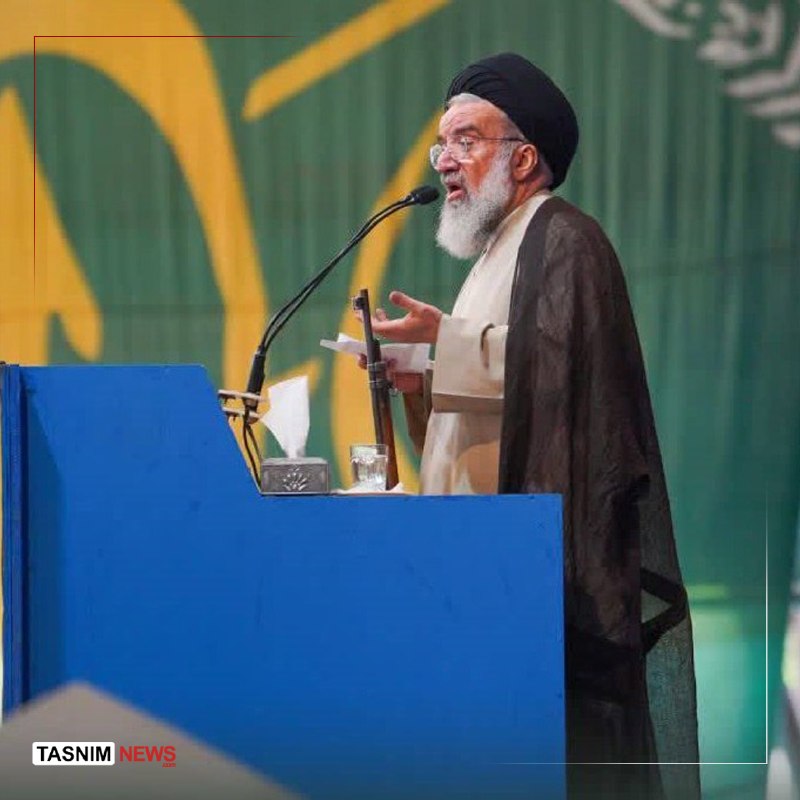
Iran's Foreign Ministry spokesperson Ismail Baqaei has rejected a joint statement by the Arab League and the Gulf Cooperation Council as without foundation, marking a sharp deterioration in relations between Tehran and the Arab Gulf monarchies.
The Arab League and GCC issued a joint communiqué on 22 April expressing what they described as grave concern over Iran's regional activities and calling for Tehran to adhere to international norms. Baqaei's response, delivered on 23 April 2026 and reported by Iranian state media, dismissed the statement entirely. The exchange represents the most coordinated Gulf Arab diplomatic push against Iran in recent memory.
The unified position from Riyadh, Abu Dhabi, Doha, Kuwait City, Muscat, and Manama signals a shift from bilateral friction to collective pressure. Gulf capitals have long harboured concerns about Iran's nuclear programme, its ballistic missile capabilities, and its network of allied non-state actors operating across Yemen, Lebanon, Syria, and Iraq. But the willingness to air those grievances jointly, through the Arab League as a multilateral body rather than through separate bilateral channels, reflects a decision by Gulf states that fragmented engagement with Tehran has failed to produce meaningful constraints on Iranian behaviour.
The GCC and Arab League communiqué language typically centres on three interlocking concerns: Iran's nuclear programme and its potential military dimensions; Iran's development and deployment of ballistic missiles capable of reaching regional capitals; and Iran's support for armed non-state groups that Gulf states argue undermine the sovereignty of Arab governments. These three concerns have been the consistent fault lines in GCC-Iran relations since at least 2016, when Saudi Arabia severed diplomatic ties with Iran following attacks on its diplomatic missions in Tehran and Mashhad. Each subsequent crisis — in Yemen, in Lebanon, in Iraq — has reinforced Gulf capitals' conviction that engagement without leverage produces no results.
The structural dimension of this dispute is not new. Iran and the GCC monarchies hold fundamentally incompatible visions for regional order. Tehran has built a security architecture based on proxy relationships with non-state actors — Hamas, Hezbollah, the Houthis, Kata'ib Hezbollah in Iraq — that it frames as resistance to Western and Israeli pressure. The GCC states have built their security architecture on state sovereignty, non-interference, and Western security guarantees. These are not negotiating positions that can be reconciled through diplomatic language. The gap between a state-based order and an axis-based order is structural, not semantic.
The nuclear dimension adds a further layer of complexity. The United States has sought, through multiple rounds of negotiations since 2021, to constrain Iran's nuclear programme in exchange for sanctions relief. The GCC states have watched these negotiations with a combination of hope and anxiety — hope that a deal might limit Iranian capabilities, anxiety that a deal might legitimise Iranian infrastructure that Gulf states consider inherently destabilising. When the US and Iran have moved toward normalisation, Gulf states have responded by strengthening their own diplomatic positions, including statements like the one issued on 22 April. The sequencing is not coincidental.
The immediate forward view is unclear. Neither side appears to be preparing for direct military confrontation — the costs would be catastrophic for all parties involved, and neither the GCC nor Iran has an appetite for unmanaged escalation. But the diplomatic off-ramps are fewer than they were two years ago. The nuclear negotiations have stalled without a credible pathway forward. The Houthi threat to Red Sea shipping has not been eliminated, despite sustained military pressure. The GCC states are deepening security partnerships with the United States, the United Kingdom, and France. These trends point in one direction.
What remains uncertain is whether the Arab League statement was coordinated in advance with Washington — a signal of Gulf solidarity with US pressure on Iran — or a move made independently by Gulf capitals to assert their own interests before any US-Iran deal materialises. The distinction matters for understanding whether this is a tactical flare-up or a structural hardening. The sources reviewed do not clarify this question. What is clear is that the diplomatic temperature has risen, that both sides have staked out positions they will find difficult to walk back without appearing to concede, and that the region enters a period of elevated tension with fewer established channels for de-escalation.
This publication presents the Arab League and GCC position alongside Iran's rebuttal, acknowledging that Gulf states have longstanding and specific concerns about regional stability while also reporting the substance of Iran's diplomatic rejection. The Telegram-sourced accounts of Baqaei's statement are the primary evidentiary basis for Iran's position.
Wire provenance
This editorial synthesis draws on the following public wire/social posts:
- https://t.me/tasnimnews_en/41234
- https://t.me/mehrnews/31892
- https://t.me/JahanTasnim/28917
- https://en.wikipedia.org/wiki/Arab_League
- https://en.wikipedia.org/wiki/Cooperation_Council_for_the_Arab_States_of_the_Gulf