Iran Tightens Its Grip on the Strait of Hormuz as Diplomatic Window Reopens
Tehran's seizure of two commercial vessels in the Strait of Hormuz follows a U.S. decision to indefinitely postpone military strikes, giving Iran leverage over one of the world's most critical oil-shipping corridors at a moment when diplomacy is quietly resuming.
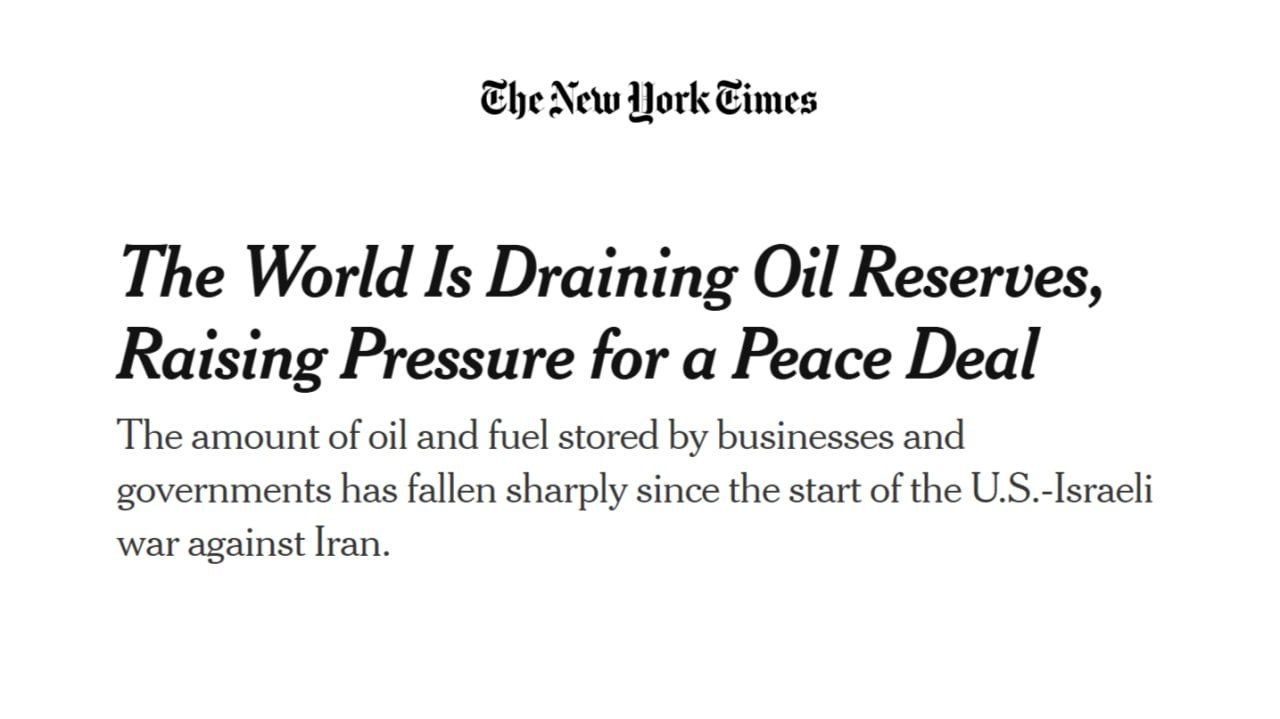
On the morning of 22 April 2026, Iranian forces seized two commercial vessels transiting the Strait of Hormuz. The seizures came hours after President Donald Trump announced the indefinite suspension of U.S. military strikes against Iran, a reversal that Tehran appears to be treating not as a diplomatic overture but as an operational opening. According to reporting by France 24 citing Western and regional officials, Iran's Revolutionary Guard Corps moved quickly to assert greater physical control over the narrow waterway through which roughly one-fifth of the world's oil passes. Pakistan, meanwhile, signaled cautious optimism that the ceasefire between the United States and Iran had created enough room for formal negotiations to resume — a hope articulated by former Pakistani officials and reported by The Jerusalem Post on 23 April.
The sequence matters. Washington's decision to pull back from renewed strikes was presented by the Trump administration as an act of strategic patience. What Iran has done in response suggests a different reading: that the suspension of American military pressure is itself a form of leverage that Tehran can exploit before any diplomatic deal is struck. The Senate, meanwhile, continued its fractious debate over the administration's Iran posture, rejecting on 23 April the fifth Democratic attempt to restrict the president's authority to use military force against Tehran — a vote that underscores how little bipartisan consensus exists on how to manage the crisis.
Seizures and the Geography of Coercion
The Strait of Hormuz is approximately 33 kilometers wide at its narrowest point between Oman and Iran. It is not an abstraction. About 21 million barrels of oil move through it daily, according to U.S. Energy Information Administration data that has remained consistent across administrations. Any disruption — whether from mines, fast-attack craft, or the boarding of vessels — sends immediate tremors through tanker insurance rates, OPEC+ compliance calculations, and the energy markets that European and Asian economies depend on. Iran's geographic position has always given it an asymmetric advantage in this waterway; what changed on 22 April was the willingness to exercise that advantage without the immediate threat of American air strikes that had previously acted as a deterrent.
The two ships seized have not been publicly identified by flag state or cargo. Iranian state media reported the boarding as a routine enforcement action related to what authorities described as maritime violations, a formulation Tehran has used in previous periods of elevated tensions. Western officials quoted by Reuters described the seizures as deliberately timed to coincide with the U.S. pullback from strike planning. Neither set of accounts has been independently verified by this publication, and the Iranian government's formal rationale remains disputed in the available sourcing.
The American Pause and Its Limits
Trump's announcement that attacks on Iran were indefinitely suspended came after weeks of escalating rhetoric following the resumption of hostilities in early 2026. The administration framed the decision as a willingness to pursue negotiations — a framing reinforced by the deployment of Ayman Elgindy, a longtime Gulf interlocutor, as a back-channel envoy. Axios reported on the envoy's role in early April 2026, citing administration officials who described the approach as parallel diplomacy designed to give Tehran a face-saving exit from the renewed confrontation.
But the pause also carries political logic internal to Washington. Hitting Iranian nuclear or oil infrastructure would have required sustained strikes, and any U.S. military operation of that scope would have needed congressional authorization or a plausibly defined emergency justification. Five separate Democratic resolutions to restrict Trump's Iran military authority have now failed in the Senate — the latest rejected on 23 April 2026 — but the mere frequency of those attempts signals that the White House faces genuine domestic friction over a potential escalation. Pulling back from strikes, even temporarily, buys the administration time on a political battlefield as well as a military one.
Critics of the pause argue that it signals weakness to a regime that has historically interpreted American restraint as an invitation. Supporters counter that direct military confrontation with Iran, in a region already destabilized by the Gaza conflict and Ukraine's ongoing war, carries costs that outweigh the strategic gains. Neither position has been resolved; the Senate vote makes clear that the argument inside Washington is not settled either.
The Pakistan Dimension and Regional Diplomatic Arithmetic
Islamabad occupies an unusual position in this geometry. Pakistan shares a long border with Iran and has historically maintained a degree of pragmatic contact with Tehran that the United States has found useful as a back-channel. The ceasefire announced in April 2026 gave Pakistan's foreign ministry enough room to suggest that the path to formal U.S.-Iran negotiations was navigable. Former Pakistani ambassador Ali Jafari, quoted by The Jerusalem Post on 23 April, put it plainly: the ceasefire had opened space for diplomacy that did not exist during the active strike phase.
That optimism is not universal. Pakistan's own security establishment has reason to be wary of Iranian adventurism on its western flank — militants operating in Balochistan have historically had at least loose connections to Iranian intelligence networks, and any Iranian military escalation carries spillover risk for Pakistani stability. Islamabad's public enthusiasm for resumed talks may also be performative: a way of signaling to Washington that Pakistan remains a useful partner without committing to any specific role in the eventual outcome.
What is more concrete is that the regional states surrounding the Persian Gulf — Saudi Arabia, the UAE, Qatar, and Kuwait — are watching the Hormuz seizures with acute attention. Their state energy ministries have not issued public statements on the vessel boardings, but private communications among Gulf diplomats, as reported across regional wires, describe quiet pressure on Washington to avoid an escalation that would force Gulf states to take sides in ways that damage their own energy infrastructure relationships. The diplomatic arithmetic is complicated: every actor wants de-escalation, but every actor also wants the terms of that de-escalation to reflect their own security interests.
Stakes and What Remains Unresolved
The immediate stakes are maritime. Oil tankers transiting Hormuz now face a higher risk of interception than they did two weeks ago, and insurance underwriters at Lloyd's of London have already begun adjusting risk assessments for Gulf voyages. If the seizures continue or expand — to include vessel detentions with cargo held hostage — the effect on global oil prices could be sharp and rapid. Markets are currently pricing in a diplomatic resolution; a sustained Iranian tightening of the corridor would break that assumption.
The medium-term stakes are diplomatic. The back-channel envoys, including Elgindy, are reportedly making slow progress. The gap between what Washington is willing to accept — some form of nuclear constraint and a halt to enrichment above 3.67 percent — and what Tehran has historically demanded — sanctions relief and security guarantees — remains wide. The Hormuz seizures, if they continue, may be designed partly to improve Tehran's negotiating position by demonstrating that it controls a chokepoint that Washington cannot replicate. That is a classic coercive negotiating tactic, not a prelude to concessions.
The longer-term stakes are structural. A resolution of the U.S.-Iran confrontation, if one materializes, would reshape the architecture of the Middle East. Saudi Arabia and Israel both have reasons to view a restored Iran nuclear deal with skepticism; their interests in containing Iranian regional influence have not changed even if the intensity of the military threat has temporarily diminished. Whether the current diplomatic window survives the next round of Hormuz seizures — or the next set of congressional votes — will determine whether the ceasefire holds or collapses back into the strike-or-negotiate binary that has defined U.S. Iran policy for the better part of a decade.
What the available sources do not resolve is whether Tehran's current seizures represent a coherent negotiating tactic, a response to internal hardline pressure, or simply the opportunistic exercise of newly available operational space. The answer to that question will shape whether the diplomatic window opens further or slams shut. For now, both trajectories remain live — and the Strait of Hormuz is where the competition will play out.
This publication covered the Hormuz seizures as a continuation of the April 2026 ceasefire rather than as a new military escalation, reflecting the ambiguity in how Tehran framed the boardings and how the White House responded. The wire services treated the events largely as an Iran story; Monexus has positioned it as a story about the mechanics of coercive diplomacy and the domestic political constraints shaping both sides of the confrontation.
Wire provenance
This editorial synthesis draws on the following public wire/social posts:
- https://t.me/The_Jerusalem_Post/245691
- https://x.com/reuters/status/2047232609879121920
- https://x.com/sprinterpress/status/2047240369893621760
- https://www.eia.gov/todayinenergy/detail.php?id=64024