Israel Signals Green-Light Dependent Strike on Iran, Targets Already Marked
Israeli Defense Minister Israel Katz publicly stated on 23 April 2026 that the IDF stands ready to resume offensive operations against Iran, with targets pre-designated, pending only an American authorization that has not yet been given.
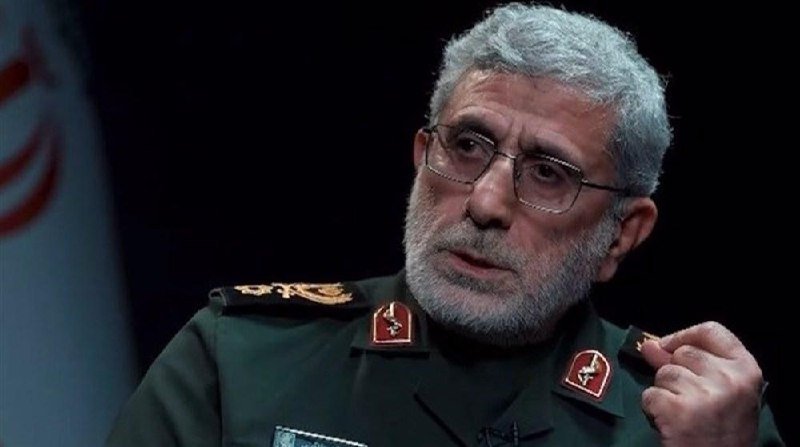
Israeli Defense Minister Israel Katz said on 23 April 2026 that Israel is prepared to resume military operations against Iran, with the Israeli Defense Forces ready for both defensive and offensive action and targets already designated. The public declaration, carried by Israeli and regional monitoring channels, made explicit what analysts have long suspected: the infrastructure for a second major strike against Iranian nuclear and military infrastructure is in place, and the decision turns on a single variable—the willingness of Washington to authorize it.
Speaking on the heels of weeks of intensified diplomatic back-channel exchange between Jerusalem and the Trump administration, Katz described the pending operation as categorically different from Israel's 2025 strikes, promising what he called "devastating blows" to Iran and warnings that the attack would "shake and collapse its foundations." The framing drew on language that senior Israeli officials have used in previous escalations but rarely with such explicit dependency on American approval, suggesting a deliberate effort to pressure the signal back to Washington while maintaining plausible deniability on both ends.
A Threshold Washington Has Been Reluctant to Cross
The United States has not issued the authorization Katz described, and officials in the current administration have signaled no imminent shift in posture. The prior round of Israeli strikes in early 2025—which targeted Iranian air defense sites and energy infrastructure—proceeded without the full-throated public green light from the White House that Katz appeared to be requesting. That ambiguity suited both capitals at the time: it allowed Israel to act and allowed Washington to avoid being seen as a co-signatory. What Katz's statement this week does is eliminate that ambiguity, forcing the question into the open.
American reluctance reflects a calculation that carries genuine weight in the administration: a full-scale Israeli operation against Iranian targets, particularly those associated with the nuclear program, risks provoking a retaliatory response that draws the US military directly into a conflict it has spent two years attempting to manage from a supporting role. Iranian officials, including representatives at the United Nations, have indicated that any Israeli attack would be met with a "proportionate and decisive" response. That language, familiar from previous escalations, carries new weight in an environment where Iran has diversified its deterrent capacity and embedded some of it in locations that are difficult to target without significant civilian proximity.
The diplomatic context matters here. The temporary ceasefire between Israel and Hamas in the Gaza Strip, brokered through Qatari and Egyptian intermediaries and still holding on fragile terms, has changed the regional calculus in ways that simultaneously lower the pressure for a two-front conflict and raise the stakes of any new escalation for the ceasefire architecture. Israeli officials have acknowledged, in background conversations reported by regional outlets, that opening a new front with Iran while maintaining the conditions for the Gaza truce would require a level of operational precision that the current force posture may not comfortably support.
The Language of Regime Change
Katz's statement that Israel is waiting for a green light "first and foremost to complete the elimination of the Khamenei dynasty" represents a notable rhetorical escalation from the target-set language of the 2025 strikes. Previous Israeli operations have been framed in terms of degrading specific military capabilities—nuclear facilities, ballistic missile infrastructure, air defense networks. The framing Katz employed targets a political order. "Elimination of the Khamenei dynasty" is not a military objective; it is a regime-change aspiration, and naming it publicly in that form changes the nature of what is being requested from Washington.
American authorization for a strike against Iranian military sites is one category of decision. American authorization for an operation explicitly aimed at the removal of a sitting government is categorically different, and the distinction is not merely semantic. It carries implications for allied participation, for the legal basis of military action, and for the post-conflict planning that would be required in Iran. US officials have historically been reluctant to embrace regime-change framing even in private, and the fact that Katz stated it publicly suggests either an assumption that the assumption has already been made in Washington, or an effort to make it politically harder for the administration to refuse.
The language also serves a domestic audience in Israel. Prime Minister Benjamin Netanyahu's government has maintained a consistently hard line on the Iranian nuclear program throughout the ceasefire negotiations in Gaza, and Katz's statement functions as a public articulation of the position the government would take if the Gaza ceasefire were to collapse: that the moment of opportunity for decisive action against Iran remains always imminent and always conditional on one factor. That framing is useful in coalition management, where the far-right partners in the governing coalition have consistently pushed for more aggressive Iranian action than the security establishment has been willing to endorse without American backing.
Regional and Structural Stakes
The question of whether Washington gives the green light is not simply a bilateral question between two allies. It is a question about the future architecture of the Middle East, and the calculation in several regional capitals is being conducted with that in mind. Saudi Arabia, the UAE, and other Gulf states have maintained a carefully calibrated posture toward the Iran question—publicly aligned with American containment logic but privately aware that a major Israeli-American military operation in Iran creates second-order effects that no amount of diplomatic preparation fully absorbs. A destabilized Iran, or an Iran that responds to attack by striking Gulf energy infrastructure, would create a crisis in global oil markets and in the security environment of states that are currently aligned with the US but have their own interests in regional stability.
The structural logic here connects to a broader pattern in Middle Eastern security: the gradual erosion of the distinctions between bilateral alliance relationships and multilateral regional realignment. The Abraham Accords normalized a form of Israeli-Gulf cooperation that was previously impossible; the continued evolution of that architecture depends on whether the Gulf states see Israeli military action as something that serves regional stability or destabilizes it. A unilateral Israeli strike, even one with American authorization, that produces Iranian retaliation against Gulf targets would test the limits of that normalization in a way that the 2025 operation did not.
For Iran, the stakes are existential in the direct sense that the language of "elimination of the Khamenei dynasty" implies. The response options available to Tehran include the activation of proxy networks across the region—Lebanon, Iraq, Syria, Yemen—each of which carries the potential to escalate the conflict beyond a bilateral Israeli-Iranian exchange into something resembling a multi-theater regional war. Iranian officials have made clear that they do not consider themselves bound by the constraints that limited their responses in 2025, a position that reflects both genuine strategic assessment and the domestic political pressure that any government in Tehran would face after an attack on national territory.
What Comes Next
The immediate question is whether the statement produces a response in Washington. Israeli officials, including at the ministerial level, have used public statements to shape American decision-making before—the record shows that the gap between private Israeli requests and public Israeli announcements often reflects an intentional strategy of making commitments that are difficult to walk back. Whether Katz's statement represents a genuine assessment of imminent operational readiness or a negotiating tactic designed to extract a commitment that has not yet been given is not immediately clear from the available reporting.
What is clear is that the infrastructure for such an operation has been rebuilt and expanded since the 2025 strikes. Israeli military officials have conducted multiple large-scale exercises in the northern sector over the preceding months, and intelligence-sharing arrangements with the US have been maintained at a high tempo throughout the Gaza ceasefire period. The targets, as Katz noted, are marked. The question of authorization is the only unresolved variable, and it is one that will be answered—or not—in the coming days, with consequences that extend well beyond the bilateral relationship between Israel and Iran.
This publication's wire coverage of the Israel-Iran tension has emphasized the military readiness dimension and the explicit conditioning on American authorization, a framing that distinguishes this reporting from the more target-specific account that dominated the initial wire services.
Wire provenance
This editorial synthesis draws on the following public wire/social posts:
- https://t.me/ClashReport/3847
- https://t.me/wfwitness/4821
- https://t.me/GeoPWatch/2156
- https://t.me/ClashReport/3846
- https://t.me/wfwitness/4820