Israeli Military Conducts Operations Across Lebanon as IDF Intercepts Aerial Target in South
Israeli warplanes flew over Beirut on 23 April 2026 while IDF forces simultaneously engaged an aerial target over southern Lebanon, in one of the most intensive single-morning sequences of cross-border activity in months.
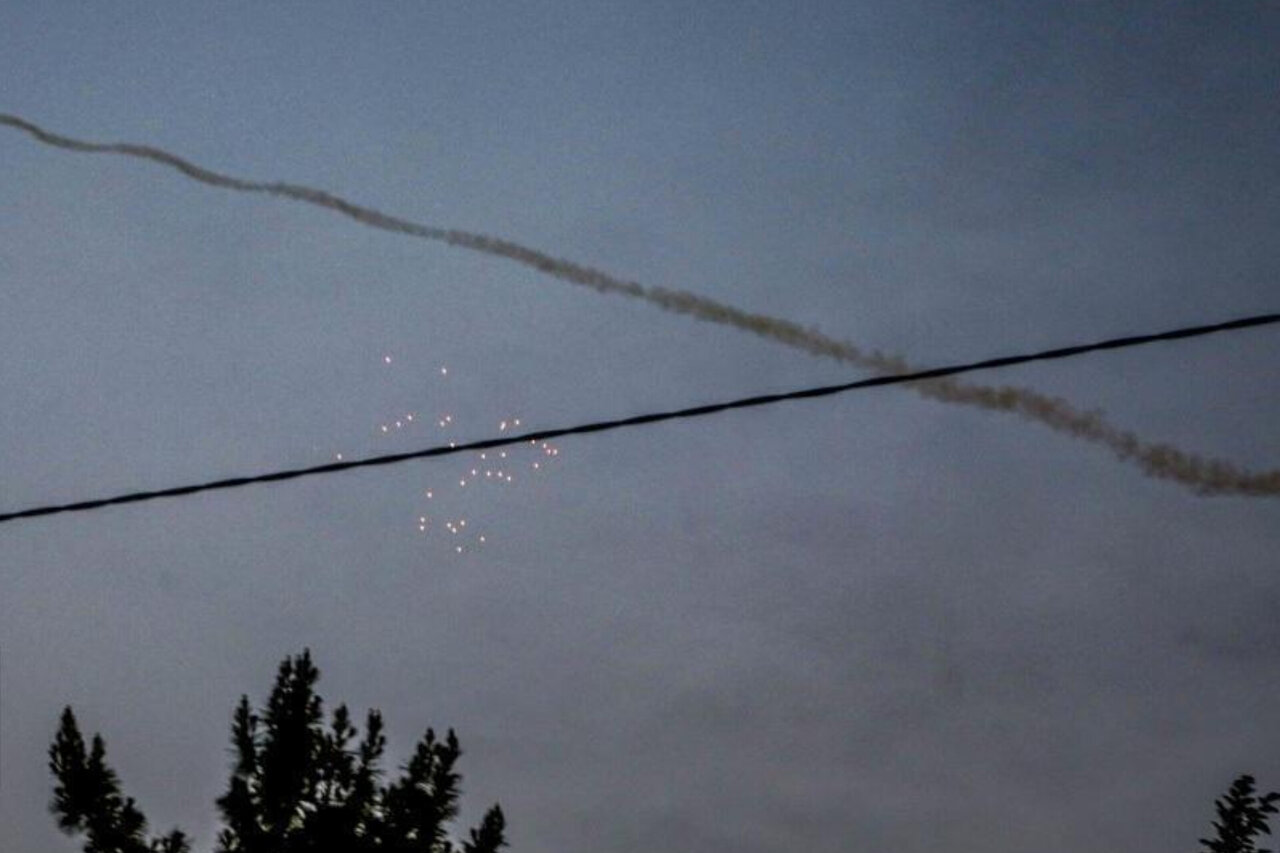
Israeli military aircraft flew over Beirut on the morning of 23 April 2026, while Israeli forces simultaneously engaged an aerial target over southern Lebanon, in one of the most concentrated sequences of cross-border military activity seen in recent months. The Israel Defense Forces confirmed that an interceptor missile was launched at a suspicious aerial object detected in the area where Israeli troops were operating in southern Lebanon. Separately, witnesses in Lebanon reported artillery shelling targeting the outskirts of the town of Yahmar Al-Shaqif, also in the south. The dual-track nature of the incidents — aerial operations over the capital and kinetic activity at the frontier — marked a notable uptick in a conflict that has not formally ended since the 2006 war.
The IDF confirmed the interception in a statement released at 07:05 UTC on 23 April. According to the military's official account, the target was identified in the vicinity of ongoing IDF operations in southern Lebanon and did not cross into Israeli territory. The interceptor was launched as a precautionary measure. The outcome of the interception was not immediately disclosed in the military's initial statement. A second IDF update, issued minutes later, reiterated that forces had engaged a suspicious aerial target in the southern Lebanese area where Israeli soldiers were deployed. The phrasing — "the area in which IDF soldiers are operating" — implicitly acknowledged that Israeli forces remain active inside Lebanese territory, a point of consistent contention in previous rounds of diplomatic exchange.
The Beirut Overflight
Witness accounts and regional monitoring channels reported Israeli warplanes operating over Beirut itself at approximately 07:48 UTC. The overflight, if confirmed as deliberate by Israeli authorities, would represent a deliberate extension of air operations beyond the southern Lebanon engagement zone. No statement from the IDF or the Israeli political establishment addressing the Beirut overflight was available as of publication. Iranian state-linked media, citing the framing common to outlets like Al-Alam, characterised the activity as a provocation and used language referring to "occupation forces" — a rhetorical posture that reflects Tehran's longstanding position on Israeli presence in the region but which does not independently confirm operational details. Readers should note that the framing of "occupation" as applied to Israeli forces in southern Lebanon is a political characterisation by regional actors, distinct from the factual reporting of military activity itself.
The question of what the airspace over Beirut signifies operationally is not straightforward. Israel has historically used overflights as signals — of capability, of intent, or of displeasure — rather than as direct kinetic threats. Whether Tuesday's flight was routine posturing or carried a specific message depends on context that the available sources do not fully illuminate. Senior Israeli officials have in previous periods described such flights as demonstrations of what they term " qualitative military edge," a doctrine that permits operations in sovereign airspace under claimed self-defence rationale. Lebanon and Hezbollah have consistently characterised such flights as violations of sovereignty. The legal status of the flights remains disputed under international law, with both sides drawing on different interpretations of UN Security Council Resolution 1701, which ended the 2006 war but left the boundary of Israeli operations in southern Lebanon a recurring source of friction.
Artillery Fire at the Frontier
Israeli artillery shelling was reported targeting the outskirts of Yahmar Al-Shaqif in southern Lebanon at approximately 07:02 UTC on the same morning, according to monitoring channels tracking the border region. The specific unit responsible, the target's nature, and whether any casualties resulted from the shelling could not be independently confirmed from the available sources. The town of Yahmar Al-Shaqif sits in an area that has seen recurring incidents since the Gaza war began in October 2023, with both Israeli ground incursions and Hezbollah rocket and missile barrages periodically pushing the frontier into open conflict. The sources reviewed for this article do not indicate a specific Israeli military statement addressing the artillery fire at Yahmar Al-Shaqif. This asymmetry — between the detailed IDF confirmation of the aerial interception and the absence of an Israeli statement on the shelling — is itself notable, as it creates a differential in the evidentiary record that reflects the practical challenges of reporting from active conflict zones.
The Wider Trajectory
Tuesday's incidents did not occur in isolation. The IDF's repeated use of the phrase "areas where its forces are operating" in southern Lebanon — phrasing present in at least two separate official statements on 23 April — signals that the Israeli military presence inside Lebanese territory is ongoing, not residual. This matters because UN Security Council Resolution 1701 called for the withdrawal of all armed personnel from southern Lebanon other than those belonging to the Lebanese state and UNIFIL, the UN peacekeeping force. Israel has never formally acknowledged being in violation of the resolution, but the operational language used by the IDF in its own communications points to a de facto presence that Lebanese authorities and Hezbollah have consistently cited as grounds for continued resistance activity. The aerial target intercepted on Tuesday may itself have been a response to that ongoing presence — drone activity by Hezbollah or affiliated groups has been a recurring feature of the frontier dynamic. What the sources do not establish is whether the suspicious object was armed, whether it was directed at Israeli forces, or whether it was operating under remote control or autonomous parameters.
The stakes extend beyond the immediate military calculus. Regional diplomatic channels, including Qatar and Egypt's mediation efforts, have repeatedly sought to prevent the Lebanon frontier from becoming a second major theatre of the broader Middle East conflict. A sustained escalation on the Lebanon border would complicate any future negotiation over Gaza, stretch Israeli military resources across two fronts, and create political pressure on the Lebanese government at a moment when Beirut is already contending with severe economic distress and internal political fragmentation. Hezbollah's leadership has maintained, in public statements cited by regional outlets, that the group will continue operations in support of Gaza until a ceasefire is reached — language that, if honoured, keeps the frontier volatile regardless of Tuesday's specific events.
What remains unclear from the current record is whether the sequence of incidents on the morning of 23 April represents a coordinated Israeli operation — a deliberate push across multiple domains — or a confluence of unrelated tactical events that happened to occur within the same short window. The IDF statement on the aerial target was measured in tone and did not suggest broader offensive action. The absence of an Israeli statement on the Beirut overflight and the artillery shelling at Yahmar Al-Shaqif leaves the operational picture incomplete. Monexus will continue monitoring official Israeli and Lebanese sources for further clarification. The disparity in official attribution across the three incidents — fully acknowledged in one case, unacknowledged in two — reflects the opacity that characterises military exchanges of this kind, where the parties to a conflict maintain deliberate ambiguity about the scope and intent of their operations.
This article was filed from monitoring of IDF official communications, regional wire services, and witness accounts on 23 April 2026. Monexus checked IDF Spokesperson statements, witness force reporting, and Al-Alam coverage against each other. Israeli military statements were given primary weight in the factual record; alternative framings from regional and Iranian state-linked sources are noted where they differ materially from confirmed IDF accounts.
Wire provenance
This editorial synthesis draws on the following public wire/social posts:
- https://t.me/idfofficial
- https://t.me/wfwitness
- https://t.me/wfwitness
- https://t.me/alalamarabic
- https://t.me/alalamarabic
- https://t.me/idfofficial