Somalia Closes Bab al-Mandab to Israeli Shipping in Escalating Red Sea Stand-Off
Mogadishu has formally barred Israeli-flagged vessels from transiting the Bab al-Mandab strait, a move that tightens the noose on Israeli maritime trade at a moment when the Red Sea corridor is already under severe strain from Yemen's Houthi campaign.
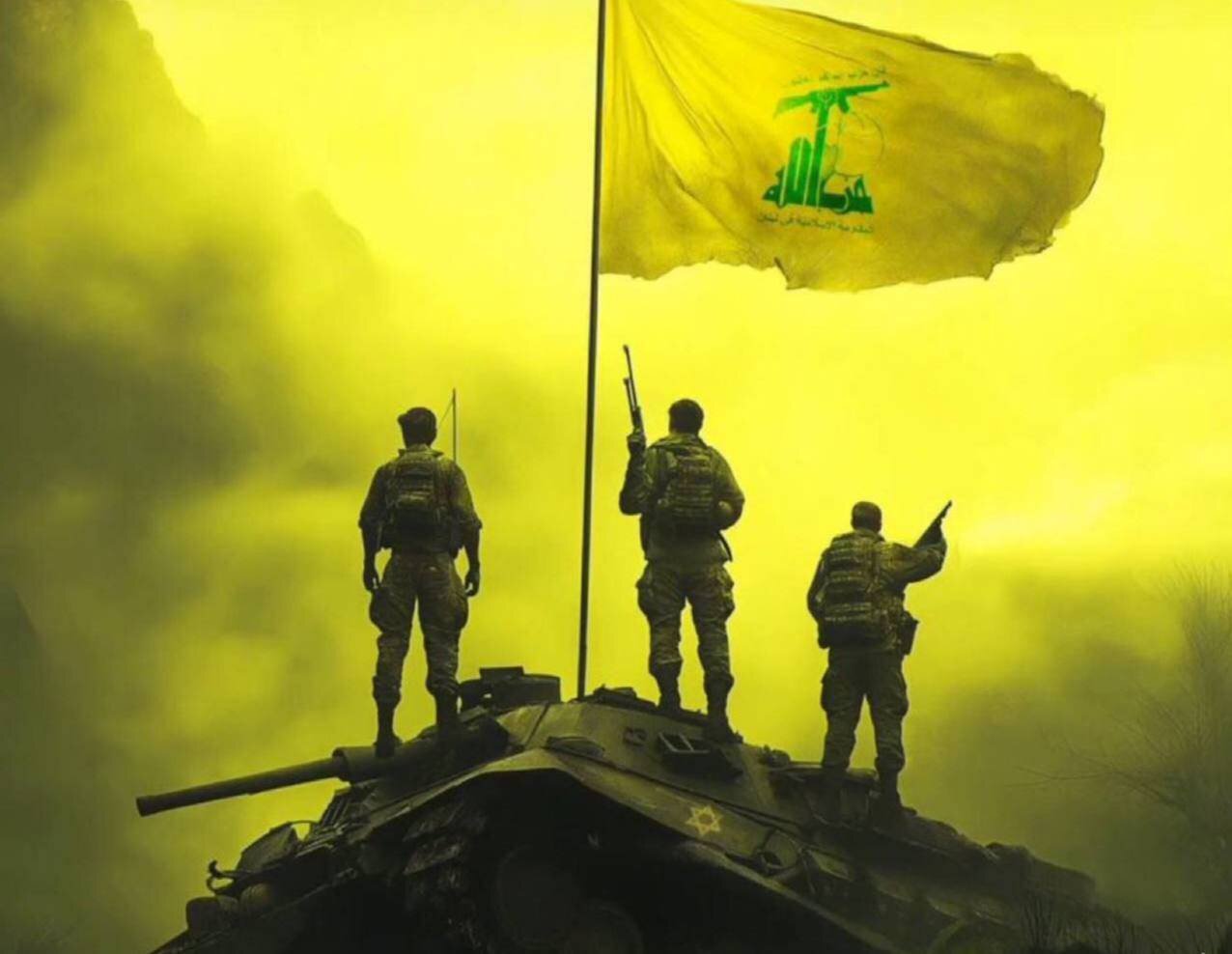
Somalia has formally declared that Israeli-flagged vessels will be prohibited from transiting the Bab al-Mandab strait, according to a government announcement carried by Arabic-language wire services on 23 April 2026. The declaration converts what had been a growing pattern of regional maritime posturing into an explicit legal prohibition, drawing a hard line around Israeli commercial shipping access at one of the world's most strategically loaded chokepoints.
The Bab al-Mandab strait sits between the Horn of Africa and the Arabian Peninsula, linking the Red Sea to the Gulf of Aden and carrying roughly 10 to 12 percent of global trade volume annually. For container shipping, the preferred route between Asia and Europe runs through the Red Sea and the Suez Canal — a passage that Funnels through Bab al-Mandab at its southern mouth. Any effective closure, or any credible threat of one, restructures the economics of global logistics in ways that ripple from Singapore to Rotterdam.
The Immediate Signal
The Somali announcement lands against a backdrop of already acute disruption. Yemen's Houthi forces have systematically targeted commercial shipping in the Red Sea since late 2023, framing the attacks as a response to Israel's military operations in Gaza. The campaign forced a significant portion of global container traffic to reroute around the Cape of Good Hope, adding roughly two weeks to transit times and raising freight costs materially for shippers that could not absorb the delay. Insurance premiums for Red Sea voyages climbed steeply. Several major shipping lines — Maersk, MSC, CMA CGM — suspended Red Sea transits for extended periods.
Somalia's decision to formally bar Israeli vessels adds a distinct political layer to a disruption that was already predominantly military in character. Where the Houthis have operated through force of arms, Mogadishu is asserting a sovereign legal claim — a formal prohibition embedded in what the government framed as an exercise of territorial and maritime jurisdiction. The distinction matters for how other states might respond: a military blockade invites a different category of response than a declared legal exclusion zone.
The Somali government's stated rationale remains anchored to the broader regional solidarity framework that has gathered momentum since October 2023. Officials in Mogadishu have aligned publicly with positions adopted by various governments across the Arab and Muslim world, framing the Gaza conflict as a matter that extends beyond the Levant. The Bab al-Mandab declaration follows that logic into concrete maritime policy.
The Enforcement Question
The more pressing uncertainty is whether Somalia possesses the naval capacity to make the declaration anything more than political signal. Somali maritime enforcement capability is limited. The country's coastline runs roughly 3,300 kilometers, and its navy has operated at severely reduced capacity for decades due to internal conflict, piracy pressures, and chronic underfunding. A formal legal prohibition on paper requires enforcement infrastructure to become anything more than a statement of intent.
This is not necessarily the point. States issue declarations for a range of reasons beyond immediate enforceability. The Bab al-Mandab declaration serves a diplomatic function — it positions Somalia within a regional coalition of states that are applying economic and legal pressure on Israeli maritime access, reinforcing a broader pattern of institutional resistance. Whether Mogadishu itself can intercept and divert Israeli vessels is secondary to the signal the declaration sends about Somalia's place in that coalition.
What it also does is complicate life for Israeli-flagged or Israeli-chartered vessels in a corridor where alternatives are already narrowing. The Houthis have acted as a de facto enforcement mechanism for maritime pressure on Israel regardless of formal declarations; Somalia's move now adds a layer of potential legal liability that ship operators and their insurers must factor into route decisions.
The Regional Choreography
Bab al-Mandab sits at the convergence of several overlapping regional dynamics. Yemen, which controls the strait's northern bank, is already the source of the most direct military pressure on Red Sea shipping. Eritrea's Assab port and Djibouti — home to multiple foreign military bases including the United States, France, China, and Japan — frame the southern and western approaches. Any escalation that disrupted transit through the strait would affect all of them, which means Somalia's declaration is not only about Israel: it touches the interests of powers with significant strategic footprint in the Horn of Africa.
Djibouti in particular has become a major hub for international military and commercial logistics, and its government has navigated carefully between various regional pressures without formally closing the strait to any party. Somalia's move creates a potential divergence from that more cautious Djiboutian posture, at least at the level of formal declaration. Whether the two governments are coordinated — or whether Mogadishu is acting independently — is not yet clear from the available reporting.
The broader choreography also involves Egypt, whose Suez Canal revenues have taken a direct hit from the Red Sea disruption. Cairo has a strong structural interest in keeping Bab al-Mandab open to commercial traffic. Any formal closure — whether enforced by the Houthis, by Somalia, or by Yemeni forces — costs Egypt money in ways that are immediately measurable. The Egyptian government's response to the Somali declaration, if any, will be a useful indicator of whether the legal prohibition generates diplomatic consequences beyond Mogadishu.
Stakes and Forward View
The stakes of this declaration are unevenly distributed. For Israel, the practical impact on maritime trade access is real but still secondary to the broader Red Sea disruption that has already reshuffled shipping routes at scale. Israeli commerce has adapted — partially — to the Cape of Good Hope rerouting; additional pressure through Bab al-Mandab tightens that adaptation without fundamentally breaking it. The more significant damage is to regional stability and to the norm against arbitrary maritime exclusion.
For Somalia, the declaration is a statement of political alignment that carries limited material cost unless enforcement escalates. Mogadishu gains a place in a regional coalition without needing the naval capability to back it up. The cost falls instead on the broader principle of unimpeded maritime transit — a principle that, once weakened, tends to accumulate precedents.
What happens next depends on whether the declaration generates a response from Tel Aviv, from Washington, or from any of the powers with naval presence in the strait's vicinity. The Houthis have demonstrated that military enforcement in this corridor is feasible. A Somali legal prohibition backed by credible enforcement capacity — whether Somali, allied, or delegated — would represent a qualitatively different escalation. The available sources do not yet establish whether that capacity exists or is being sought.
The geography of this strait has made it a fulcrum of great-power competition for generations. On 23 April 2026, Somalia's government put a political flag on that geography in a form that will require careful monitoring.
Wire provenance
This editorial synthesis draws on the following public wire/social posts:
- https://t.me/alalamfa/2026-04-23