What US Intelligence Actually Says About Iran's Military Capabilities
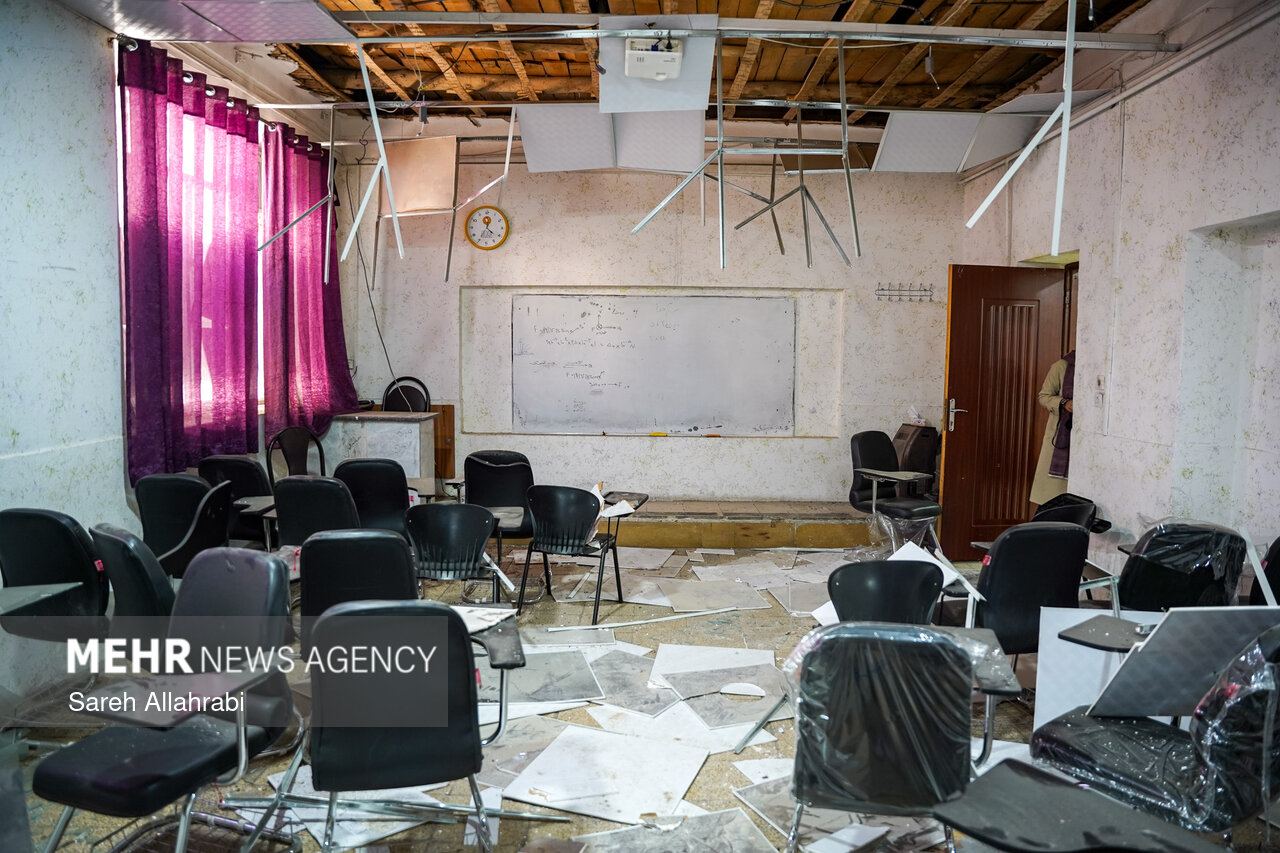
The White House has repeatedly suggested that Iran's military capacity has been gutted — the product of sustained strikes that the administration credits with degrading Tehran's ability to project power. But a tranche of US intelligence assessments circulating among policymakers, as reported via OSINT channels on 23 April 2026, paints a more complicated picture: Iran still possesses significant military capabilities, the assessments indicate, and those capabilities are not consistent with a force that has been largely defeated.
The discrepancy matters. It shapes the terms on which any ceasefire holds or collapses.
The Intelligence Picture
According to US intelligence summaries reviewed across multiple open-source channels, Tehran's military infrastructure remains operationally functional in ways that contradict the triumphant framing coming out of the White House. The assessments — described as current as of 23 April 2026 — do not characterise Iran's forces as defeated or neutralised. They describe a military that retains significant capability, one that analysts tracking the conflict have long argued was never fully captured by the strikes-focused public narrative.
This is not a minor analytical wrinkle. When an administration frames an adversary as militarily degraded, it sets expectations for the durability of any negotiated pause. If the underlying intelligence suggests otherwise, the gap between stated position and ground reality becomes a negotiating liability — particularly when the other party has access to the same open-source intelligence picture and knows precisely what the strikes did and did not destroy.
The administration has been blunt in its public posture. President Trump has signalled impatience with extended timelines, and White House spokespeople have rejected reports of any formal ceasefire extension window of three to five days, insisting that timelines will be dictated by Washington and by the President's assessment of Iranian compliance with the naval blockade currently in place.
The European Dimension
The divergence between intelligence reality and public framing becomes sharper when set against the European response. The European Union on 23 April 2026 announced an emergency energy rescue plan calibrated to a prolonged confrontation with Iran — not a short war ending in decisive defeat. The plan, reported via OSINT channels covering EU policy channels, includes electricity tax cuts and coordinated gas storage refill coordination across member states.
Electricity tax cuts and coordinated gas storage are not the instruments of a crisis nearing resolution. They are the tools of structural adaptation: measures designed to make an energy-disrupted economy more resilient over months, not days. EU energy planners, in other words, appear to be operating on a timeline that assumes the Iran conflict does not end cleanly in the near term.
The gap between Washington's public characterisation of Iranian defeat and Brussels' preparation for a protracted energy shock is not subtle. One of two things is true: either the Europeans have private intelligence assessments that contradict the White House's public read, or they are hedging against a scenario they do not believe the White House's framing adequately accounts for. Either explanation points to a transatlantic intelligence disagreement operating just beneath the surface of public statements.
Tehran's Internal calculus
The White House has identified another complication: internal divisions within Tehran. According to reporting on 23 April 2026, the administration has indicated that a struggle between pragmatists and hardliners within Iran's political structure is complicating the prospect of unified negotiations. President Trump is expecting a unified response from Iran — a single negotiating partner capable of delivering on commitments.
The problem is structural. Any Iranian negotiating position that emerges from a factional struggle carries an inherent instability: an agreement reached with pragmatists can be repudiated by hardliners, and vice versa. The administration knows this, which is why it has signalled impatience with delays. But rushing a negotiating process on the assumption that Tehran's internal politics can be compressed into a single timetable serves Washington's short-term optics more reliably than it serves durable outcomes.
The naval blockade has been cited by the White House as evidence of effective pressure. The blockade is real and has economic consequences. But a blockade that degrades Iranian economic capacity without degrading Iranian military capability does not produce the kind of leverage that compels capitulation — it produces the kind of leverage that makes negotiations necessary without making their outcome pre-determined.
What We Verified / What We Could Not
The following points are traceable to the OSINT and EU reporting channels active on 23 April 2026:
Verified:
- US intelligence assessments indicate Iran retains significant military capabilities, contradicting White House defeat framing. Sourced to OSINT channels tracking US intelligence disclosures.
- The White House explicitly rejected reports of a three-to-five-day ceasefire extension window, stating the President will dictate timelines. Sourced to White House spokesperson statement carried via Telegram wire.
- The EU has implemented an emergency energy rescue plan including electricity tax cuts and coordinated gas storage coordination. Sourced to EU policy channel reporting on 23 April 2026.
- The White House has publicly identified internal Iranian pragmatist-hardliner divisions as a complicating factor in negotiations. Sourced to US policy channel reporting.
- The naval blockade is the current instrument of coercive pressure and is cited by the White House as evidence of effective enforcement.
Could Not Verify:
- The specific details of US intelligence assessments — their provenance, classification level, or scope — beyond the summary characterisation that Iran retains significant capabilities.
- Whether EU planners have access to intelligence assessments that differ from those publicly described by the White House, or are operating on open-source analysis.
- The specific positions of named Iranian officials or factions.
- Whether any formal ceasefire terms are currently under active negotiation.
Stakes
The stakes are immediate and structural. In the near term, the gap between White House public framing and the intelligence picture the Europeans appear to be acting on creates a transatlantic friction point that will surface if ceasefire talks fail. If EU member states believe they have been insufficiently consulted on a negotiating posture built on assumptions they do not share, the coalition discipline that any sustained Iran policy requires becomes harder to maintain.
Over a longer horizon, the intelligence discrepancy raises a more fundamental question: what does it mean to declare an adversary defeated when the intelligence community's own assessments suggest otherwise? The answer, historically, is that such gaps produce negotiated outcomes that look less like victories and more like accommodations — and that they are easier to manage when the gap is acknowledged rather than papered over.
Tehran's internal factions are watching. European energy planners are hedging. The White House is setting timelines. The intelligence, at minimum, suggests that those timelines reflect political convenience as much as operational reality.
This publication's coverage of the Iran conflict prioritises Western-allied and mainstream wire sources as the primary evidentiary basis. The EU energy planning dimension was carried primarily via OSINT channels rather than institutional EU media releases — a sourcing constraint that reflects the speed of wire reporting in a fast-moving crisis.
Wire provenance
This editorial synthesis draws on the following public wire/social posts:
- https://t.me/osintdefender/
- https://t.me/englishabuali/
- https://t.me/osintdefender/
- https://t.me/osintdefender/