The Weight of Years Stolen: Wrongful Detention and the Slow Machinery of Justice
A teenager held for five years without trial, a disputed ex-president's remains, a teenager's death in a musician's car — three stories from three continents that converge on a single uncomfortable truth: when the machinery of the state moves against an individual, the cost is measured not in policy debates but in lives interrupted.
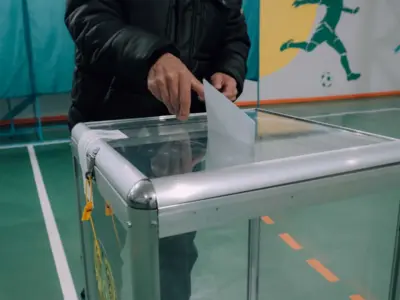
Rasheed Wasiu was seventeen years old when he was taken into custody. He would spend the next five years — the entirety of what should have been his twenties — behind bars without ever being tried, without a conviction, and, as subsequent proceedings would confirm, without guilt. On 22 April 2026, a court finally cleared him. The delay, not the arrest, had defined his ordeal.
Across sub-Saharan Africa, the Wasiu case is neither isolated nor aberrational. It is the visible end point of a justice architecture that operates on vastly different timescales depending on who stands before it. Pretrial detention rates in several West African jurisdictions consistently exceed international benchmarks; the United Nations Justice in Prison conditions body has documented average waits of eighteen months to three years in some national systems for cases involving low-income defendants. Wasiu's five-year wait falls at the extreme, but not outside the pattern.
The Specific Injury
Wasiu was detained in the context of security-force operations responding to protests against police brutality — a context that, across Nigeria's history of such crackdowns, has consistently produced cases of mass arrest with minimal subsequent differentiation between participants and bystanders. The authorities, acting under emergency provisions, moved swiftly to contain. They were far less swift to process.
The Nigerian legal framework, in common with many across the region, allows for extended remand pending trial under broadly drawn public-order provisions. What the system lacks is a functioning mechanism to challenge extended remand at regular intervals — the kind of interlocutory judicial review that would, in theory, compel the prosecution to demonstrate continuing grounds for detention rather than simply allowing the file to sit. In practice, those mechanisms exist on paper and fail in application. Defendants without legal representation — a majority in cases of this kind — rarely invoke them. Courts rarely compel their use. The result is inertia: a case moves when it moves, and not before.
Wasiu's case emerged into public attention through BBC reporting on 23 April 2026, at which point his acquittal was already a matter of record. The question the reporting raised — and that the justice system itself has yet to satisfactorily answer — is what accountability looks like for time lost. Nigerian law provides limited grounds for state compensation in wrongful detention; the threshold for demonstrating negligence by a state prosecutor is high, the process slow, and the amounts modest. Wasiu walks free. He does not walk into a life rebuilt.
A Disputed Republic of Remains
The question of what the state owes the dead and their families surfaced simultaneously in Lusaka, where Zambia's government moved to take possession of the remains of former president Edgar Lungu, whose family had contested repatriation terms with the authorities. The dispute — reported by BBC on 23 April 2026 — concerns where Lungu's remains should rest, who controls the ceremonial dimensions of his burial, and what political signals the government's posture sends to the voting public in a country where Lungu's legacy remains contested. For the Lungu family, the question is custodial: their relative, returned to Zambia, should be buried according to family wishes. For the government, the question is also custodial — of narrative, of institutional authority, of the public dimension of political memory.
The two cases differ in almost every particular. One involves a living person and years of lost freedom; the other involves a dead one and competing claims over ceremonial propriety. What they share is the insight that the state's relationship to bodies — detained bodies, returned bodies, contested bodies — is never purely administrative. It is always political. And in systems where judicial independence is contested and the line between state interest and state overreach is drawn by the same authorities who benefit from its location, the burden of that politics falls on those with the least power to contest it.
The Unseen Third Case
The third item, from the same date, concerned a fourteen-year-old found dead in a vehicle owned by the musician D4vd. The medical examiner had determined the cause of death months earlier; the finding had been blocked from public release pending further enquiries. When it did emerge, it answered one question — what killed this child — while leaving a more uncomfortable one unanswered: who knew, when they knew it, and why the information was managed rather than disclosed.
That management speaks to a pattern familiar across multiple jurisdictions: the instinct of institutional actors — law enforcement, prosecutorial services, medical examiners operating under judicial seal — to control the timing and framing of information that may reflect on their own conduct. When a teenager dies in a celebrity's vehicle, the constellation of interests arrayed around suppressing premature disclosure is predictable. What is less predictable — and more structurally significant — is how long the suppression lasted, what process allowed it to lift, and what accountability framework exists for the delay.
The Structural Common Ground
The three cases are not equivalents. They occupy different registers — criminal justice failure, political funeral contestation, celebrity-adjacent death investigation — and to collapse them into a single tidy thesis would be to perform the kind of analytical overreach that obscures more than it reveals. But they do share a structural feature: in each case, an individual or family found themselves confronting state power in an institutional corridor designed primarily to serve state interests. Wasiu waited five years because the system that should move his case had no meaningful pressure on it to do so. The Lungu family negotiated burial terms against a government that controlled the transport, the documentation, and much of the public framing of the exchange. The teenager's family received a cause-of-death determination that someone, somewhere, had decided to hold.
In each instance, the imbalance was structural, not accidental. Courts that move slowly are not broken courts — they are functioning courts operating exactly as the incentives and resource constraints designed them to operate. Governments that claim jurisdiction over the remains of political opponents are not overstepping — they are exercising the same authority that in other contexts they would claim for legitimate state purpose. Medical examiners who withhold findings are applying legal provisions that exist precisely to manage sensitive disclosures in sensitive contexts.
The discomfort in each case is not that the law was broken. It is that the law, applied in its ordinary way, produced outcomes that served institutional interests at the cost of individual ones. That is harder to remedy, because the fix is not to close a loophole — it is to alter the incentive structure of institutions that are, by design, better resourced and better connected than the individuals who pass through them.
Wasiu's acquittal does not restore his twenties. The Lungu family's negotiated outcome does not establish precedent for the next contested repatriation. The disclosure of the teenager's cause of death does not explain the management of the information before it. What each case does, if it is reported accurately and read carefully, is remind us that the machinery of the state does not malfunction — it functions. The question is whether what it produces is acceptable.
This desk noted that while the Wasiu and Lungu stories arrived on the same news cycle, they received substantially different coverage weight in Western wire services, with the Nigerian case generating fewer follow-up analyses despite representing a more systemic class of rights violation.
Wire provenance
This editorial synthesis draws on the following public wire/social posts:
- https://t.me/bbcworldoffl/31944
- https://t.me/bbcworldoffl/31942
- https://t.me/bbcworldoffl/31943