Another Explosion in Khiam, Another Silence
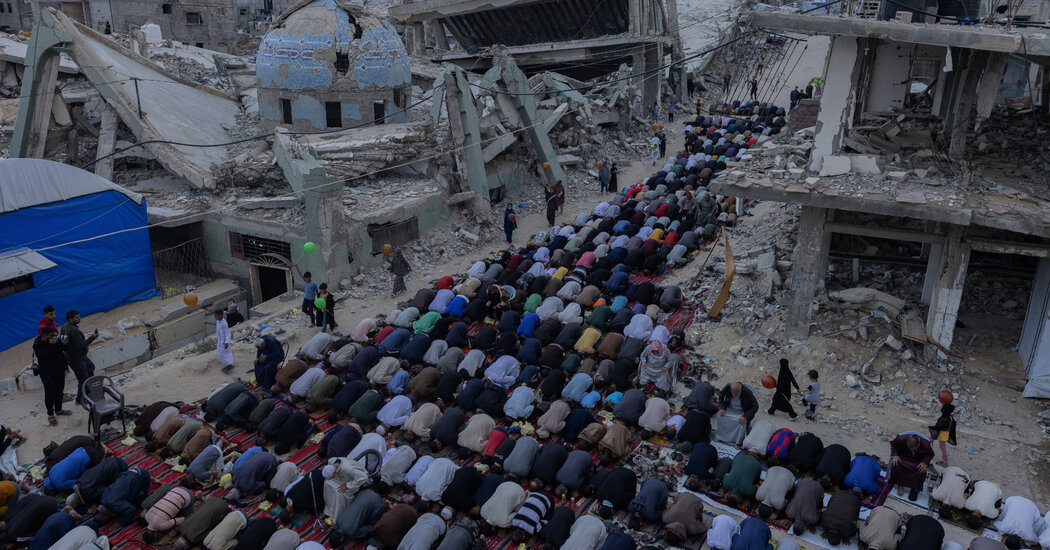
A small town on the Israeli-Lebanese frontier was hit by an Israeli bombing on 25 April 2026. By late morning UTC, the story had not appeared on the homepages of Reuters, AP, or BBC. It had not triggered a UN Security Council consultation. The IDF spokesperson had no comment. This is worth asking why.
Khiam is not a coined abstraction. It is a town of some 10,000 people, strategically positioned near the demarcation line drawn after the 2006 ceasefire. Its name carries particular historical weight: during Israel's 18-year occupation of south Lebanon, Khiam housed a detention facility where human rights groups documented abuse. That history does not automatically confer moral weight on any current event. But it does mean the town is not a blank space. It has a name, a population, and a set of grievances that Western policy has long considered marginal to more pressing calculations.
The question this publication raises is not whether the incident occurred — regional Telegram channels, including The Cradle Media and Al Alam Arabic, reported a major bombing carried out by Israeli forces in Khiam on the morning of 25 April. The question is why, hours later, the story had not crossed the threshold into what the wire services treat as publishable conflict coverage.
The Thresholds of Coverage
Newsrooms operate with triage systems. Casualty counts, celebrity involvement, or direct implications for Western governments tend to move a story up the hierarchy. A strike on a border town, with no confirmed dead at time of writing, involving parties already engaged in active conflict, sits below that line by design. The algorithm does not punish this. The algorithm does not know Khiam from Kidron.
But the structural effect is real. When a story fails to clear the wire-service threshold, it does not appear in the digest feeds that drive government briefings, opposition research, and parliamentary questions in Western capitals. The feedback loop breaks. Policymakers are not asked to comment because journalists have not filed. Journalists have not filed because their editors applied a metric derived from a template built around a different conflict.
Lebanon has been in this position before. The 2006 war received intensive coverage — it involved a ground incursion, rocket barrages into northern Israel, and an American ally's military in direct action. The ongoing low-intensity exchanges along the Blue Line since then have been treated as a background condition. Khiam, on 25 April 2026, sits in that background by default.
A Town That Has Been Here Before
Khiam's experience is not new, and neither is the pattern of thin coverage. During the 2006 conflict, Israeli forces struck infrastructure across south Lebanon including bridges, power stations, and civilian-access roads. Human rights organisations documented the effects on towns like Khiam, but the documentation circulated in specialised reports rather than wire dispatches. The gap between documented harm and headline attention is not a coincidence — it is the product of editorial resource allocation that treats density of Western interest as a proxy for severity.
Hezbollah's entanglement in regional conflicts since 2011 has further complicated the framing. Every exchange along the Israeli-Lebanese border becomes, in the first instance, a story about a group under sanctions, a US-designated organisation, or a Lebanese state's inability to control its southern territory. The civilian population of south Lebanon enters the story obliquely, and often only when mass casualty events create pressure that smaller incidents cannot.
This is the structural dynamic this publication is describing — not a conspiracy, but a set of cascading choices that produce a consistent result. Khiam, again, is in that result.
What Escalation Looks Like Before the Headline
Israeli officials have warned throughout 2025 and 2026 that the situation on the northern border cannot remain frozen. IDF planners have cited Hezbollah's post-2024 rearmament and infrastructure rebuilding as a threat requiring pre-emptive action. If those warnings are correct, Khiam on 25 April is not an isolated incident — it is a point along an escalating line.
The risks are concrete. Lebanon's state institutions are structurally weak; the country has no functioning government with the authority to negotiate or restrain armed groups on its soil. A sustained Israeli air campaign against southern infrastructure would not encounter an effective counter-party capable of de-escalation. The United States, which historically served as a back-channel to manage flare-ups, has not signalled appetite for that role. The Europeans have limited leverage. Hezbollah, for its part, has shown willingness to absorb pressure before matching it — a dynamic that historically produced precisely the kind of slow-burn escalation that does not make headlines until it detonates into something larger.
The question of who loses most from a trajectory of graduated strikes is not complicated to answer. Lebanese civilians in the south bear the direct physical cost. The Lebanese state bears the economic cost of renewed displacement and infrastructure damage at a moment when its fiscal position remains precarious. Hezbollah bears the attrition cost. Israel bears the diplomatic cost of maintaining an active conflict front while simultaneously managing pressures in Gaza and the West Bank.
What Khiam on 25 April reveals is not a single failure of coverage. It is a threshold — a test of whether the machinery of international attention will record an event that, in a different geography, would have produced a press conference, a congressional statement, and a viral thread by mid-morning. It did not.
Desk note: this publication's reporting on the Khiam incident is drawn from regional Telegram feeds (The Cradle Media, Al Alam Arabic) because the story had not appeared on Reuters, AP, BBC, or Al Jazeera English at the time of writing. IDF spokesperson had not commented at time of publication. This publication will update if wire-service confirmation or official denial emerges.
Wire provenance
This editorial synthesis draws on the following public wire/social posts:
- https://t.me/thecradlemedia/
- https://t.me/alalamarabic/