Gaza death toll crosses 72,500 as ceasefire violations continue to drive civilian casualties
The Gaza Strip has recorded more than 72,500 deaths since the escalation of hostilities, with the Ministry of Health reporting 17 martyrs and 32 wounded arriving at hospitals in the 48 hours ending 25 April 2026, as diplomatic efforts to sustain the fragile ceasefire face continued strain.
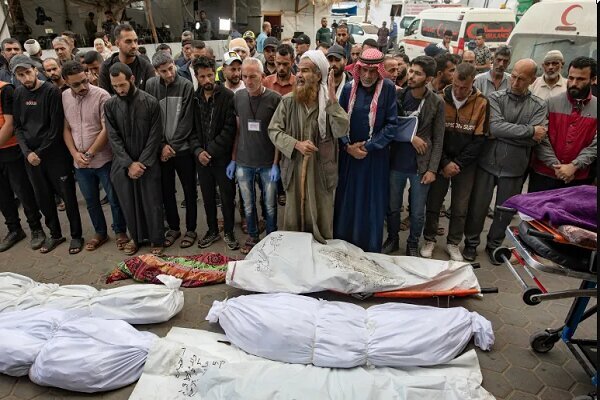
The Gaza Ministry of Health confirmed on 25 April 2026 that 17 martyrs — including 13 recorded in the preceding 24 hours — and 32 wounded arrived at hospitals across the Strip during the preceding 48-hour period. The update brought the cumulative death toll since the escalation of hostilities to 72,585, according to the Ministry's own count. The figures, relayed via the Ministry's official Gaza-based communications, were published in Arabic by state-adjacent media channels and circulated across regional wire services without substantive contradiction from international monitoring bodies operating in the territory.
The 25 April reporting interval marks the latest in a series of cumulative casualty updates that the Ministry has released at regular intervals since October 2023. International humanitarian organisations have repeatedly described the data as broadly consistent with independent satellite-verified damage assessments and displaced-person tracking conducted by UN agencies, while noting that the fog of conflict and the collapse of routine civil registration in northern Gaza means some under-count is probable.
The timing matters. The casualty update arrived as mediators from Qatar and Egypt were midway through renewed efforts to lock down a second-phase ceasefire arrangement following the first-phase exchange of hostages and prisoners in February 2026. The first phase held largely intact through the spring, but incidents along the Netzarim corridor and the intermittent closure of the Nitzana crossing have tested the arrangement's durability. Israeli officials confirmed on 23 April that the security cabinet had voted to delay a planned third phase prisoner release pending guarantees on the movement of commercial goods through Karni, a demand Qatar characterised as outside the agreed framework.
The pattern is familiar. Ceasefire frameworks negotiated under intense international pressure routinely produce agreement on hostage exchanges while leaving the harder structural questions — permanent border arrangements, reconstruction financing, the status of northern Gaza's population — for later stages. The negotiating parties approach the later stages with less urgency because the primary political pressure — the families of hostages, the international travel ban on senior Hamas officials — has been partially relieved. The result is a ratchet dynamic in which the ceasefire holds at a surface level while the conditions for its collapse accumulate.
The civilian toll, meanwhile, is not confined to incidents attributable to an identifiable military engagement. The Ministry's 48-hour figures capture casualties received at hospitals, which means they reflect events occurring before the patients arrived. In an environment where pre-hospital care networks have been partially dismantled — several ambulance stations in northern Gaza were rendered inoperable during the 2024 bombardment phase — the time between injury and hospital arrival is itself a determinant of outcome. Aid workers operating with the International Committee of the Red Cross have noted in internal situation reports that access to stabilisation points in the eastern districts remains inconsistent, particularly after dark.
The international response to the April casualty figures has been measured, which is itself a measure. The United States State Department issued a statement on 24 April calling for "all parties to adhere to existing commitments" without naming any actor by accusation. The statement made no reference to the specific casualty figures. European Union foreign policy chief Kaja Kallas posted on the social platform X that the bloc was "deeply concerned" and called for an independent verification mechanism — a proposal that has been on the table since November 2025 without gaining traction. The United Nations Office for the Coordination of Humanitarian Affairs published a flash update on 25 April citing the Ministry's figures and noting that humanitarian access to northern Gaza remained "severely restricted," without drawing a causal link to the violations.
What is notable, and rarely foregrounded in coverage from Western wire services, is how the ceasefire's fault lines map onto political constituencies rather than military logic. The Israeli delay on the third-phase release has been publicly endorsed by the security cabinet but faces pushback from the families of remaining hostages and from the Biden-administration's liaison team, which has invested significant diplomatic capital in the process. The competing pressures mean that small incidents — a checkpoint confrontation, an alleged weapons cache discovered in a residential building, a mortar round fired from an area nominally under Palestinian civil authority — can trigger disproportionate responses because both sides have domestic political incentives to demonstrate firmness.
The structural context is rarely addressed in the immediate casualty reporting. Gaza's health infrastructure entered the current conflict phase with approximately 2,000 hospital beds, a figure that UN agencies had already revised downward following years of blockade-induced attrition. The Ministry of Health's casualty count does not distinguish between combatants and non-combatants, between those killed by air ordnance and those who died from wound complications, dehydration, or the interruption of dialysis treatment. The granularity required to produce that kind of analysis does not exist in real time; it emerges over months, from post-conflict documentation processes that are themselves contested. What the 72,585 figure represents, at minimum, is a floor — a count that reflects what the surviving health system's documentation capacity can capture.
The diplomatic path forward is narrow. Qatar and Egypt have indicated a readiness to host another round of indirect talks in Doha before the end of April, but the parties are arriving with conflicting understandings of what phase two requires. Egypt's intelligence service, which has maintained a back-channel with both sides, has described the gap as "procedural rather than substantive" in a briefing to regional media — language that, if accurate, suggests the hold-up is about sequencing and face-saving rather than any fundamental incompatibility. That framing, however, is itself a negotiating posture; Egypt has an interest in presenting the gap as closeable because Cairo faces significant domestic pressure over its management of the Rafah crossing situation.
The stakes are concrete. If the ceasefire collapses before phase two is operationalised, the first-phase release of hostages and prisoners cannot be reversed — those individuals are not returning to custody without a further negotiated exchange. What can collapse is the humanitarian mechanism: the entry of fuel and commercial goods through the southern crossing points, the continued operation of the temporary field hospitals established by the World Health Organization, and the capacity of the UN Relief and Works Agency to distribute assistance at the scale required for a population of which the majority have been displaced more than once. Each of those systems, once disrupted, takes weeks to reconstitute. The civilian cost of a fresh round of hostilities in that context would not start from zero — it would start from the accumulated fragility of a system already under severe strain.
The 25 April casualty report is a snapshot, not an argument. But the snapshot sits within a trajectory that the international community has the instruments to interrupt and, so far, has not interrupted with consistent pressure on all parties simultaneously. That asymmetry — in which diplomatic consequences for ceasefire violations are applied to one side rather than calibrated to the violation itself — has been a structural feature of the process since the initial pause in November 2023. Whether the accumulating civilian numbers reach a threshold that changes that dynamic, or whether they simply become the background against which the next round of talks proceeds, will depend on decisions in Washington, in European capitals, and in Cairo and Doha that are not yet made.
— This publication's desk noted that Western wire coverage of the 25 April update led with the diplomatic delay on the third-phase release, treating the casualty figures as context rather than news. The framing prioritised the negotiating machinery over the human tally. The approach taken here inverts that order, reflecting the editorial judgment that 72,585 dead is a first-order fact, not a footnote.
Wire provenance
This editorial synthesis draws on the following public wire/social posts:
- https://t.me/TheCradleMedia/10891
- https://t.me/TheCradleMedia/10890
- https://t.me/alalamarabic/4821
- https://t.me/JahanTasnim/7234