Gaza's Shadow Falls on Southern Lebanon
Six people are dead in southern Lebanon after a fresh round of Israeli strikes. The casualties barely register in a Western press corps exhausted by the region's perpetual violence — but they should.
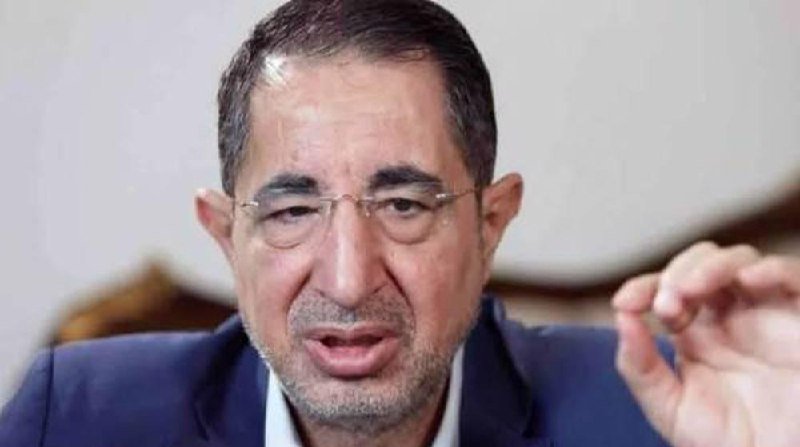
Six people are dead. Two more are wounded. The Lebanese Health Ministry confirmed the figures on 25 April 2026 following Israeli raids on multiple towns in the south of the country — strikes that targeted Kunine and surrounding areas, according to Iranian state-affiliated outlet Al Alam. There is no indication from available sourcing that any of the dead were combatants.
This is not a sentence designed to provoke. It is a factual ledger of what happened on a specific day, to specific people, in a specific place. The reason it reads as provocation is the reason it needs to be written: the machinery of international attention has moved on, and the dead in southern Lebanon are paying the membership dues for that decision.
The Escalation Nobody Covered
The strikes landed on the same date the Israeli military conducted operations it characterized as retaliation — language that has become the universal solvent for civilian harm in this conflict. IDF statements, per mainstream wire reporting, framed the raids as targeting what the military described as Hezbollah infrastructure. The Lebanese Health Ministry, whose casualty counts are treated as credible by UN agencies and international monitors, described the victims simply as martyrs. The two categories — "militant-adjacent infrastructure" and "martyrs" — are not mutually exclusive. They are also not mutually inclusive.
The problem is that nobody stayed long enough to find out. The regional wires — Al Alam, Fars News — carried the story with the urgency the casualty count warranted. Western desk editors, whose decisions shape what an English-language audience sees, processed it through a different filter: the assumption that violence in southern Lebanon is background noise to the main event in Gaza, and therefore requires no independent headline treatment. Israeli security concerns are real and legitimate. The IDF faces rocket barrages from Hezbollah positions embedded in civilian areas — a tactical choice made by Hezbollah's command, not by the Lebanese civilians who live in the blast radius. These facts are not in dispute. What is in dispute is whether their existence exhausts the story.
It does not. When a hospital in Khan Yunis is struck, it makes headlines because Gaza has earned sustained attention. When a town in southern Lebanon absorbs a comparable toll, the same causal logic should apply — but it does not, because Lebanon's war has no social media moment, no hostage narrative, no demographic majority in Western capitals with enough political salience to demand coverage.
The Casualty Arithmetic Nobody Did
The ceasefire negotiations that have consumed diplomatic bandwidth for the better part of two years have been Gaza-focused. This is understandable. But it has created a structural blind spot: a parallel escalation along the Israel-Lebanon border has continued largely unchecked, with periodic flares that draw brief wire mentions and then vanish from editorial attention. Hezbollah's continued rocket fire — which the group has not ceased despite pressure — provides the casus belli Israel cites for each round of strikes. The casualty figures from the Lebanese side, however, suggest a pattern that merits independent examination rather than reflexive dismissal as tit-for-tat.
The six dead on 25 April are not a rounding error. They are a specific number attached to a specific date. The two wounded are not collateral — they are people who will carry injuries, visible or otherwise, for the rest of their lives. Western coverage of this conflict has, with notable exceptions, been precise about civilian harm when the harm occurred in Gaza. That precision should not have a geographic terminus at the Litani River.
What the Ceasefire Architecture Forgot
Any serious diplomatic framework addressing the Israel-Hezbollah equation must grapple with a structural reality that the current negotiating posture elides: both parties have strong incentives to maintain a state of managed tension rather than either full-scale war or genuine peace. Israel uses Hezbollah's periodic activity as justification for strikes that degrade the group's military capacity. Hezbollah uses Israeli aggression to remain politically relevant within Lebanon's fractured sectarian landscape. The civilian populations on both sides of the border are the stakeholders with no voice in this arrangement — their interests are sacrificed to the preferences of actors who face no meaningful accountability for the outcomes.
The ceasefire talks have largely proceeded as if resolving the Gaza chapter will automatically de-escalate the Lebanon front. This is a plausible hypothesis. It is not a demonstrated fact. The 25 April strikes suggest the hypothesis requires stress-testing.
Six people are dead in southern Lebanon. The number will not appear in the next briefing on Gaza ceasefire progress. It will not feature in the next statement from the mediators. It may not appear in the next Western wire summary of regional events. That is a choice — and choices have consequences that compound over time.
The region is not waiting for our attention to return. The dead cannot return it either.
This publication covered the strikes via Lebanese state-affiliated and regional wire sources, with Israeli military statements sourced from mainstream international wires. The casualty figures reflect Lebanese Health Ministry confirmations as reported by Al Alam on 25 April 2026.
Wire provenance
This editorial synthesis draws on the following public wire/social posts:
- https://t.me/alalamarabic/738921
- https://t.me/alalamarabic/738918
- https://t.me/FarsNewsInt/892134