Germany's Economic Fault Lines Are Not a Democracy Story
Friedrich Merz has found his rhetorical momentum by framing Germany's troubles as a fight for democratic survival. But the harder conversation his government needs to have is about the economic exposure that no amount of nationalist rhetoric will fix.
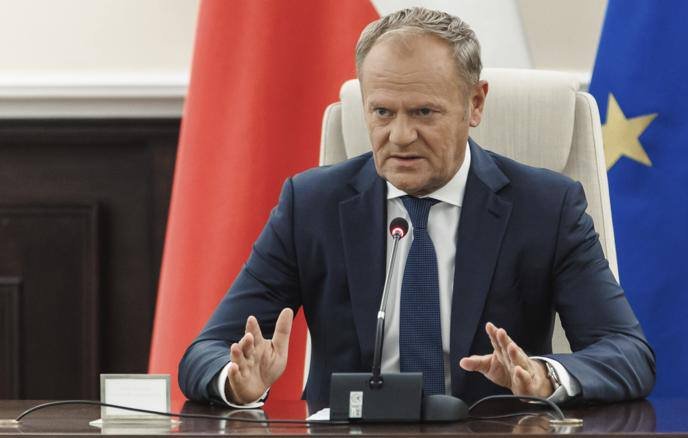
When Friedrich Merz rose to speak in the Bundestag on 25 April 2026, he chose the language of existential crisis. Germany's democratic order, he said, was "being attacked systematically and from many sides." He described hardworking Germans as feeling their efforts had gone unrecognised for years — and he put the blame on political opponents. "Those who call themselves the Alternative for Germany have nothing — absolutely nothing — better to offer," he told the chamber, daring his critics to name a single AfD policy worth adopting.
The speech was polished and politically effective. Merz has made his name as the man who took on the AfD and, by most measures, is winning that argument in the polls. But the argument he is winning is not the one that matters most.
The workers he claims to champion
Merz framed the moment as a test of democratic will. That framing is politically serviceable — it unites his coalition and marginalises a challenger party — but it leaves the structural problem untouched. German workers are not merely suffering from a crisis of civic morale. They are paying higher energy costs, watching industrial capacity migrate eastward, and absorbing the ripple effects of geopolitical decisions made in Washington, Tehran, and Brussels with little consultation from voters in Duisburg or Leipzig.
The dissonance is not subtle. Merz can simultaneously tell working Germans that their country is strong and at the top globally, as he did in the same speech, while those same workers face real-terms erosion in purchasing power and factory closures driven by energy price uncertainty. The rhetorical celebration of German economic vitality does not land the same way in regions where the post-industrial contraction has not reversed.
The geopolitical exposure the speech did not name
A report from FarsNews International on 25 April cited a German Chancellor stating that the war in Iran threatens "the foundations of Europe's first economic power." The ClashReport Telegram channel, which carried Merz's Bundestag remarks in full, did not include a direct Iran passage — the excerpts released focused on domestic political confrontation. That gap is itself revealing.
Germany's economic architecture is genuinely exposed to disruption in the Middle East. Energy supply chains, petrochemical inputs, and the downstream manufacturing costs that underpin German export strength are all sensitive to sustained regional conflict. Merz, by most public accounts, has aligned Berlin with a hawkish posture on Iran — supporting expanded sanctions, backing Western security guarantees, and contributing to the diplomatic environment that has escalated tensions rather than defused them. If the economic consequences of that posture arrive — and the FarsNews framing suggests the German government's own internal assessment may be approaching that conclusion — the Chancellor who claimed to speak for working Germans will find himself implicated in their hardship.
The structural contradiction
The pattern is familiar across European politics: mainstream parties respond to economic anxiety by reframing it as a crisis of national identity or democratic integrity. The AfD, from this vantage, becomes the enemy not because its policies fail — though they do — but because its existence threatens the consensus that produced those policies. Merz's speech followed this template precisely. The underlying assumption is that the problem is the protest, not the conditions that generate it.
That assumption is politically convenient and structurally wrong. If German voters are drifting toward the AfD, it is partly because the issues driving their discontent — energy costs, industrial decline, economic exposure to decisions they cannot influence — have not been credibly addressed by the parties now defending the democratic order. The solution on offer is a defence of the status quo. The status quo includes the policy choices that produced the vulnerability.
The counter-argument — that Germany's alignment on Iran is a security necessity, not a policy option — deserves a hearing. Berlin has genuine interests in a stable Middle East, in preventing nuclear escalation, and in maintaining the credibility of Western deterrence. These are not trivial concerns. But acknowledging them honestly means admitting that the economic exposure is a consequence of choices, not an external shock beyond anyone's control. The moral clarity of "democracy under siege" is easier to claim than that admission.
What comes next
If the Iran situation continues to escalate, the economic pressure on German households will compound. Industrial energy costs will rise. Supply chain disruptions will tighten margins for mid-sized manufacturers — the Mittelstand firms that employ the largest share of the German workforce. Chancellor Merz will face a choice: acknowledge the connection between foreign policy choices and domestic economic outcomes, or continue to frame the crisis as a battle between democratic order and its enemies.
The first option is harder. It requires admitting that the mainstream consensus — which Merz leads — carries costs as well as benefits. The second option is easier, which is why every mainstream European leader reaches for it. But the second option also leaves the structural problem intact, and structural problems have a way of eventually surfacing in the ballot box in forms that rhetorical discipline cannot manage.
Merz told the Bundestag that Germany should not be dragged into a negative mood. He may be right that the country's fundamentals are stronger than the mood suggests. But the fundamentals he has inherited — energy dependency, industrial vulnerability, economic exposure to conflicts he has helped shape — will not improve because the framing is optimistic. They require a harder conversation than the one he chose to have.
Wire provenance
This editorial synthesis draws on the following public wire/social posts:
- https://t.me/ClashReport/4821
- https://t.me/ClashReport/4819
- https://t.me/ClashReport/4817
- https://t.me/FarsNewsInt/3144