Ghana's Offshore Oil Discovery: Eni Strikes Black Gold in the Deepwater Tano Basin
Italian energy company Eni has announced a significant offshore oil discovery in Ghana's Deepwater Tano Basin, with preliminary estimates suggesting reserves of 500 million barrels, potentially transforming the country's energy and fiscal landscape.
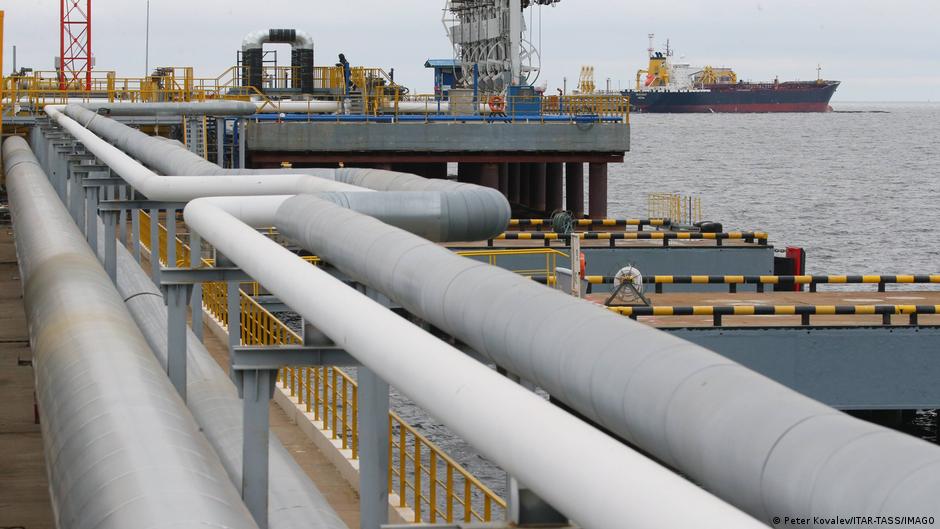
The announcement came on a Tuesday morning in early April 2026 and landed with the force of a seismic event in Ghana's political and economic circles. Eni, the Italian energy multinational, confirmed that its Akoma-1 exploration well in the Deepwater Tano Basin, located approximately 80 kilometres off the coast of Ghana's Western Region, had struck oil in commercially viable quantities. Preliminary estimates suggested reserves of approximately 500 million barrels of recoverable oil, making it the largest oil discovery in Ghana since the Jubilee field was found in 2007.
The discovery immediately triggered a wave of optimism tempered by the hard lessons of Ghana's oil and gas experience over the past decade and a half. Ghana, which began producing oil from the Jubilee field in December 2010, has earned approximately $8 billion in petroleum revenues since inception. Yet the expected transformation of the economy — the transition from lower-middle-income to middle-income status, the financing of large-scale infrastructure, the creation of thousands of well-paying jobs — has been only partially realised, undermined by volatility in oil prices, governance failures, and the Dutch Disease dynamics that have complicated the management of the petroleum sector.
The Akoma discovery offers Ghana a second chance to get the oil formula right — to translate subterranean wealth into surface-level prosperity. Whether the country seizes that opportunity will depend on the policy choices made in the coming years.
The Discovery Details
The Akoma-1 well was drilled by the Saipem 10000 drillship in water depths of approximately 1,800 metres, making it one of the deepest offshore wells drilled in the Gulf of Guinea. The well encountered approximately 85 metres of net oil pay in Cretaceous-age turbidite sandstones, with reservoir properties described by Eni as "excellent." Preliminary flow tests yielded rates of approximately 8,000 barrels of oil per day, with an API gravity of approximately 32 degrees — a medium-light crude that is well-suited to refining into diesel, petrol, and aviation fuel.
Eni holds a 40 percent stake in the Deepwater Tano Block, with its partners being Vitol (30 percent), GNPC (15 percent), and Woodside Energy (15 percent). The partners have committed to an appraisal programme that will include the drilling of at least two additional wells to delineate the field's extent and assess its commercial viability.
Eni's Chief Operating Officer for Africa, Alessandro Puliti, described the discovery as "transformational" during a press conference in Accra. "The Akoma discovery confirms the outstanding potential of the Deepwater Tano Basin. Together with our partners, we are committed to moving this project towards development as quickly as possible."
If developed, the Akoma field could reach peak production of approximately 80,000 to 100,000 barrels per day, according to preliminary engineering assessments. First oil is estimated for 2030, assuming a development timeline of four to five years from the final investment decision, which is expected in 2028.
The Fiscal Implications
The fiscal implications of the Akoma discovery are significant. Assuming development and peak production of 80,000 barrels per day, with an assumed average oil price of $75 per barrel, the field could generate approximately $2.2 billion in annual gross revenue, of which Ghana's share — through royalties, corporate taxes, and GNPC's carried interest — could amount to approximately $800 million to $1 billion annually at peak production.
Over the field's estimated 20-year production life, cumulative government revenue could reach $12 billion to $15 billion in nominal terms — a sum that, if managed prudently, could meaningfully accelerate Ghana's infrastructure development, education investment, and fiscal sustainability.
The discovery comes at a fortuitous time for Ghana's public finances. The completion of the IMF programme in early 2026 has restored macroeconomic stability but left the government with limited fiscal space. Petroleum revenues from the Akoma field, beginning to flow from approximately 2030, could provide a significant and timely boost to government revenues.
However, the experience of the Jubilee and TEN (Tweneboa, Enyenra, Ntomme) fields offers cautionary lessons. Petroleum revenues from these fields have been volatile, fluctuating with oil prices and production volumes. The Petroleum Revenue Management Act, passed in 2011 and amended in 2016, established a framework for managing oil revenues, including the creation of a Ghana Heritage Fund (for intergenerational savings) and a Ghana Stabilisation Fund (to buffer against revenue volatility). Both funds have been subject to political pressures, with withdrawals from the Stabilisation Fund authorised during the COVID-19 pandemic and during the recent fiscal crisis.
The Mahama administration has committed to strengthening the PRMA framework, including the introduction of a fiscal rule that limits petroleum-financed spending and the enhancement of transparency in the management of petroleum revenues. The credibility of these commitments will be tested as the Akoma field moves towards development.
The Energy Sector Context
The Akoma discovery occurs against the backdrop of Ghana's evolving energy landscape. The country is simultaneously developing its natural gas resources — the Sankofa gas field, operated by Eni, currently supplies approximately 150 million standard cubic feet per day of gas to the domestic market for power generation — and pursuing a transition to renewable energy sources.
The discovery has reignited the debate about the appropriate balance between fossil fuel exploitation and climate action. Ghana, as a signatory to the Paris Agreement, has committed to reducing its greenhouse gas emissions by 64 percent by 2030 (relative to a business-as-usual scenario) and achieving net-zero emissions by 2050. The development of a new oil field, which will generate significant CO2 emissions over its lifetime, sits uneasily with these climate commitments.
The government has sought to reconcile the apparent contradiction by framing oil revenue as a means of financing the energy transition. The argument, articulated by Energy Minister Herbert Krapa, is that petroleum revenues from the Akoma field can fund investments in renewable energy, grid modernisation, and energy efficiency that would otherwise be unaffordable.
Environmental groups have expressed scepticism about this framing. "The idea that you can burn oil to fund climate action is a convenient fiction," said Prince Osei, executive director of the Ghanaian environmental organisation A Rocha. "Every barrel of oil produced makes the climate crisis worse. Ghana should be investing its capital and creativity in renewable energy, not in extracting more fossil fuels."
Governance and Transparency
Ghana's oil sector has been a mixed bag on governance and transparency. The country was one of the early adopters of the Extractive Industries Transparency Initiative, gaining EITI compliance status in 2010. The EITI process has required the public disclosure of payments from oil companies to the government and the reporting of petroleum revenues in the national budget.
However, governance challenges have persisted. The Agyapa Royalties Transaction, a controversial deal under the previous administration that sought to monetise future gold and oil royalties through a special purpose vehicle listed on the London Stock Exchange, was widely criticised for its lack of transparency and the potential for conflict of interest. The transaction was subsequently cancelled by the Mahama administration, and the Office of the Special Prosecutor has initiated an investigation.
The management of GNPC, the national oil company, has also been a source of concern. The company has accumulated significant debt — approximately $1.5 billion as of 2025 — and has been criticised for cost overruns on its equity stakes in producing fields. The government has initiated a restructuring of GNPC, including the appointment of new management and the development of a commercial roadmap.
The Local Content Question
One of the most persistent criticisms of Ghana's oil sector has been the limited extent to which local businesses and workers have participated in the industry's value chain. Despite the passage of the Petroleum (Local Content and Local Participation) Regulations in 2013, which set minimum targets for the participation of Ghanaian companies and nationals in petroleum activities, the sector remains dominated by international contractors and expatriate workers.
The discovery of the Akoma field presents an opportunity to strengthen local content, particularly if development timelines allow for the training and capacity building of Ghanaian businesses and professionals. The Petroleum Commission has indicated that it will enforce more stringent local content requirements for the Akoma development, including targets for local fabrication, logistics, catering, and professional services.
The Ashesi Venture Incubator and the University of Ghana's Department of Petroleum Engineering have established training programmes specifically designed to prepare Ghanaian professionals for the oil and gas sector. These programmes have produced graduates who have been employed by international oil companies, though the scale of training remains insufficient to meet the sector's demand.
The Opportunity and the Risk
The Akoma discovery represents both a tremendous opportunity and a significant risk for Ghana. The opportunity is clear: billions of dollars in revenue that can be invested in infrastructure, education, healthcare, and the energy transition, propelling the country toward upper-middle-income status and a more diversified, resilient economy.
The risk is equally clear: the resource curse, the Dutch Disease, the governance failures, and the environmental damage that have characterised the experience of so many resource-rich countries. Ghana's performance in managing its existing oil resources has been better than average but still far from exemplary. The Akoma field will multiply both the rewards and the risks.
As Professor William Ackah, a petroleum economist at the University of Cape Coast, observed: "Oil discoveries are not blessings or curses in themselves. They are tests. Ghana has been tested once before. The Akoma discovery is a second test. This time, we must study harder."