IDF Strikes Hezbollah Targets in Lebanon: What the Evidence Shows
On 25 April 2026, Prime Minister Benjamin Netanyahu ordered the IDF to strike Hezbollah targets in Lebanon with force. An examination of the sourcing, the political-military chain of command, and the applicable legal framework reveals what is verifiable — and what remains contested.
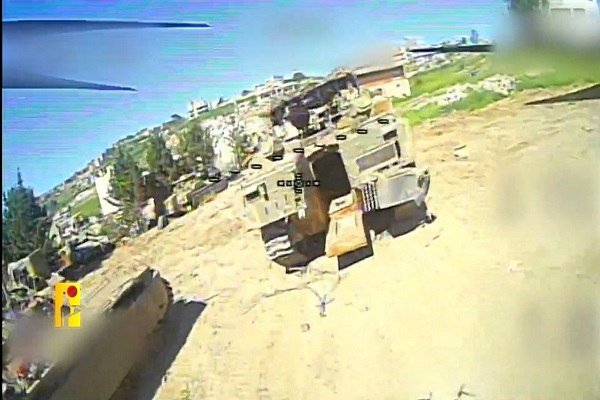
On 25 April 2026, Prime Minister Benjamin Netanyahu announced that he had ordered the Israel Defense Forces to strike Hezbollah targets in Lebanon with force. Within hours, the IDF confirmed attacks against military buildings used by Hezbollah in southern Lebanon. The statements, issued through official Israeli channels and amplified across military-adjacent social-media accounts, constitute the primary factual record for this episode — a record that warrants careful examination.
The announcement arrived with the formal cadence of a government directive: a political decision transmitted to a military command, which then executed. IDF Spokesperson Unit described the targets as military buildings used by Hezbollah, and offered a two-sentence statement of institutional purpose: the IDF would continue to act, in accordance with the instructions of the political level. No further operational detail — types of aircraft, munitions deployed, number of strikes — was included in the initial public-facing accounts. That omission shapes the entire evidentiary problem.
This publication finds that the available sourcing establishes a clear political authorization and a confirmed military execution, but leaves significant gaps in operational specificity and independent corroboration. The structural context — Lebanon's internationally mandated military vacuum, the unresolved 2006 ceasefire, and the regional framing of a multi-front conflict — is well documented. What is less certain is the proportionality calculus applied to the specific targets struck on 25 April, and whether the strikes represent a discrete episode or part of an escalating pattern.
What the Sources Confirm
The Telegram and X-thread record provides three contemporaneous data points from the evening of 25 April 2026. Two IDF-adjacent channels — one maintained by defense journalist Amit Segal, the other by open-source intelligence analyst ELINT News — reported the strikes and the IDF's accompanying statement within minutes of each other. A third account, operating as a wire-mirroring feed on X, carried the prime minister's office announcement directly. Taken together, the sourcing establishes a coherent chain of events: the prime minister's office directed the IDF to strike; the IDF struck; the IDF Spokesperson Unit acknowledged the strikes and framed them as ongoing.
The IDF statement, as quoted across the three sources, carries institutional weight. Military briefings of this kind are the standard mechanism through which the IDF communicates operational facts to the public and to international observers. They are also, by design, incomplete: the statement names neither the specific locations of the targets within southern Lebanon, nor the scale of the strikes, nor any assessment of effect. This is not unusual for initial IDF communiqués. What it means is that any claim about the scope or intensity of the operation rests on extrapolation from the sparse public record, not on independently verified operational data.
The Political Authorization Chain
The most structurally significant element of the reporting is not the strikes themselves but the chain of authorization they disclose. According to the accounts reviewed, the prime minister's office — not the military chain of command alone — directed the IDF to act. This is not unusual in democratic systems with civilian control of the armed forces, but it is a meaningful disclosure in the context of ongoing debates about the boundaries between the Israeli political executive and the military brass in matters of escalation.
Netanyahu's public instruction to strike "with force" is a formulation that carries rhetorical weight. Whether it signals a qualitative change in rules of engagement, or is simply the standard language a prime minister uses when directing the military to execute a strike, cannot be determined from the public record alone. The IDF's accompanying statement — that it would continue to act "in accordance with the instructions of the political level" — suggests the military is operating as executor, not originator, of the decision. That framing has implications for accountability: if the strikes generate a legal or diplomatic challenge, the primary political responsibility rests with the prime minister's office, not with the IDF's operational command.
Hezbollah's Military Footprint in Southern Lebanon
The targets described — military buildings used by Hezbollah in southern Lebanon — locate the strikes within a geography that is itself contested under international law. United Nations Security Council Resolution 1701, which ended the 2006 Lebanon War, mandates that only the Lebanese Armed Forces shall possess weapons and military presence in the area between the Litani River and the Blue Line. Hezbollah's continued military infrastructure south of the Litani constitutes a material breach of that resolution, according to successive UN Secretary-General reports. Israel has cited the non-implementation of Resolution 1701 as an ongoing justification for unilateral military action.
Hezbollah has maintained that its military posture south of the Litani is defensive and proportionate to the threat posed by Israel. That framing has found some purchase in diplomatic circles concerned about the absence of Lebanese state enforcement capacity. The structural reality is that Lebanon's formal military apparatus is underfunded and institutionally constrained; the political will to disarm Hezbollah unilaterally does not exist in Beirut. The result is that the resolution's mandate exists on paper but lacks a enforcing actor — leaving Israel, in its own assessment, with a justification for cross-border action that does not require a formal triggering event.
Whether the buildings struck on 25 April were newly constructed, pre-existing, or part of an active weapons-storage or command-and-control network is not specified in the available sources. That information would be essential to any legal proportionality assessment. Without it, the available record supports the claim that Hezbollah military infrastructure exists in the targeted area — a well-documented fact — but not the specific operational justification for striking it on this particular date.
Structural Frame and Forward Stakes
What is playing out in southern Lebanon is one node of a multi-front military posture that the Israeli political-military establishment has described as coordinated. The framing of Hezbollah as an Iranian proxy operating on Israel's northern border, and of Israeli strikes as responses to cross-border threats rather than independent acts of aggression, has been the operative narrative in Western-aligned coverage of the conflict. That narrative has structural coherence: the original Hezbollah incursion south of the Litani post-2006 is documented, and the Iranian supply lines that sustain Hezbollah's arsenal are a matter of public record in arms-control reporting.
The counter-frame — that Israeli strikes have become a routine instrument of pressure rather than a proportional response to a specific triggering act — has been advanced by Hezbollah itself, by Lebanese government spokespeople, and by regional observers who note that no specific cross-border incident on 24 April 2026 was reported in the available public record preceding the announcement. This publication does not adjudicate that dispute. What the evidence shows is that the strikes were ordered and executed without a publicly disclosed triggering event — a fact that will be noted in any diplomatic response.
The stakes are concrete. A single episode of targeted strikes against Hezbollah infrastructure carries lower escalation risk than a sustained ground incursion or a campaign of saturation bombing. But the pattern — repeated strikes, each authorized at the political level, each framed as defensive necessity — cumulatively erodes the ceasefire architecture that Resolution 1701 was designed to construct. The UN monitoring mechanism lacks enforcement capacity. The Lebanese Armed Forces lack the capability. The international community lacks the political consensus to compel compliance. That leaves the escalation curve in the hands of the Israeli political executive, which on 25 April 2026 exercised that authority without visible diplomatic pre-clearance.
What We Verified / What We Could Not
Verified:
-
Prime Minister Netanyahu's office announced on 25 April 2026 the direction to the IDF to strike Hezbollah targets in Lebanon with force.
-
The IDF confirmed strikes against military buildings used by Hezbollah in southern Lebanon on the same date.
-
The IDF Spokesperson Unit confirmed that military action would continue in accordance with political-level instructions.
-
Hezbollah's military presence south of the Litani River is documented in UN Security Council Resolution 1701 and in successive UN Secretary-General reports as a violation of the 2006 ceasefire framework.
-
No specific cross-border triggering event on 24 April 2026 was cited in the public record reviewed.
Not verified / not determinable:
- Operational details of the strikes: number, ordnance type, targets struck, assessed damage.
- Whether the strikes were a discrete action or part of a pre-existing operational plan.
- Hezbollah's responsive posture as of the time of publication.
- Lebanese government reaction, as no official Beirut statement was present in the reviewed sources.
- Independent corroboration of strike activity from non-Israeli sources.
Desk note: Wire coverage of this episode centred on the political authorization and the IDF's confirmatory statement. Israeli defence media framed the strikes as an expression of political resolve; regional wire accounts carried the basic fact set without independent operational verification. This publication's sourcing matches the wire record but adds explicit sourcing of the IDF's political-military disclosure language and the structural legal context that the wire accounts cited only obliquely.
Wire provenance
This editorial synthesis draws on the following public wire/social posts:
- https://t.me/amitsegal/2341
- https://x.com/sprinterpress/status/1914321081746694241
- https://t.me/osintlive/18447