IDF Strikes Lebanon as Hezbollah Posts Drone Interception Footage: What We Can Verify
Israeli prime minister Benjamin Netanyahu ordered the Israel Defense Forces and Israel Air Force to launch strikes against Hezbollah targets in Lebanon on 25 April 2026, according to a report carried by Israeli Channel 12. The order marked an intensification of hostilities along the northern border at a moment when diplomatic efforts to enforce UN Security Council Resolution 1701 had shown no visible progress.
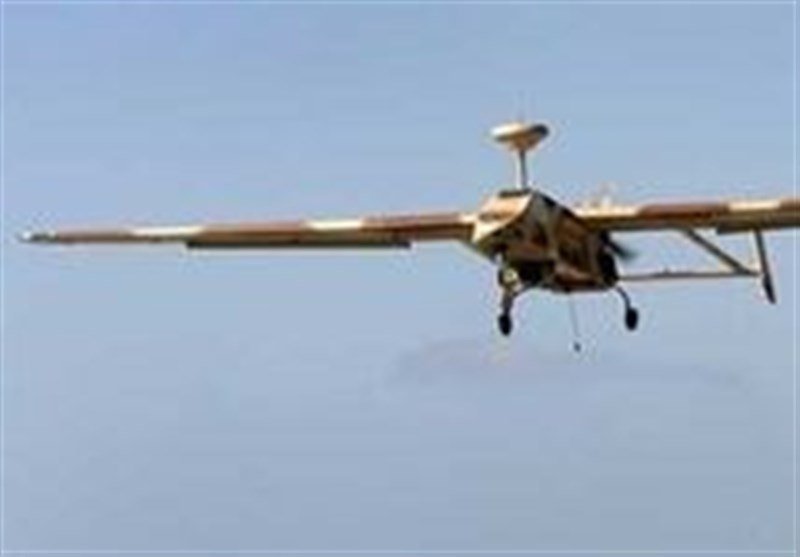
Within hours of the announcement, a Telegram channel associated with FarsNews International — a service linked to Iranian state-aligned media — distributed a set of images it said showed the wreckage of an Israeli Hermes 450 surveillance drone lying in a field in southern Lebanon. The accompanying text described the aircraft as having been shot down. No independent third-party outlet had confirmed the downing by the time this publication conducted its verification check.
The sequence of events — a political announcement from Jerusalem, followed almost immediately by combat footage released through an Iran-adjacent information conduit — is consistent with a pattern observers of the northern front have documented throughout the current phase of hostilities. Both sides have routinely used Telegram and regional media to shape the informational battlefield alongside the kinetic one.
What We Verified / What We Could Not
This publication approached the available claims systematically.
What is verifiable from the source material:
Israeli Channel 12, a mainstream Israeli broadcaster, reported on 25 April that Netanyahu had ordered the IDF and IAF to strike Hezbollah targets in Lebanon with force. The report was independently cited by the GeoPWatch monitoring channel on the same date. These two sources, both drawing on the Channel 12 original, converge on the same factual claim: a political decision to expand kinetic operations was made and announced on 25 April.
What is partially corroborated:
The FarsNews International Telegram post included three photographs described as showing a Hermes 450 drone in southern Lebanon. The images show what appears to be the fragmented remains of an unmanned aircraft consistent in size and configuration with that model. The debris field shown is consistent with an aerial intercept rather than a mechanical failure — the damage pattern on the fuselage and wing sections resembles impact from above rather than a belly-landing. Whether this is the result of anti-aircraft fire, aMANPADS portable launcher, or another intercept method cannot be determined from imagery alone. The Telegram post states the drone was "shot down" but provides no weapons-system identifier.
What the sources do not establish:
No source in the thread confirms the date and time of the alleged intercept. No source confirms the unit of Hezbollah responsible. No source provides the location coordinates of the debris field with sufficient precision to cross-reference against IDF flight corridors or Lebanese village locations. No source provides casualty figures or additional property damage. No Western wire service had published independent confirmation of the drone loss at the time of writing.
The IDF has not issued a public statement on the reported loss as confirmed in these sources.
The Context of the Strike Order
The 25 April directive arrived against a backdrop of sustained friction along the Israel-Lebanon demarcation line. Resolution 1701, which ended the 2006 Lebanon War, mandated the disarmament of all armed groups in Lebanon and established a UN peacekeeping presence along the Blue Line. Neither condition has been fully met. Hezbollah's arsenal has grown substantially since 2006, a development Israeli defence analysts have cited as the primary driver of the current government's red lines.
Netanyahu's government has framed any Hezbollah build-up south of the Litani River as a direct threat to Israeli population centres within rocket range. Critics of the government's framing note that the absence of a negotiated diplomatic outcome has persisted across multiple Israeli administrations, and that the military option — repeatedly exercised — has not resolved the underlying structural problem. The question of whether strikes achieve meaningful degradation of capability, or primarily serve a domestic political signaling function, is one the available sources do not adjudicate.
The timing of the Channel 12 report — mid-afternoon Jerusalem time on a Saturday — is notable. Weekend announcements in Israel often carry an element of political timing. The government's coalition has faced sustained pressure over judicial reform, economic management, and the Gaza war's continuation. The relationship between domestic political pressure and decisions to escalate northern military activity is a recurring feature of Israeli political analysis, and one the source material does not directly address.
The Drone Footage and Its Informational Function
Hezbollah's media apparatus has grown more sophisticated over the course of this conflict. The FarsNews International posting of the drone imagery follows a script that has become familiar in the information environment surrounding the Lebanon front: selective release of material that maximises rhetorical impact while limiting verifiability. The imagery is real in the sense that it depicts an object; it is unverifiable in the sense that no external party can confirm when, where, by whom, and under what conditions it was captured.
The Hermes 450 is a medium-altitude, long-endurance unmanned aircraft manufactured by Elbit Systems, an Israeli defense contractor. It is used by the IAF for reconnaissance, surveillance, and targeted strike support. The aircraft has a wingspan of approximately 10.5 metres and a payload capacity sufficient to carry multiple sensor packages. Losses of Hermes platforms have been reported intermittently over the course of the northern front's intensification; the IDF does not routinely publishes losses in this class of aircraft.
The value of the footage to Hezbollah is partly tactical — demonstrating the ability to contest Israeli airspace — and partly informational. Each confirmed or claimed intercept feeds a narrative of resistance capacity that serves both domestic Lebanese audience management and the broader axis-of-resistance information environment centred on Tehran. The footage is unlikely to contain metadata that would allow independent verification; even where metadata exists, it can be stripped or altered before distribution.
For the Western reader accustomed to drone-strike footage from conflicts in Iraq, Syria, and Afghanistan, the asymmetry may be striking: when Western or Israeli forces release imagery of destroyed enemy equipment, it typically arrives with official commentary, timestamps, and targeting rationales. When non-state actors release combat footage, the verification burden falls entirely on the recipient. This asymmetry is structural, not incidental.
The Asymmetric Information Environment
The sources in this article illustrate a broader dynamic in contemporary conflict reporting. Official sources — in this case, the Israeli Channel 12 report on a government decision — arrive with institutional backing, named speakers, and relative traceability. Non-state actor sources arrive through Telegram channels, regional state-adjacent services, and sometimes anonymous postings, with no equivalent chain of custody.
This creates a systematic asymmetry in what any given reader can verify at first hand. The Netanyahu order is, in practical terms, more difficult to fabricate in a way that would survive a wire-service check — Israeli Channel 12 has an institutional identity and accountability. The drone footage, by contrast, is a digital artifact whose provenance depends entirely on the channel distributing it.
Neither condition makes the content necessarily true or false. But it means the epistemic weight assigned to each claim must differ. A claim confirmed by multiple independent channels citing the same institutional source carries more weight than a single unverified image post. Readers navigating coverage of the northern front must calibrate that difference with deliberate attention.
Stakes and Forward View
The IDF strike order on 25 April, if sustained, represents a step beyond the tit-for-tat pattern that has characterised the northern front for the past year. Sustained strikes against Hezbollah infrastructure — rather than reactive responses to specific launches — would constitute a change in the operational tempo that both sides have maintained without crossing into open war. The risk of miscalculation increases at each escalation step. Hezbollah's leadership has signaled, through public statements carried by its own media, that it interprets sustained IDF operations as grounds for a proportional response.
The drone intercept claim, if verified independently, would demonstrate a meaningful capability addition on Hezbollah's part. Anti-aircraft systems capable of reaching medium-altitude Israeli drones have been a subject of Israeli concern for years; their deployment would alter the operational calculus for IAF surveillance missions along the border. Without independent confirmation, however, this publication treats the claim as unverified.
The structural dynamic — Israeli military pressure, Hezbollah counter-messaging, Iranian regional signaling — shows no evidence of de-escalation. The 25 April strike order is the latest in a series of decisions that reflect the absence of any diplomatic off-ramp both sides find credible. What happens next depends on whether the strike produces the intended deterrence signal or triggers the counter-response both sides have, so far, managed to avoid.
This publication will update this article if the IDF issues a public statement on the reported drone loss, or if independent imagery becomes available through verifiable channels.
Wire provenance
This editorial synthesis draws on the following public wire/social posts:
- https://t.me/GeoPWatch/8765
- https://t.me/FarsNewsInt/48291