Iran's Deterrence Dilemma: Air Defenses, Empty Threats, and the Nuclear Crossroads
On 25 April 2026, air defenses activated in Kermanshah, western Iran, as Tehran simultaneously signaled conditional openness to diplomacy. The contradiction is not accidental — it is the regime's operating system.
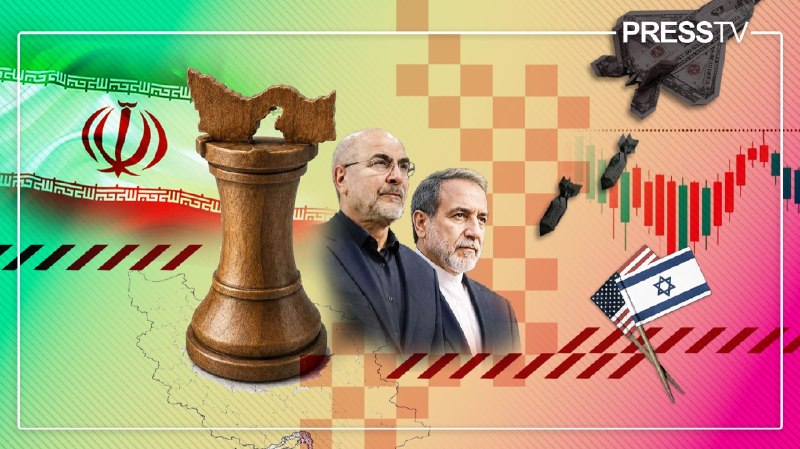
On the evening of 25 April 2026, Iranian state media confirmed what regional monitors had flagged hours earlier: air defense systems had been activated over Kermanshah, a provincial capital close to the Iraqi border. The announcement triggered the expected wave of wire alerts, Telegram channels, and breathless live-ticker coverage. Within hours, Iran's armed forces had issued a formal warning to the United States against what they termed renewed "aggression." Yet the same 24-hour news cycle carried a quieter message from Tehran's presidential circle — doctors, the headline-writers noted, emphasizing that halting hostile actions and securing guarantees against their repetition represented the minimum threshold for any negotiated settlement.
The juxtaposition was not a glitch in the information environment. It was a window into how the Islamic Republic manages deterrence, escalation, and signaling simultaneously, across parallel channels, to audiences domestic and foreign. Air defenses publicly activated serve a dual purpose: they are operational preparations and political communications, timed to demonstrate readiness without initiating the contact they ostensibly guard against.
The Polymarket betting markets registered the ambiguity in real time. By mid-afternoon on 25 April, the platform's traders assigned a 26 percent probability to a US-Iran diplomatic meeting occurring before the end of the month. A separate market, tracking the odds that Iran agrees to surrender its enriched uranium stockpile within the calendar year, stood at 43 percent. The spread between those numbers — narrow enough to signal genuine uncertainty, wide enough to suggest neither outcome is foreclosed — captures the moment precisely.
The Trigger and What It Signals
The immediate cause of the Kermanshah activation remains partially opaque. Western intelligence assessments, absent from the wire reports published on 25 April, presumably contain specifics about what sensor data or communications intercepts prompted the defensive posture. What the public record shows is that the activation occurred against a backdrop of sustained American pressure: tariff escalation, designations of Iranian-linked networks, and continued assertions from Washington that the Joint Comprehensive Plan of Action — the 2015 nuclear agreement — is not a viable long-term framework absent additional constraints on ballistic missiles and regional behavior.
Iran's response has been characteristically layered. The armed forces' warning to the United States, published via Middle East Eye's live coverage feed, used the language of deterrence: explicitly framing renewed aggression as something the Iranian military was prepared to meet with force. The presidential statement, carried by al-Alam and Mehr News, took a different register — one of conditional rationality, suggesting that the regime's leadership remained within the diplomatic box if sufficient guarantees were offered.
The Mehr News coverage of a mass gathering in Kermanshah — described as the "56th gathering of the people of Kermanshah, we are avengers" — provides the domestic counterweight. The language is notable: not defenders, not citizens, but avengers. It speaks to an audience inside Iran that has been subjected to years of sanctions pressure, regional isolation, and nationalist mobilization. The regime's ability to simultaneously speak deterrence to Washington and vengeance to its own population is not a bug in its communication strategy. It is the design.
The Diplomatic Conditional
The phrase from the presidential circle — that stopping hostile actions and providing guarantees for their non-repetition is a prerequisite for resolving disputes — deserves precise attention. This is not a rejection of negotiation. It is a precondition list with a familiar structure: agree to our terms before we agree to talk about agreeing to terms. The language of doctors and guarantees borrows from diplomatic protocol precisely because Tehran wants the international community to read this as a serious, institutionalized position rather than political theater.
The Polymarket odds make clear that market participants — a noisy but aggregated indicator of informed speculation — assign meaningful probability to talks materializing before the end of April 2026. The 26 percent figure is not confidence; it is doubt with a directional tilt. It suggests that something could happen, that conditions are not static, but that the barriers remain high. The 43 percent odds on uranium surrender are similarly instructive: they imply that market participants think Iran might accept a partial nuclear concession in exchange for sanctions relief or security guarantees, but that the regime is not there yet.
What would shift those numbers? A direct US communication channel — even informal, even through intermediaries — would likely move the diplomatic-meeting odds sharply upward. A verified halt to Iranian uranium enrichment above 60 percent purity, or a resumption of International Atomic Energy Agency inspections, would likely move the surrender odds. Neither condition exists on 25 April 2026.
The Structural Frame: Why Deterrence Logic Collapses Here
The framework through which Washington has approached Iran since the 2019 maximum-pressure campaign rests on a classical deterrence logic: increase costs until the target concedes. The assumption embedded in that approach — that Iran will choose accommodation over resistance when sufficiently pressured — has not survived contact with the evidence. Iran has endured cumulative sanctions pressure that, by most economic metrics, should have produced either capitulation or systemic collapse. Neither has occurred.
This does not mean the pressure has been costless. It has not. It has produced genuine economic hardship, accelerated brain drain, created shortages in specific pharmaceutical and industrial inputs, and generated domestic political pressure on the clerical establishment. What it has not produced is behavioral change on the nuclear question or regional posture — the two variables Washington has identified as non-negotiable.
The structural problem is that deterrence logic works when the party being deterred calculates that the costs of the proscribed action exceed the benefits. Iran, across multiple administrations and under conditions of severe economic stress, has consistently concluded that the costs of nuclear restraint — permanently ceding a strategic hedge without receiving verifiable security guarantees in return — exceed the costs of continued enrichment. That calculation is rational within the regime's own framework of threat perception. It is not irrational from Tehran's point of view; it is irrational only from Washington's, which assumes its own threat framing should be determinative.
The air defense activation in Kermanshah is a symptom of this miscalculation gap. Iran activates defenses because it perceives genuine threat; Washington applies pressure because it believes deterrence should work; neither side's logic is internally incoherent, but the two logics are not in dialogue. The result is the posture we observed on 25 April: maximum pressure and maximum resistance, running in parallel, with diplomatic off-ramps clearly marked but structurally inaccessible.
Precedent and What It Tells Us
The 2019-2020 cycle offers the most recent data point for how this dynamic resolves. The US assassinated Quds Force commander Qasem Soleimani in a January 2020 drone strike. Iran responded with a ballistic missile attack on Ain al-Asad airbase in Iraq — publicly framed as retaliation, limited in scope, and followed by what amounted to a de-escalation signal. The regime calculated that direct military conflict with a far superior adversary served no strategic purpose, absorbed significant domestic pressure to escalate, and stepped back.
That episode is instructive but not directly applicable to the current moment. The Soleimani strike occurred before Iran had enriched uranium to the levels it has reached in 2026. The regime's negotiating position — and its deterrence value — was primarily conventional and regional. Enriched uranium at weapons-grade or near-weapons-grade levels changes the calculation in ways that make the 2019-2020 framework a poor guide.
What the precedent does confirm is that the regime has demonstrated capacity for strategic restraint when it calculates that direct confrontation serves no purpose. The question is whether that calculation is still operative given the nuclear threshold Iran now approaches. If the regime believes it is within months of a credible weapons capability, the restraint calculus changes fundamentally. The difference between a nuclear-armed Iran and a non-nuclear Iran becomes existential — not strategically important, not geopolitically significant, but existential for a regime that has defined itself against American regional hegemony.
The Polymarket odds, read against this structural backdrop, suggest market participants understand the narrowing window. A 26 percent probability of diplomatic contact by month-end is not a prediction; it is a measure of uncertainty weighted toward the downside. A 43 percent probability of uranium surrender within the year reflects genuine belief that the regime might trade a partial capability for permanent security guarantees. But the asymmetry — modest odds of diplomacy, modest odds of concession — points toward the most dangerous scenario of all: one in which neither side achieves its preferred outcome but both sides stumble into the outcome neither wants.
Stakes and What Comes Next
The stakes are, by any measure, outside the normal range of geopolitical risk assessment. A nuclear-armed Iran would fundamentally alter the regional balance of power in the Gulf, trigger a potential Saudi and Egyptian nuclear hedging program, and place Israel within the range of Tehran's second-strike capability. A US military strike on Iranian nuclear infrastructure would likely trigger a multi-front regional response, disrupt global oil markets at a moment of already elevated energy price sensitivity, and potentially kill the nuclear agreement framework entirely — removing the only verified constraints on Iran's program.
Neither outcome is priced into the Polymarket markets at anything like its true weight. The 57-plus percent probability assigned to Iran not surrendering uranium represents the baseline expectation — which means the market is implicitly assigning low probability to either the diplomatic breakthrough or the military strike that would resolve the question. The implicit assumption is that the current ambiguous state persists.
The problem with that assumption is that ambiguity, in this specific context, is not stable. Iran is enriching uranium at levels that, given sufficient accumulation, produce a weapons capability within a timeline measured in weeks rather than months. The ambiguity is therefore temporary — and the resolution, whether diplomatic or military, is coming regardless of whether Washington and Tehran prepare for it.
The immediate question is whether the diplomatic channel Tehran has signaled — conditional, hedged, and carrying the fingerprints of internal regime debate — represents a genuine opening or a tactical delay. The doctors' language, the air defense activation, and the armed forces' warning are, on the surface, contradictory. In the Islamic Republic's communication architecture, they are not. They are the sound of a regime keeping all options open while testing whether an externally imposed crisis might be turned into an internally manageable negotiation.
Whether Washington is prepared to meet that signal — with guarantees that the regime can sell domestically and with sanctions relief that meaningfully alters the economic calculation — is the question that will determine whether the next chapter of this story is written in diplomatic prose or in the language of air defense intercepts. The Polymarket odds say the outcome is not yet determined. The air defenses over Kermanshah suggest the window is not wide open. On 25 April 2026, both statements are true simultaneously.
This desk covered the Kermanshah activation as a deterrence-signal dual-use event — operational preparation and political communication — rather than as a conventional escalation item. The dominant wire framing emphasized the military dimension; this publication foregrounded the diplomatic conditional embedded in Tehran's simultaneous statements. The Polymarket odds provided useful context for market-based probability estimates, though prediction markets are informational inputs, not authoritative forecasts.
Wire provenance
This editorial synthesis draws on the following public wire/social posts:
- https://t.me/Middle_East_Spectator
- https://t.me/alalamfa
- https://t.me/mehrnews
- https://en.wikipedia.org/wiki/Islamic_Republic_of_Iran